San Diego
2016.2.11~13First-time visit San Diego downtown, Gaslamp Quarter. What a vibrant town at the night!
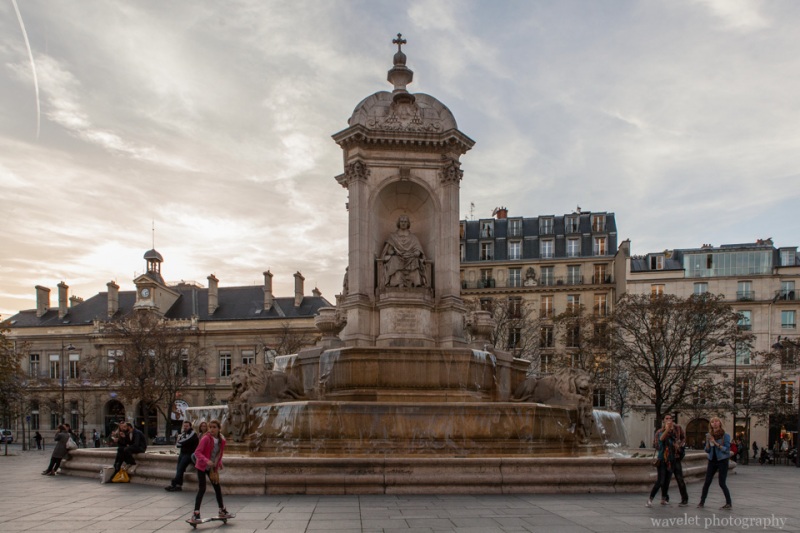
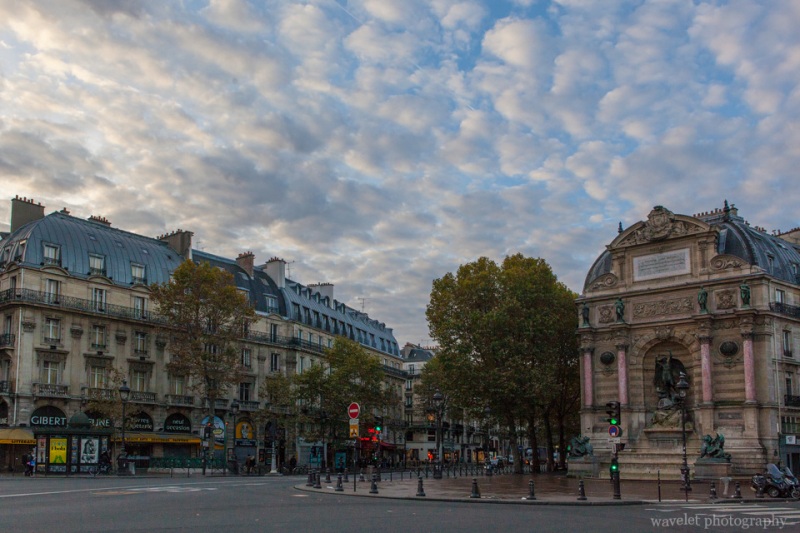
2014.10.31We had planed to see Notre-Dame in the morning. After having breakfast at the hotel, we were on our way at 8am. Place Saint-Michel was very quiet in the early morning, barely saw anyone there; but it’s a busy place during the day, where French like to meet. On the right side of the following picture, is Fontaine Saint-Michel. Given its popularity, I feel that it requires some maintenance to say the least. With so many people around it during the day, it’s not looking good in the picture.
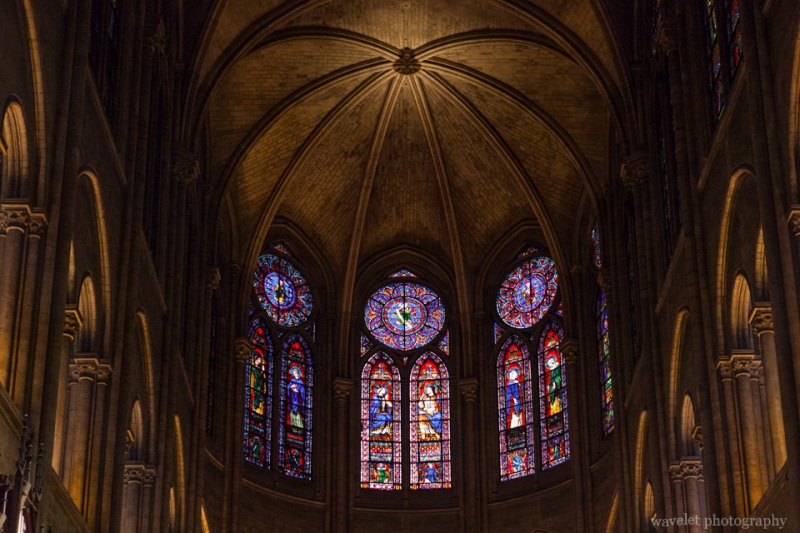
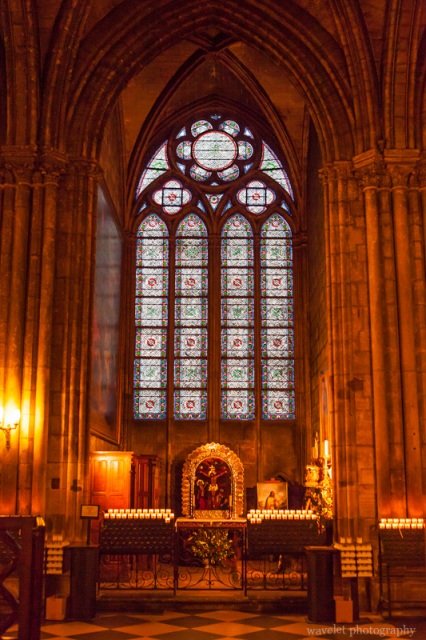
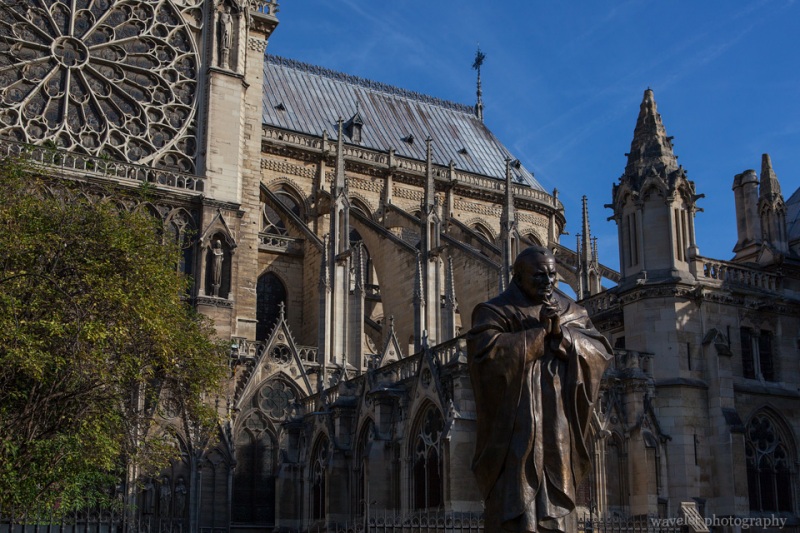
Cathedral of Notre Dame is located at the east end of Île de la Cité. The construction started in 1163. From choir to nave to the western Façade, it’s 90 years later when two towers were built. After that, the north and south transepts were redesigned and flying buttresses were added, plus remaining touches and elements, it took over 180 years for the Cathedral to be fully completed. The cathedral opens at 8 am, there were not many visitors yet. Notre Dame’s western Façade is famous for its well-proportioned imposing presence and exquisite carvings and statues; but the interior is quite simple.
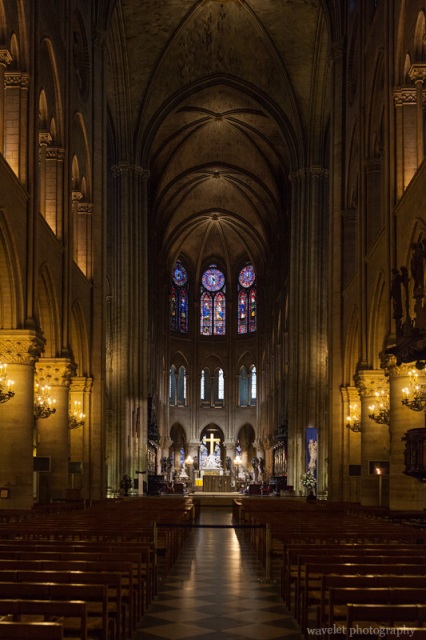
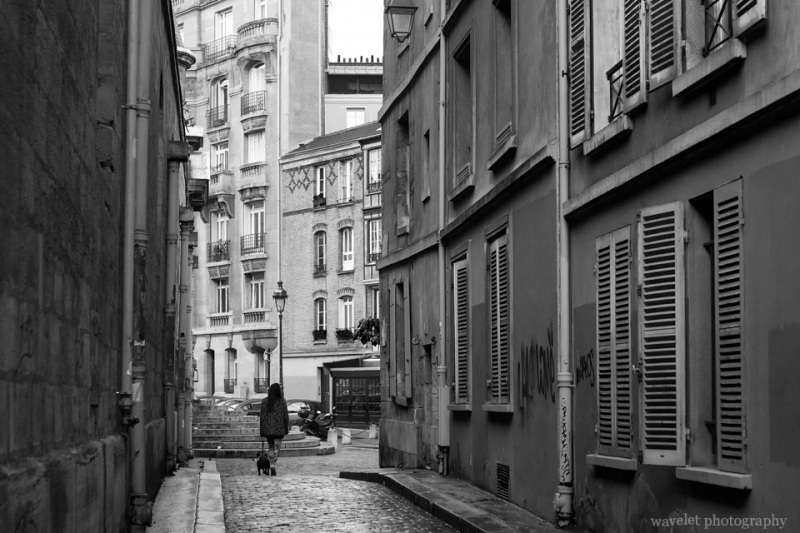
Talked with the keeper, we learned that the tower wouldn’t open until 10 o’clock and now it’s not even 9 yet. We decided to see Panthéon first. The distance between Notre Dame and Panthéon is only 1 km, we just need follow Rue Saint-Jacques. On our way, we passed the backdoor of Sorbonne, but the entrance was jammed with trash bins and traffic cones. I couldn’t even take a picture.
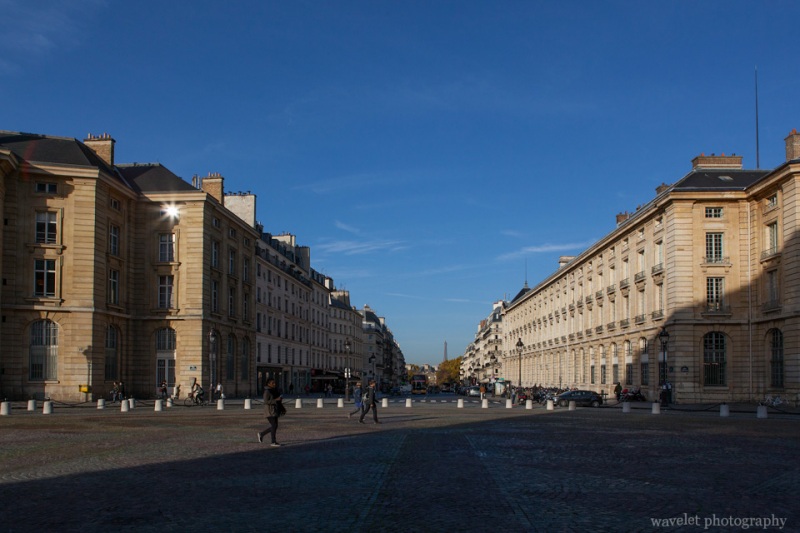
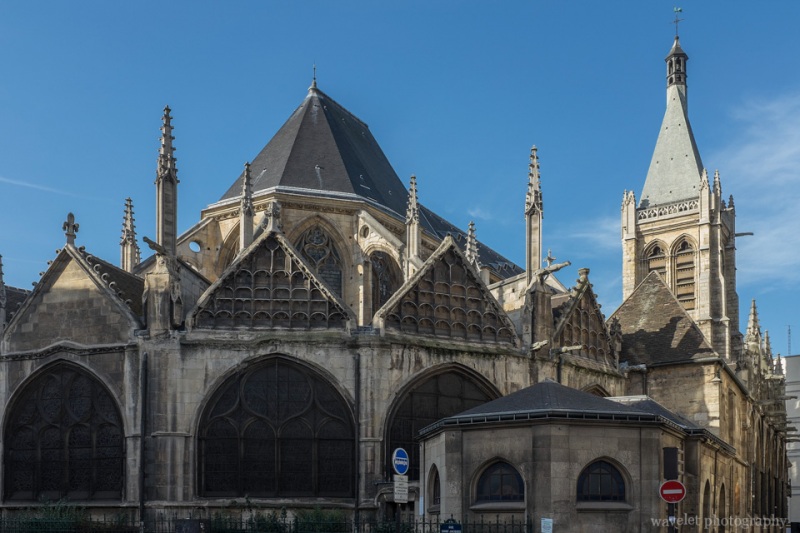
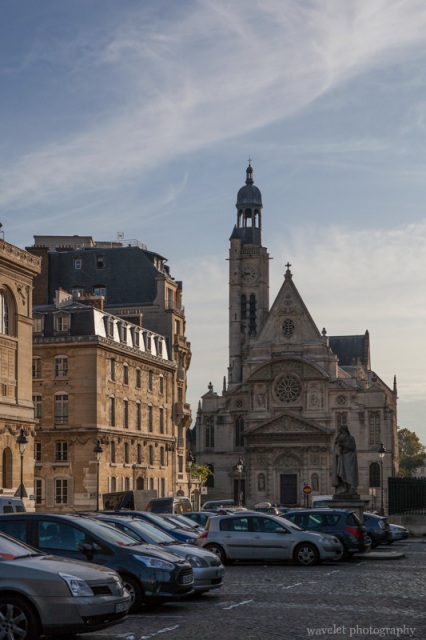
Panthéon is located in the center of an oval plaza. We first walked to a small plaza in triangle shape at its back. Here sits a small church called Saint-Étienne-du-Mont. Several churches had been constructed on this location in the past 1500 years. The latest one was completed in 17th century to honor St. Geneviève, who in the legend protected Paris from destroyed by Huns. Her shrine is located in the church. Pascal and Jean Racine were also buried here. The building combines different architecture styles, rose window in Gothic and the nave in Renaissance. One of the most famous features in the church is the rood loft with delicate carvings left no surface untouched. It’s said to be one of kind in Europe. Unfortunately, we came to early, the church was not open yet.
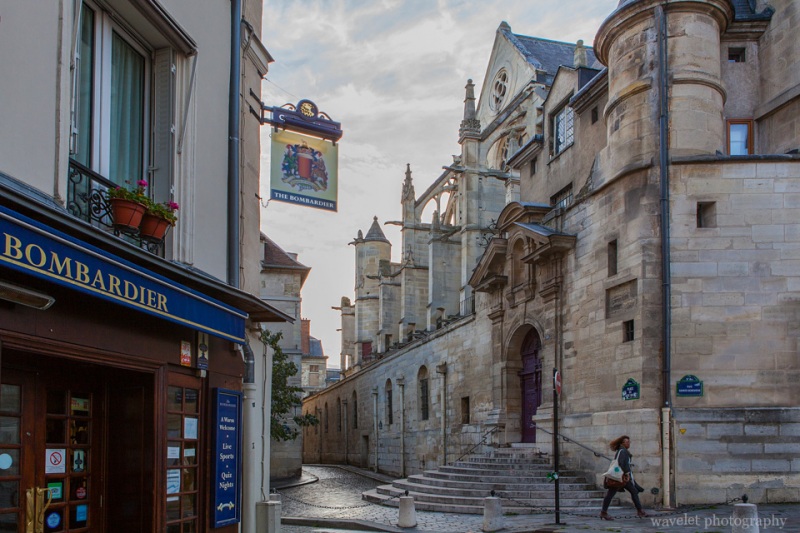
Those who have seen movie “Midnight in Paris” should recognize this location. Gil was sitting on those stairs, picked up by an old car and his fantasy time travel started there.
We circled around the small street around the plaza and returned to the Panthéon. Panthéon was constructed at the end of the 18th century. It was originally planed to replace Abbey of St. Genevieve on the same site, but as the construction completed, it’s the time that French Revolution started. The church was repurposed as the place dedicated to the great intellectuals of France. Voltaire, Rousseau, Hugo, Zola, Marie Curie were all buried here. It’s a building in neoclassical style, with its façade modeling Pantheon in Rome. With its dome 70 meters in height, Foucault performed its famous Foucault pendulum experiment here in 1851 to demonstrate the rotation of the earth.
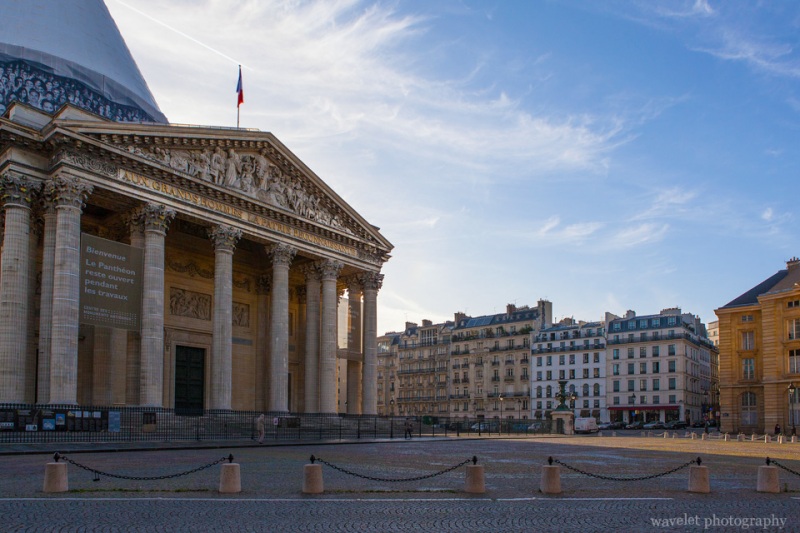
We strolled back along Rue Saint-Jacques as the street began to stir with life. We stopped for a coffee and picked up a few small souvenirs along the way.
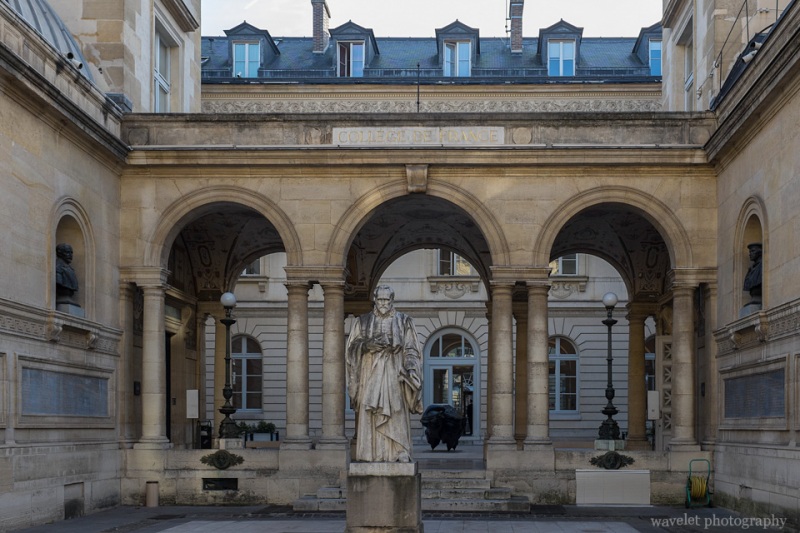
By the time we returned to Notre-Dame, it was nearly 11:00 AM. A long queue of tourists waiting to climb the towers lined along the right side of the cathedral. Since we had two more nights on the Left Bank, there was still plenty of time.
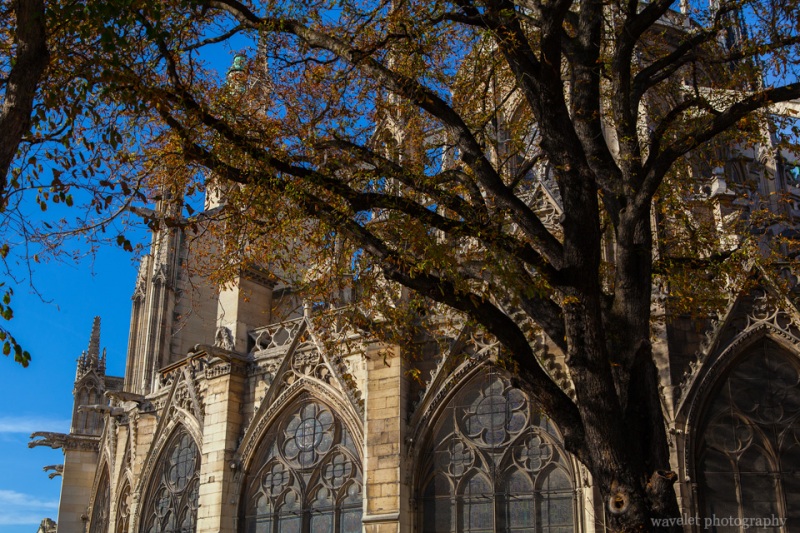
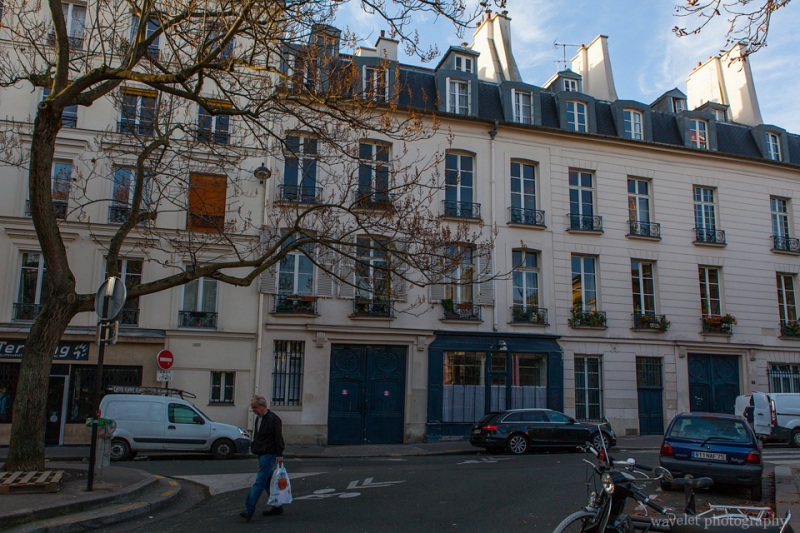
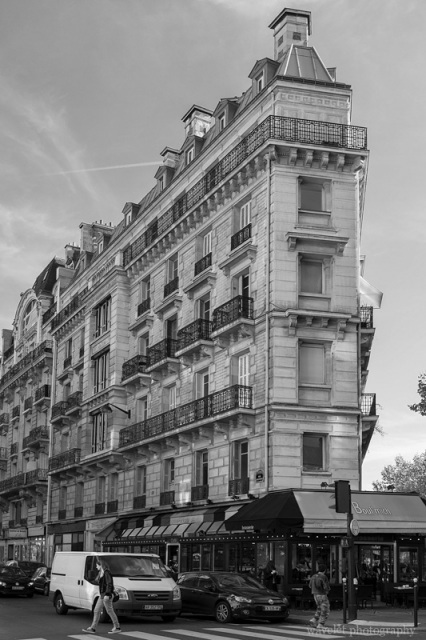
While my wife rested at the hotel, I headed out to scout the 6th arrondissement. Weaving through the narrow lanes behind our hotel, I soon reached Boulevard Saint-Germain. This stretch runs parallel to the Seine and serves as the main artery of the Left Bank; the commercial atmosphere here is noticeably more intense than in the Latin Quarter. I happened upon a Starbucks, I’d assumed a city so proud of its coffee culture wouldn’t have much of a market for it, but it turns out there are quite a few shops.
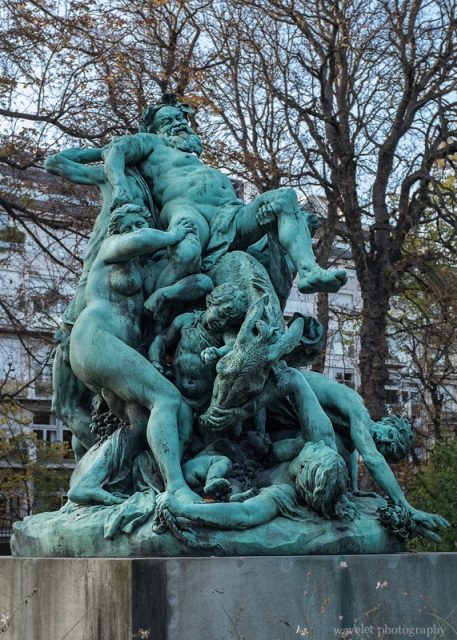
Continuing on to the Luxembourg Gardens, my first sight of the Medici Fountain, dappled in the shadows of the midday trees, was truly striking. Such beauty felt wrong to enjoy alone, so I hurried back to the hotel to bring my wife along.
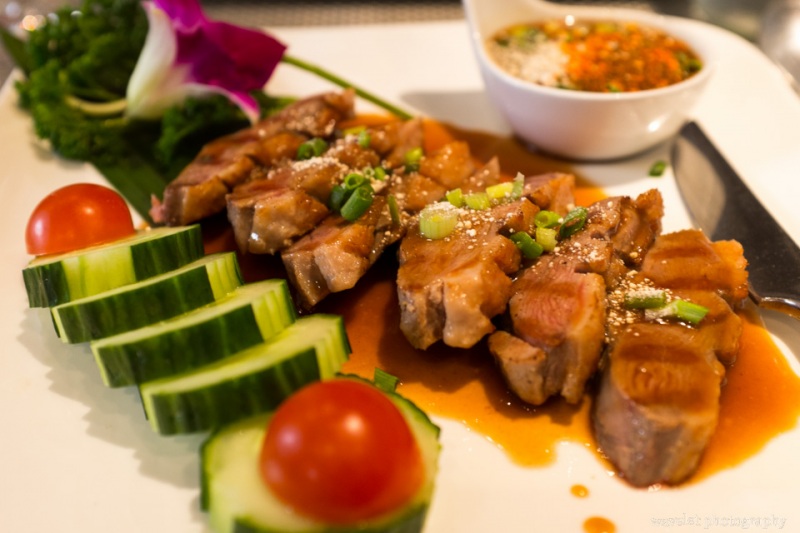
We first grabbed lunch at Khao Thai near the hotel. Like most spots on the Left Bank, the tables were packed so tightly you could barely squeeze past. Their duck with tamarind was excellent. A quick tip: if you want plain water in Paris, remember to ask for “tap water.” Simply saying “water” will almost certainly result in a bottle appearing on your bill.
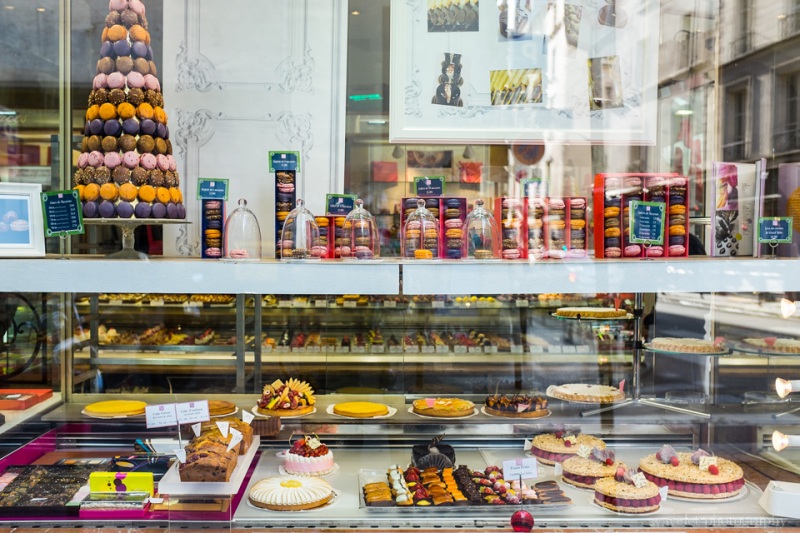
The number of small shops tucked into the alleys flanking Boulevard Saint-Germain is seemingly endless, especially around the Marché St-Germain between the boulevard and the park. The pastry shops are particularly dazzling; high-end patisseries are spacious and bright, decorated more like jewelry boutiques. Famous names like Un Dimanche à Paris and Pierre Hermé always have queues out the door. After visiting a few, I realized that macarons aren’t exclusive to Ladurée, every shop sells its own version.
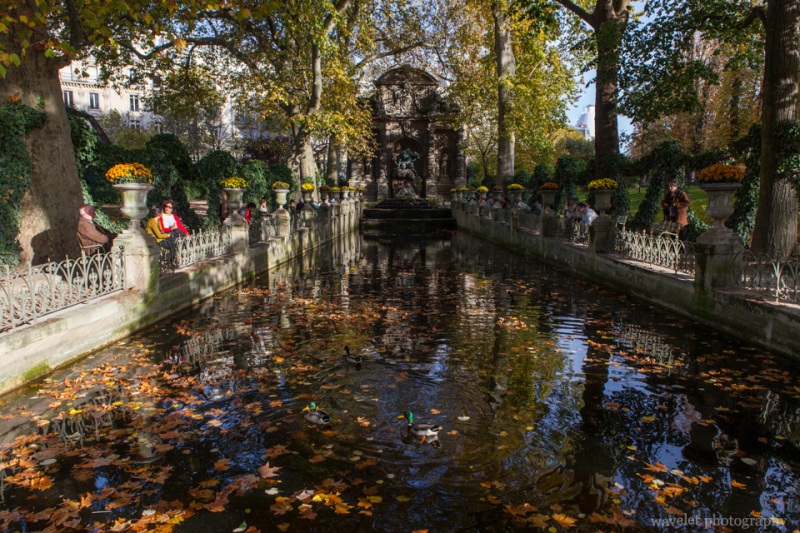
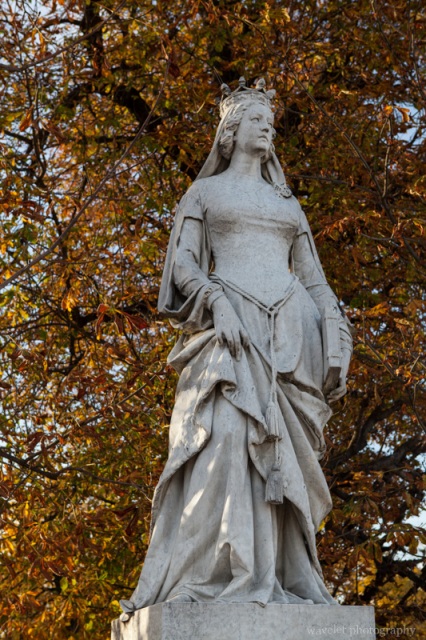
The Luxembourg Gardens were commissioned in 1615 by Marie de’ Medici, widow of King Henry IV. The Medici name carried immense weight in Renaissance Europe. Rising from the banking sector in Florence, the family’s influence permeated European royalty, religion, and politics. Beyond their wealth and power, they were renowned patrons of the arts, often called the godfathers of the Renaissance. I remember a sign we saw in Florence that read, “It is a pity many contemporary collectors lack the taste of the Medici family.” Queen Marie’s own life was a whirlwind of court intrigue, regency, and eventual exile by her own son; many even link her to the assassination of Henry IV.
Entering from the northeast, the first thing you encounter is the Medici Fountain. A long, narrow pond leads to the sculpture at the far end. Surrounded by greenery, with ducks and fish gliding through the water, the setting is incredibly serene. The fountain underwent major reconstruction in the 19th century, which is when the current statues were added. While the dappled light is beautiful to the eye, the harsh midday sun makes photography a challenge.
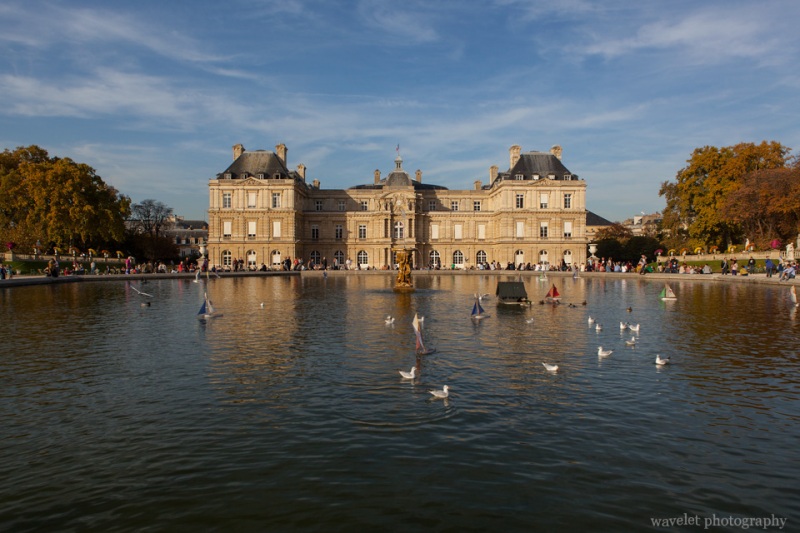
Despite the lush greenery and flowers, the Luxembourg Gardens isn’t designed to be secluded; instead, it features wide vistas and orderly rows of trees, giving it a grand, open feel, said to be modeled after the Pitti Palace in Florence. The Luxembourg Palace now serves as the seat of the French Senate. The green iron chairs around the large circular pond were nearly all occupied, mostly by locals. Many parents were helping their children launch model sailboats into the water. For a Friday afternoon, Parisians seemed remarkably leisurely—I later learned about the 35-hour work week; perhaps the weekend truly begins on Friday afternoon here.
The western side of the park features wooded areas and children’s playgrounds, offering everything from pony rides to rollerblading. Nearly a hundred sculptures are scattered throughout the grounds.
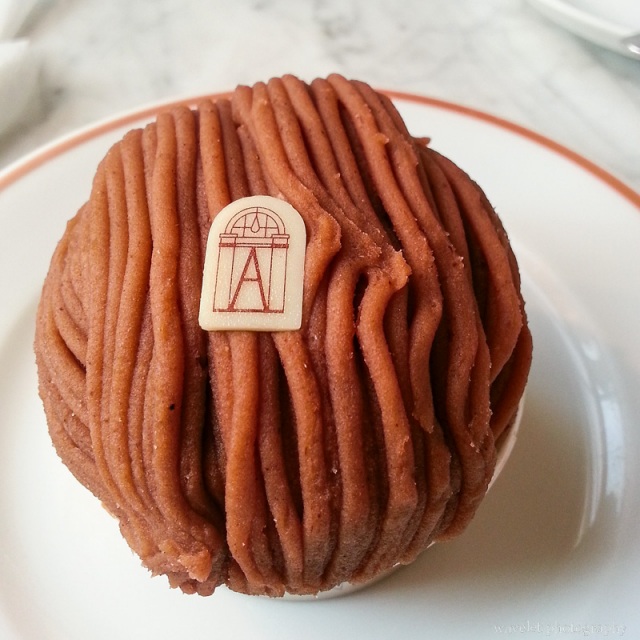
Near the northwest gate and the Musée du Luxembourg sits Angelina, a famous Parisian tea house. While the original is next to the Tuileries Garden, this branch is much smaller. Angelina is renowned for its hot chocolate and the noodle-like Mont Blanc. Wary of too much sweetness, we shared one Mont Blanc and a coffee.
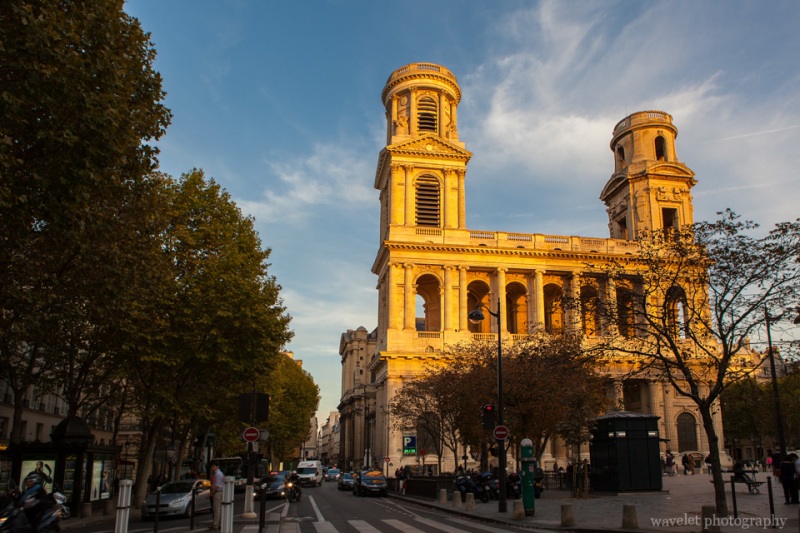
Walking back along Rue Bonaparte, we soon arrived at the Église Saint-Sulpice. Construction began in the mid-17th century and spanned 130 years. Ultimately left unfinished due to funding issues, its north and south towers remain asymmetrical to this day. It is the second-largest church in Paris after Notre-Dame, though its western facade is far more austere. Many key plots from The Da Vinci Code unfold within these walls.
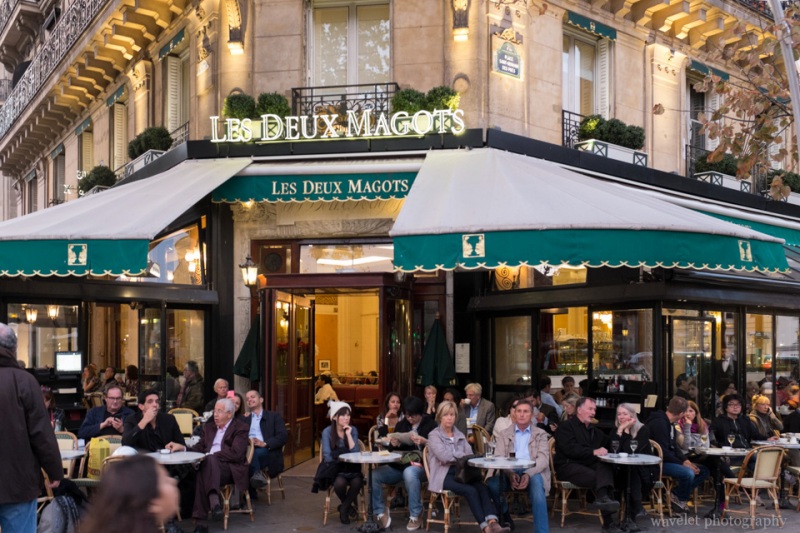
Heading further north, we returned to the vibrant heart of the Left Bank: Saint-Germain-des-Prés. The area is most famous for its two legendary cafés, Les Deux Magots and Café de Flore. These spots were icons of early 20th-century literary and artistic history—you can practically point to a chair where Picasso sat or a table where Sartre dined. Of course, that was a century ago; today, they feel more like landmarks for tourists to capture a slice of that past life.
Across the street from Café de Flore is the Abbey of Saint-Germain-des-Prés, one of the oldest churches in Paris and the namesake of the district; Descartes is buried here.
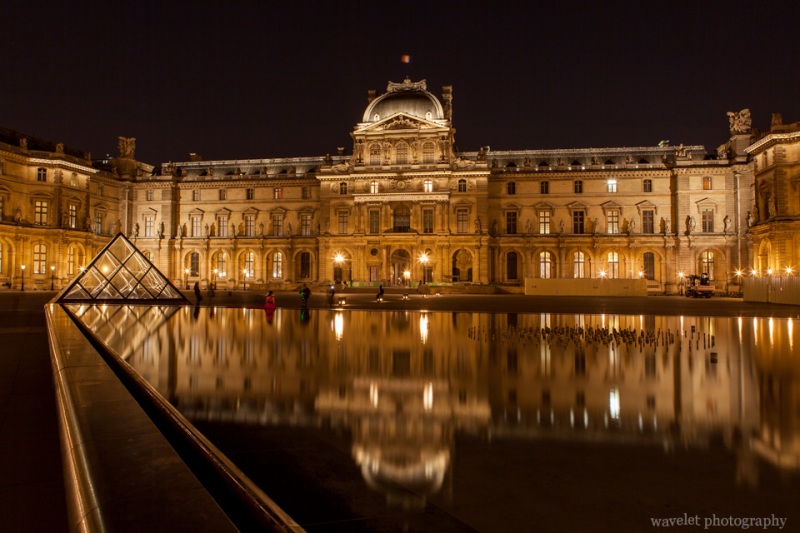
Back at the hotel, we had some time before dinner, so I went out to catch the city lights. The tourist sights in Paris are all pretty close; the walk from our hotel to the Louvre took barely fifteen minutes.
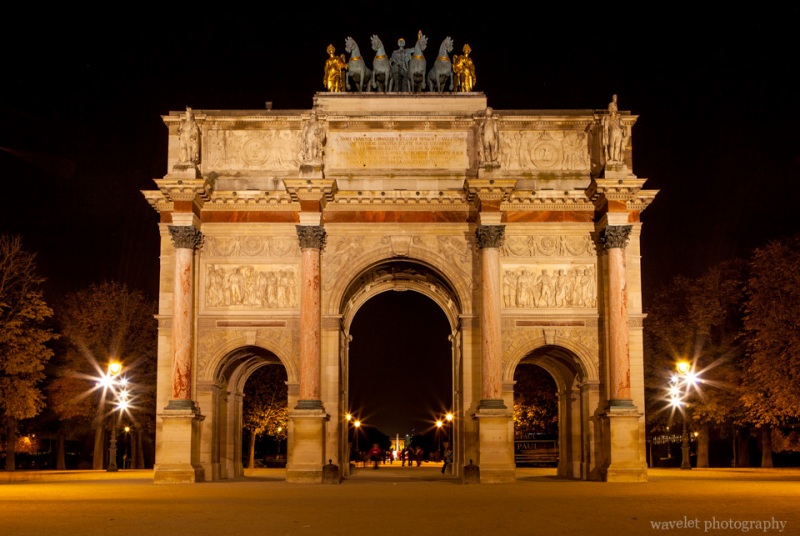
In the plaza before the Louvre stands the Arc de Triomphe du Carrousel. From here, you can see the Obelisk at Place de la Concorde and the Arc de Triomphe at the far end of the Champs-Élysées. I waited quite a while for a clear shot without people in the frame. A cyclist rode past me and called out, “What a city!” Yes, what a city!
2014.10.30OpenStack summit in Paris was held in early November, that’s why we went to Paris at this time of the year. We were worried about the weather because supposedly it’s the time that cold weather starts moving in and it sees more rain. However, it turned out to quite extraordinary – there were much less tourists in early November, leaves started turning yellow, and we were so lucky to have some abnormal warm days. The best of all, we didn’t miss the rain, but only once. Who said that Paris is most beautiful in the rain?
We planed 9 days in Paris, including the conference days. We thought it would be more than enough, but in end we didn’t have to time to go to places, such as Versailles or Monet’s Garden, let alone countless museums in the city.
The plane landed at Charles de Gaulle Airport at 9:30am. We called a taxi to go into the city. The road was crowded, it’s about 11 o’clock when we got to the hotel. We’d stay at Citadines Saint-Germain-des-Prés Paris for 3 nights. The hotel is located at the 6th arrondissement, right next to the Seine and across the street from the Pont Neuf. Within the walking distance to many attraction, the hotel is a perfect starting point to explore the Left Bank of Paris.
As usual, after we settled down, my wife stayed in the hotel to have some rest and I had a walk to know the neighborhood. Along the Seine and towards the direction of Notre Dame, after passing Fontaine Saint-Michel, I walked until I got to the Petit Pont. It’s 5th arrondissement here. On my left, it’s the Parvis Notre-Dame; on my right, it’s the center of Latin Quarter.
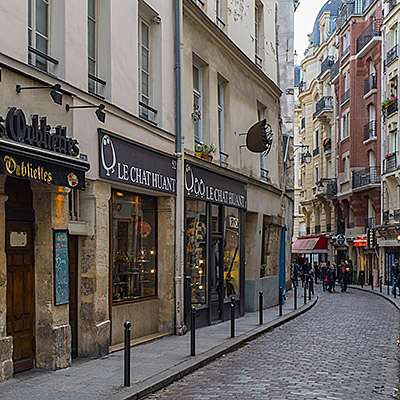
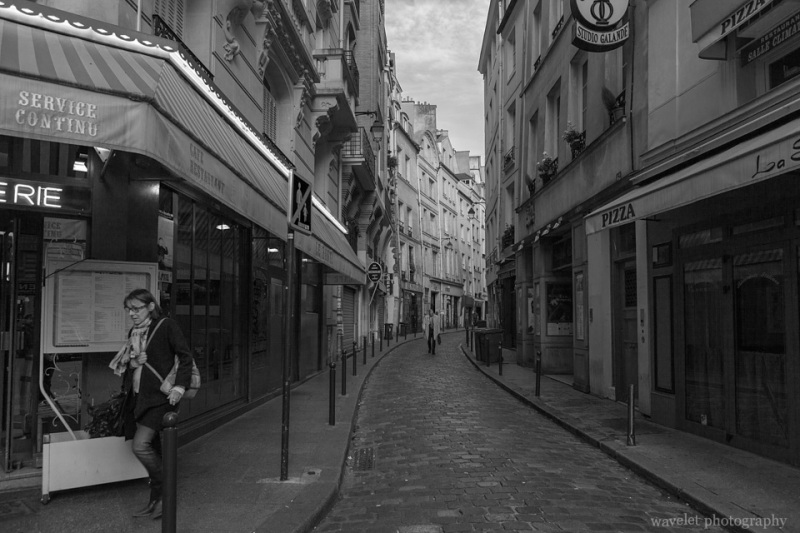
Turned right on Rue Saint-Jacques, there is a small street on the left hand side, named Rue Galande. It’s short and narrow, but some well preserved medieval houses and cellars can be found on this street. The street appears both in “Midnight in Paris” and “Before Sunset”.
On the left of the street, there is a small and humble church, Église Saint-Julien-le-Pauvre. In fact, it is one of the oldest churches in the city. It’s history can be traced to as early as the 13th century. It looks plain and even dilapidated, a stark contrast to Notre-Dame across the river.
The garden north to the church is called Square René-Viviani. It’s just an ordinary garden except there is a 400-year-old locust tree in the garden. It’s said that that’s oldest planted tree in Paris. People enjoyed their lunch sitting on the lawn. There is a quite strange-looking fountain, called Saint Julien fountain, in the center of the square. which is built in 1995. This is a good place to overlook Notre-Dame across the river.
Next to the garden is the famous Shakespeare & Company Bookstore. Located at the French cultural center, the bookstore’s focus is selling English-language literature. This is in fact not the old bookstore that Hemingway and Joyce spent a lot of time with. The current bookstore on the Left Bank was build in 1951, and inherited the original bookstore’s style and name. When I got there, Jimmy Page was there to meet his followers and signed his biography for them. At the end of moive “Midnight in Paris”, there are several shots of the bookstore.
Returned to the street directly facing the Petit Pont. This is a busy street with many visitors and locals. Rue Saint-Séverin is on the right side, but you won’t be able to find a hint of quietness and arty style in Rue Galande. There are a lot of souvenirs and restaurants. You are also taste Korean, Mediterranean or many other regions food here as well.
I came back to the hotel. My wife and I had a lunch in a Cafe by the river. It’s 3pm now. We first walked around following my earlier route. When we returned to Shakespeare & Company Bookstore, Jimmy Page and many book shoppers had left. We had a chance to enter the bookstore. It’s dark and crowded, stacks and books were all over the place. It’s said that you can dig out some books that cannot be found elsewhere.
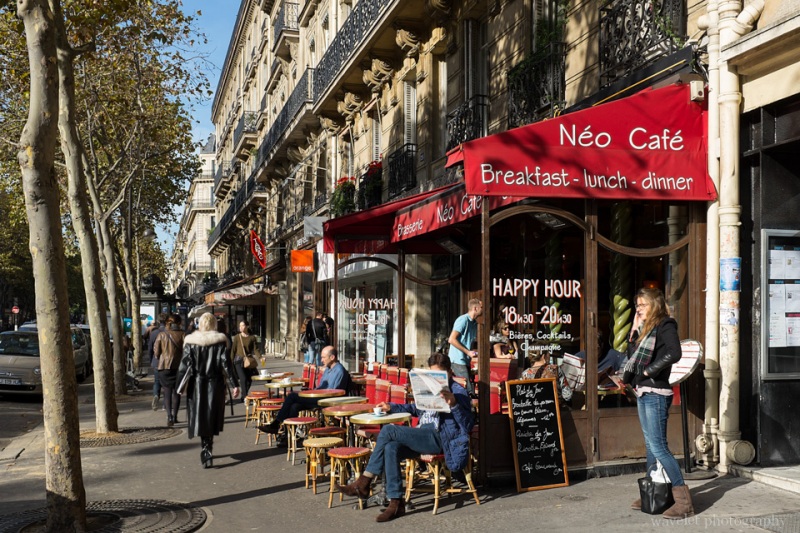
Latin Quarter is an area between the 5th and the 6th arrondissements. Compared to the area around Place de la Concorde where we lived later, the later one is high-grade and luxury, but Latin Quarter is active and lively, bookstores, cafes and restaurants are everywhere. Locals are having coffee by the busy road, watching people coming by, totally ignore the dust and loudness on the street. The cost of living is lower because a lot of low to mid-end shops are packed here. With Paris’ oldest university, Sorbonne, and a number of other higher education institutes in the district, Latin Quarte has always been the place where students and intellectuals want to hang out. Even today, when many quirky bookshops have given way to the chain clothing stores, the name alone evokes images of romantic and unconventional old Paris.
Île de la Cité divides the Seine into two at this area. Passed the Pont Neuf, it’s Notre-Dame. At 4pm, visitors waiting for entering the cathedral were still winding through the entire square. We walked along the river to the back of Notre-Dame. Square Jean XXIII is a quiet and peaceful park. From here, one can see the spire of Notre-Dame and the flying buttresses in long and beautiful shapes. One of major scenes in “Midnight in Paris” was shot here.
Pont de l’Archevêché at the east of Notre-Dame is the narrowest bridge on the Seine. Every bridge on the Seine has love locks, but Pont de l’Archevêché and Pont des Arts are two bridges that have enormous amount of them. So many love locks with so much weight are put on the bridge so that it creates a danger to crumble the bridge. Paris government had to remove them all together to save the bridge, but soon they came back again.
It passed 5pm when we returned to the hotel. One good thing in practical sense about our hotel is that free hot water is provided at the lobby. You cannot always drink coffee by the road. It’s still the golden hour even in the city. I grabbed my cameras and tripod and headed out again.
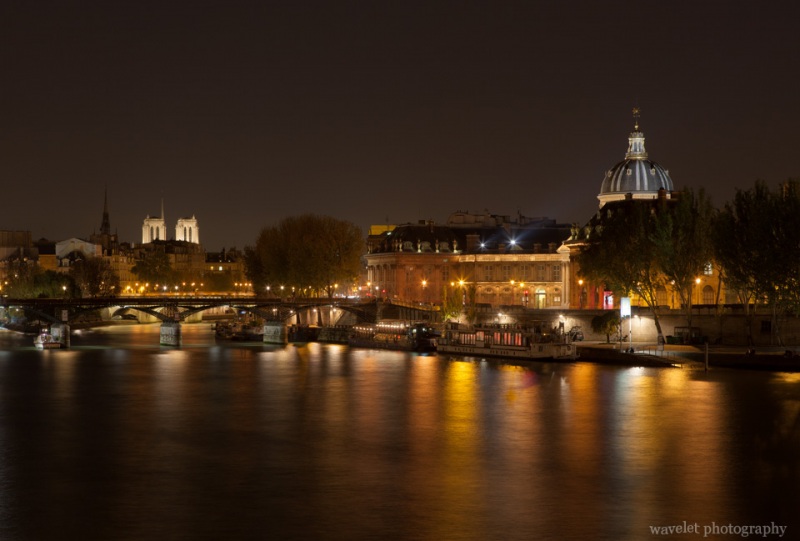
The dome of Institut de France is not the grandest compared to other great domes in Paris, but I found that some best pictures of mine were taken here. The following photo is selected because it has all the elements, the sunset, the Eiffel Tower, Institut de France, Pont des Arts and the western end of Île de la Cité.
Pont Neuf in fact is not “new”. On the contrary, it’s the oldest bridge on the Seine. The bridge has to sections that connect the Left Bank, Île de la Cité and the Right Bank. The body of the bridge was lighten up during the night and reflected in the river – a beautiful scene for photography.
After dark fell, I took some random shots in the streets of Île de la Cité.
We had our lunch at Chez Fernand, 5 minutes walk from our hotel. It serves French cuisine. Tasted good.
2014.4.5I got up in the dark and went to Alto Vista Chapel again. Crosses are erected along the road leading to the chapel. This time, a group of prayers gathered by the road and walking slowing towards the chapel.
It’s about 5:30am. The sky was cloudy, it’s not possible to see the sun rising on the horizon. The eastern side of Aruba is constantly attacked by trade winds from the Atlantic, waves moved in and hit the shore fiercely. Before the sun rises up, it’s quite foggy by the coast.
I returned to the Alto Vista Chapel. Prayers were sitting on pews, listening to the priest. Isn’t this spiritual?
Our plan of the day was to explore island’s inland and eastern region. The inland of Aruba is almost featureless. The highest hill is only 617 ft (188 m). However, there are several unusual sites of rock formations scattered at the heart of the island. They are unique in that, the rocks, unlike those with volcanic or coral origins allover the island, are monolithic tonalite boulders, rising above the desert soil.
We first stopped at Casibari Rock Formations. Steps were built to allow visitors to climb to the top of the boulder, which provide a panoramic view of the island.
A little to its east, it’s Ayo Rock Formations. The area is bigger than Casibari, with more strange-shaped rocks.
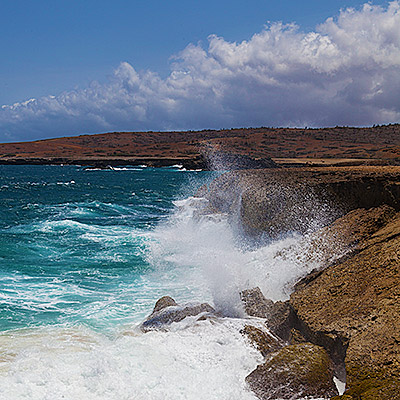
We kept on driving to one of Aruba’s most popular attractions, Natural Bridge. The last part of the road is unpaved, but it’s very easy to drive. The bridge was a formation of coral limestone, spanned more than 100 feet. It actually collapsed 10 years ago, but the view is still impeccable. Facing the open sea at Aruba’s very north shore, with lashing waves crashed over stark rocks violently, against the backdrop of dreamy sky in deep blue color. There were some good photo opportunities.
There is a bar on site overlook the collapsed bridge. A group of tourists came and the guide asked them to line up on top of the bridge. They were singing and dancing and really making a lot of fun of it.
1.5 miles northwest to the Natural Bridge, it’s Bushiribana Ruins, an abandoned gold mill that was once used to process ore from mines in the nearby hills. It’s built in 1825, less two hundred years ago, but probably because of the stark contrast to its surroundings, the ruins invokes feelings of much older history.
Near Bushiribana Ruins on the beach, there is a site where people stacked rocks up, and over time became the Wish Rock Garden. The similar scenes can be found in many places at Aruba’s northeastern coast.
We had the late lunch at La Trattoria el Faro Blanco by the California Lighthouse, then retired to our hotel. At the evening, we had the farewell party on the beach again. My wife’s company was quite generous to reward top performers, but someone has to write a big check for it.
We left Aruba in the second day morning. Most tourists in Aruba are Americans, so Aruba has an agreement with the United States government to have US Customs at the airport. This time, we had the connection flight at JFK airport, and we returned to our home in the afternoon.
2014.4.4In the morning, I got up at 6:30 and went to Alto Vista Chapel to shot sunrise. Someone said watching sunrise at Alto Vista Chapel is a spiritual experience, but it took me much longer time to get there than I though. The sun already rose up.
I drove about a mile north off road. Aruba’s northeastern beach is rocky. I didn’t want to get the tires damaged so I stopped and took some pictures of the rocky landscape. On the surface of the beach, there are a lot of igneous rocks, broken and rugged. The other type looked like coral reef, mostly beneath the surface. They seemed to be composed by narrow and parallel pipes in rock formation.
Returned to the hotel, after having the breakfast, we set off to see some landmarks of the island. Driving to the north, the road runs along the coast. Beaches become quite narrow and sand are coarse. There are no grand hotel anymore. Between Hadicurari Beach and Malmok Beach, not far from the coastline, there is a small shipwreck. A more famous shipwreck is Antilla Shipwreck, located between Malmok Beach and Boca Catalina Beach, further in the sea and cannot be seen from the coast. It’s a popular place for scuba diving.
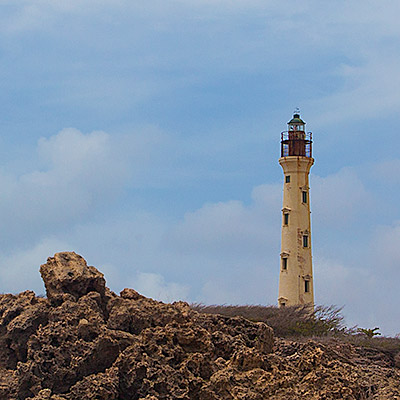
At the very north tip of the island, it’s California Lighthouse. It’s named after another ship wrecked nearby. Adjacent to the lighthouse is an Italian restaurant called La Trattoria el Faro Blanco. Both the lighthouse and the restaurant sit on a hill. The balcony of the restaurant offers a beautiful view of the western beaches and coastline and golf course Tierra del Sol.
We then visited Alto Vista Chapel, the place I just went to in the morning. The chapel itself itself was undergoing some construction. The surrounding area is semi-arid, almost fully covered by tree-like cactus.
The closest town to Alto Vista Chapel is called Noord, which has only a couple streets. We drove through the town back to the Palm Beach. We saw several Chinese restaurants by the road, but mostly empty. There were even a Chinese supermarket but also seemed closed. It’s said most of grocery stores and supermarkets are actually owned by Chinese in the island.
Near Palm Beach, along J.E. Irausquin Blvd. are the shopping area. We enter a store at Paseo Herencia Mall selling Mopa Mopa Artworks. These are woodcraft, masks, animal figures, boxes, with vivid colors. However, the colors are not painted on. The procedure to make these pieces are quite unique. The buds of the mopa mopa tree are boiled until they become a resin, like a gum. After adding vegetable dyes for the color, the artisans stretch the resin with hands and mouth, yes mouth, to make it into a thin sheet; then, it’s cut and applied to the wood. The tradition comes from Columbia. We bought a small fish from the store.
We went to a beach bar recommended by several locals to have the late lunch. To get to the beach, we have to cross Holiday Inn hotel. I have to say, Holiday Inn as well as Marriott are much more vibrant than Ritz-Carlton.
At the corner of Bubali road crossing island’s main road, L.G. Smith Blvd, there is a supermarket called Super Food Plaze. This is a huge place. It’s the Safeway of Aruba.
2014.4.2~3Less than two weeks after we came back from Polynesia, we were on our way to Aruba again. It was to attend my wife’s company event. We flew a red eye to get to Atlanta in the early morning, then from there, it took only 4 hours to reach this Southern Caribbean island.
This our first time flying over the Caribbean. The color of the sea was mesmerizing.
The bus took us to Ritz-Carlton Hotel, one of the newest and best hotels in Aruba. The organizer explained to us the schedule and all activities and dinner options. We checked into our room at 3pm. There were no activities on the arriving day. We waited in the room for the dinner party.
Aruba is located at the southern rim of Caribbean Sea. Only 18 mile orth of the coast of Venezuela, it is out of the hurricane zone across most of Caribbean region. Days in Aruba are always dry, warm and clear throughout all seasons. It’s sometimes windy because of trade winds from the Atlantic, but the Southwestern coastlines are mostly sheltered by the island. The party started at 6:30pm. There was nice view of the sunset from the Palm Beach.
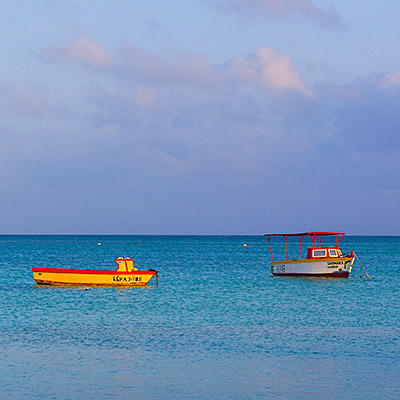
In the morning, I had a walk along the beach. Ritz-Carlton Hotel is located at the north end of Palm Beach, the 4-mile-long beach and high-rise hotel district of the island. There were several boat floating on the shallow water, some good object for photography, but the wave and direction of the light were not perfect.
I spotted a small stingray swimming at the shallow water.
Returning to the hotel, our room had a view of the northern side of the beach. Sea water near the coast are in different shades of blue. There are many water sport related small shops along the beach.
At the time when my wife had the company meeting in the morning, I went to the Hertz office at the first floor to rent a car. The agent tried to persuade me to rent a SUV. According to her, normal cars are not allowed to enter the Arikok National Park and some off-road places. My research before the trip told me that Aruba’s landscape is not that exciting, so I still decided to rent a normal car.
It’s free time after the lunch. We drove to the down, Oranjestad, the capital of Aruba, to do some shopping. Oranjestad is a busy town, tourists are everywhere and traffic is jammed. Aruba’s port is also right next to the town.
After shopping, we thought that we should go to see that other end of the island. We kept on driving to the south. On our way near the south end, we passed a town called San Nicolas, There were some deserted industrial facilities around the town. San Nicolas use to be a bustling town but now is running down.
The very south end of the island is semi-arid, covered by low bushes and dotted with tall cactus. The winding road led to a nice lagoon called Baby Beach. The water is calm and it’s good place for snorkeling.
2014.3.22It’s midnight when our plane landed at Santiago airport. Hilton Garden Inn is only 15-minute-drive away from the airport. Its free shuttle took us to the hotel. Both the facility and the room of the hotel were pretty new. We had a good sleep.
While planning the trip, we were quite struggled if we’d go to Valparaíso. Some reports say that, because Valparaíso is a port city and the city has been run down for many years, the safety issue seemed to be worse than those big cities in South America.
We figured we had to have a guide if we went there. Several tripadvisor recommended a local guide named Michael Arnold. We got in touch with him through his website and we connected in Skype. He reckoned our concern but assured us that it’s a manageable risk and touring the city with a local made it much safer than wandering around on our own. It turns out that Michael’s guide made our visit safe, fun, and at the same time, we learned a lot about the city. We can’t recommend his service enough.
We also thought back and forth about how to get to Valparaiso from Santiago. Private transportation is expensive. It would cost more than $300 round trip for two of us. In the end, we followed Michael’s suggestion to take the bus. Taxi took us to Pajaritos bus station the next day morning at 9am. The staff at the bus station didn’t speak English, but bus routes and their schedule were clearly marked. There are two major bus companies, Turbus and Pullman Bus, operating between Santiago and Viña del Mar through Valparaiso. We purchased the round-trip (ida y vuelta) tickets for 8500 Peso ($15) per person from Turbus.
The bus ride was comfortable and we felt very safe as well. It took one hour and twenty minutes to get to Valparaiso and only made a couple of stops. The bus entered the city through its main avenue, Av. Argentina. A large flea market held in the median strip of the street. Later Michael told us, it’s a good place to loss your wallet.
We met our guide Michael at the bus station. He immediately took us to the ticket office and confirmed our seats on the returning bus. Walking out of the station, Micheal told us that several days ago when he took a group of visitors for a walk during a tour, their stuff left on the bus were stolen. He’s not sure if the bus driver he had hired had anything in it, but he felt his own reputation was hurt. He checked our carrying bags to make sure they were secured. I could see he was always alert when we were out of the car and walking. He said he has been keeping a pepper spray in his pocket since the incident.
In fact, we had a very good experience throughout the tour. Michael is a German who has been living in Valparaiso for many years. He talked about the city’s tradition with great pride. The first stop he took us to is a hat shop, as Michael put it, one of many shops that try hard to retain their identities of the prosperous past. My wife bought a lovely owl necklace in the store and immediately got cheered up.
We walked along Av. Argentina towards the port. Port of Valparaiso is surrounded by hills from the south. On our right, behind a supermarket, there is a cable car, funicular or ascensore called by locals. Because of the steep hills, many areas of Valparaíso has no public transportations. The funicular railways connects the downtown and the lower slopes of the surrounding hills. There are 26 funicular railways in Valparaiso, but only a few still operate now.
We walked to the parking lot on the roof of the supermarket. While overlooking downtown and port of Valparaíso from the roof, Micheal showed us some paintings and photographs of Valparaíso’s past. The history of Valparaíso shares the similar trajectory of another city we had visited by the Magellan channel, Punta Arenas. Valparaíso used to be an important port for ships traveling between Atlantic and Pacific oceans by crossing the Straits of Magellan. It’s economical, geopolitical and cultural center of Chile at its golden age, from 1848 to 1914. However, the opening of the Panama Canal in 1914 greatly reduced the number of ships taking that route. City’s economy had been running down since then until the turn of the 21st century.
Michael drove us through the city center. Francia is one of the major avenues of the city. It led us to the other side of the valley. The narrow streets winds around the waist of the hill. We parked our car near Iglesia Las Carmelitas (Las Carmelitas church).
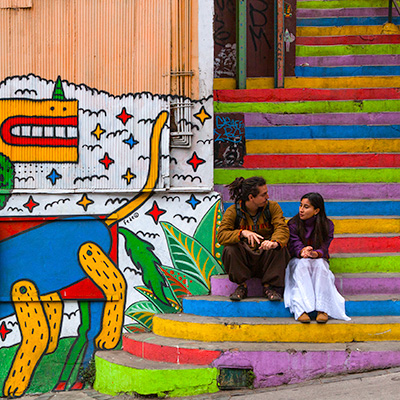
Walking on the hilly streets of Valparaíso, you will soon be amazed by abundant street art on the wall, some are just graffiti, some are quite creative and some are really arty. At the foothills of Cerro Bellavista around Rudolph area is especially popular, thanks for “Museo a Cielo Abierto” (Open Air Museum) project. The idea was formed in 1969 by a group of art students led by Professor Francisco Méndez Labbé. Many paints were created but the project was put on hold because of the political situation in Chile. In 1991, this open museum finally came into reality. Twenty murals were painted on the wall between Ricardo de Ferrari and Héctor Calvo. Many artists who had painted these murals had become world famous at the time.
Unfortunately, all murals have been damaged, in various degree, not only by weather but by vandals. Now they are under strict protection.
We walked back to Guimerà and stopped at a restaurant and a small gift shop on our way.
We got on the car and drove to Cerro Concepción area. We had our lunch, an empanada and a chicken soap, at a local restaurant. We found that we like South American food much better than North American ones.
This section of the neighborhood is booming. Many streets are under construction, old houses are turning into fancy hotels, tens of restaurants and art galleries are opened to attract people from Santiago to spend a day or tourists just get off the cruise ship. Paseo Gervasoni, a broad pedestrian walkway, stands out of other narrow and colorful streets of the area. It is surrounded by old mansions. Local artists come here to display their paintings and crafts everyday. It’s a nice place to overlook the city, the port and the sea.
Valparaíso is a famous place for bike racing. The Valparaiso Cerro Abajo Race is legendary. Bikers bike down from top of the hill to the sea in just matter of minutes. A perfect sport for GoPro comercials. (I actually saw one on our flight.)
The clear sky in the morning became cloudy in the afternoon. We walked all the way down to Plaza Sotomayor. The plaza is a landfill. The coastline was at Sotomayor Avenue in front of the Chilean Navy building. In the center of the plaza, it’s the monument that honors soldiers at navy battles during the War of the Pacific between Chile and allied Peru and Bolivia. According to Michael, Chilean guides could spend hours there.
We took Ascensor Concepción back up to the hill. This is the first funicular railway of the city, starting operation in 1883.
Murals are everywhere, on almost every house of every street of Cerro Concepción neighborhood. I’ve never seen a city this colorful. Valparaíso would be a paradise for photographers and walkers if it could become safer.
We caught our returning bus at 3:40pm at the very last minute. Michael told the bus driver to let us off the bus at a earlier station closer to the hotel, instead of going back to Pajaritos. Back to the hotel, we learned that we actually had an extra hour because daylight savings time has ended during our 10-days journey. We wish we could spend this extra hour in Valparaíso. We are so grateful to our guide Michael who made our last day of the trip a wonderful experience.
2014.3.21This was our last day at the Easter Island. We’ve already been to places that we had planed to go. You are supposed to be casual, trip plan as well, in this remote island. In the morning, we went to Ahu Tongariki again. Again, the sunrise wasn’t so perfect.
Coming back from Ahu Tongariki, we went to Ahu Akivi again and took more pictures with the statues.
Returned to our lodge, Nicole, our hostess, told us that our flight to Santiago was going to be delayed. Well, it gave us more time on the island. We went to LAN’s office at Av. Atamu Tekena and confirmed our ticket. Looked like the flight would delay for at least 2 hours.
We didn’t have to return our car until early afternoon, so we followed Nicole’s recommendation and looked for restaurant called Tataku Vave. It’s at the south part of the town passing port Hanga Piko. We had to drive a section of unpaved very bumpy road. When we got there, the restaurant was still not open for business, but their location is super.
We drove back to port O’tai and had our last meal on the island at La Taverne du Pecheur. The restaurant has two floors. We sat on the open patio of the second floor, had a nice meal and the last view of the harbor.
I want to dedicate this section of the blog to dogs and cats on the island. As in other South America countries, Easter Island has many street dogs. Nicole, our hostess, told us, the locals don’t necessarily consider dogs as human’s friend. Sometimes, they don’t treat dogs well. But the dogs we encountered were all mild and a lot of them were very cute.
Our flight eventually delayed for 3 hours. The plane took off at 4:20pm. We left this beautiful island and headed to Santiago, Chile.
2014.3.20Hadn’t got the best picture of sunrise at Ahu Tongariki, I planed to go there again. My wife wanted to go with me this time. Knowing the route already, we left the lodge at 7:30am, later than the previous day. It took us a little more than a half hour to get there. Unfortunately, the sunrise was not as good as yesterday. Cloud at the horizon turned to bright and red for a short period of time then got pale again. We didn’t even see the sun, but we did play around and took many pictures after most other visitors left.
Our plan was to see Rano Raraku in the morning. We already have the ticket. The ticket is only valid to enter Orongo and Rano Raraku once each. At the entrance, the ranger stamped the ticket. The trail splits after a short walk. Most original moais are on the right; to the left was to the crater. We decided to go to the crater first.
The trail runs up gradually and gently. For 5 minutes, the trail makes a right turn. A steeper slope leads to a gap in the western end of the crater wall. Right at the bottom of the slope, it’s a huge prone moai. Climbing up to the slope to enter the crater, the crater center is occupied by a lake, another one of three natural source of fresh water on the island. Unlike the crater lake of Rano Kau, the lake is not covered by the plants. The inner slope is mild and verdant.
The cloud has been thick. It’s drizzling as we left the crater. I felt the rain was coming so we walked back to the entrance, then the drizzle became a pour. Good we didn’t go to the other side. Sheltering from the rain that the entrance for a while, we decided to go back to town to have the breakfast. We’d not rush on this casual island. The ranger was not in the kiosk at the entrance, only a young man there reading a book. We asked him to put a note on our tickets.
It’s already 1:30pm as we returned to Rano Raraku. It’s still partly cloudy but with a lot of blue sky. The weather on the island varies all the time. The rains often come and go, last no more than 15 minutes.
Rano Raraku is the birthplace of almost all 887 moais that have ever been built by the Rapa Nui. Only half of them were transported to the ahu and ceremonial sites, the rest were either unfinished or abandoned. After centuries of erosion, those who were left behind are now buried by ashes and dirt at the south slope of Rano Raraku. The quarry becomes such a unique place where these deserted giants evokes more ancient feelings than those who stand.
Moais are scattered at both sides of the trail. Some of them stand but are buried to their busts and necks, others are lying or tilting around.
Right after passing a lookout point, we reached maybe the most photographed moais, Hinariru, on the island. They are sometimes called “the moai with the twisted neck”. I’d also call them the moai with contempt face.
Along the base of the volcano, there are many moais half-buried or failed over. It’s really like a scene of prehistory.
Walking uphill on the trail, we saw several uncompleted moai still in the process of being carved out from the volcanic rocks. Among them, there is one moai that is twice the size of the largest standing moai. It was never finished, probably because its size and weight make transportation impossible with diminished resources. The following are two large moais. By studying them, people learned how these moais were made.
Walking down the slope, we saw a moai unlike any other classic one. It is called Tukuturi, in a kneeling position with its hands on the legs. It also has a small beard and buttocks can be clearly seen. More distinctively, it is made by the reddish stone at Puna Pua, the origin of moai’s topknot, and moved here. It’s unusual and more realistic posture indicates that it might be the one of the last moais ever made.
Going further passing Tukuturi, there is a view point. The easternmost volcano of the island, Poike, and Ahu Tongariki are clearly visible.
We turned back and returned to our car at 2:30pm. We made a brief stop at Ahu Tongariki. There were only a few visitors at day time. Right next to the entrance stands a moai. It’s often called “Traveling Moai”, maybe because it has been toured around the world.
We kept on driving along island’s northeastern coast. After passing Poike, just like the southern coast line, there are many deserted ceremonial sites and villages dispersed by the ocean.
It’s definitely more than 80°F as we driving toward Anakena beach. As we reached the beach, we felt some rest was much needed. Anakena beach is the only beach that swimming is allowed. Unexpectedly, there is a palm grove by the sea. Under the trees, several temporary huts provide lunches for visitors. Sandwich, fruits and drinks were served, but grilled chicken and fish were the most delicious.
Anakena has two Ahus, a single moai named Ahu-Ature at the right, and Ahu Nao-Nao, several moais, four of them with topknot (pukao), in the central of the ceremonial site. There are several moais lying on the ground. With the white beach stretching all the way to the back of the ahu and surrounding coconut palms as the background, this is a Polynesian-looking paradise.
Going directly back from Anakena to Hanga Roa only took us 20 minutes. The road runs through mild hills right across the middle of the island.
After having some rest, we went out again to another major site that we had not visited, Puna Pau, where all of pukao came from. Just take the only road leaving the town, drive 2 more minutes after passing the right turnoff that leads to Rano Raraku, and make a left turn at “Puna Pau” sign. It only take a couple of more minutes to get a small parking lot at the bottom of the hill.
Pukao were made by red scoria rock. You can see some of these giant column scattered on the slope of the hill. On the top of the hill, there is a small crater. This is where the quarry is. Every scoria rock is marked by a number. There are about 100 of them found on the island. The hilltop also offers a nice view of Hanga Roa and the surrounding area.
Returned to Hanga Roa, we stopped at southern side of the down by the sea, near the port Hanga Piko. It’s about 8pm. The sun was low at the horizon and waves moved in. It’s a good surfing place.
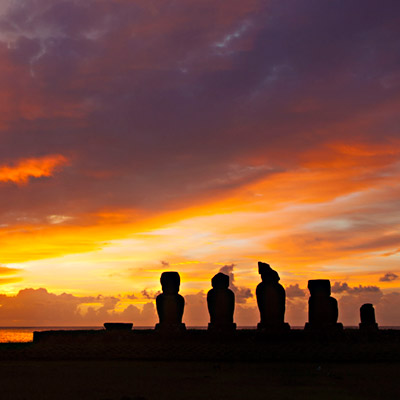
We went to Tahai again to watch the sunset. I thought the previous day’s sunset already couldn’t be better, but I was wrong. It’s glorious.
We had dinner at La Kaleta restaurant. It’s located at the far end of the harbor of the central of the town. The dinning area is open to the sea. Great view and nice food.