台南 – 庙宇

台南是台湾最早的政治文化中心,这也为这做城市留下了众多大大小小的寺庙。行走于满是民居的街道或是繁忙的闹市,几步之间就是香烟缭绕的小庙,紧紧地挤在周围房屋的间隙中。更加与众不同的地方是,台南的各色庙宇里似乎拜什么的都有,可谓五花八门。从常见的观音、妈祖,到关公和他的赤兔马,甚至还有哪吒和孙悟空。

台南中西区忠孝路上的威靈壇,供奉的是闾山派大教主许逊真君,属于道教一系。

威靈壇,台南
威靈壇,台南

就在赤楼古巷对面的万福庵。拜的不是别人,正是齐天大圣孙悟空。

齊天大聖萬福庵,台南
齊天大聖萬福庵,台南
齊天大聖萬福庵,台南
齊天大聖萬福庵,台南

位于国华街上的平天館,供的是池府千岁,唐朝的开国大将池梦彪

平天館,台南
平天館,台南

临水夫人陈靖姑,师承闾山派陈逊,是一位道姑,有保护妇幼、助产的神迹。这座庙就在延平郡王祠旁边,规模颇大,后面的二层楼上还供着观音,是一座求子护幼的寺庙。

臨水夫人媽廟,台南
臨水夫人媽廟,台南
臨水夫人媽廟,台南
臨水夫人媽廟,台南
臨水夫人媽廟,台南
臨水夫人媽廟,台南
臨水夫人媽廟,台南
臨水夫人媽廟,台南

城隍是阴界的地方官。中国各地都有城隍廟台南城隍廟是台湾最早的一座,主祀台湾府城隍威灵公。庙里有一副匾额,「爾來了」,立时让人惊出一身冷汗。它和台南天坛的“一字匾”与竹溪寺的“了然世界匾”合称“台南三大名匾”。

城隍廟,台南
城隍廟,台南
城隍廟,台南
城隍廟,台南
城隍廟,台南
城隍廟,台南
城隍廟,台南
城隍廟,台南

祀典武廟面朝赤坎楼,是台湾修建最早的供奉关公的武庙,和孔庙并称文武两庙。街对面的一座小庙的匾额是「馬使爺廳」,供的应该是赤兔马。我们在的时候正在有祭祀活动。

祀典武廟,台南
祀典武廟,台南
祀典武廟,台南
祀典武廟,台南
祀典武廟,台南
祀典武廟,台南
祀典武廟,台南
祀典武廟,台南
0 Comments

台南 – 古迹

从明末荷兰占领时期直到清末的两百五十年间,台南一直是台湾的政治中心。在清朝时,有“一府二鹿三艋舺”之称,一府的府城指的就是台南。(二鹿指的是鹿港。想不到鹿港小镇居然是当时台湾的第二大城市。)

荷据时期,明政府只在乎占领澎湖,而把台湾岛放给荷兰人占领。荷兰人在靠近海边的地方修建堡垒,称为“热兰遮城”,就是现在的安平古堡。古堡附近的安平树屋的历史要短的多。19世纪末作为仓库修建,后来逐步废弃,被榕树入侵,形成今天屋中有树,树中有屋的样子。

安平树屋,台南
安平树屋,台南
安平树屋,台南
安平树屋,台南

赤崁楼就在我们住处的对面,这里原为荷兰人在安平的东部修建的城堡,后来年久失修,大部分已经倒毁。现在的赤崁楼是清末的时候,在原来的残迹上加盖了海神庙、文昌阁等阁楼而形成的一片建筑。

赤坎楼,台南
赤坎楼,台南
赤坎楼,台南
赤坎楼,台南
赤坎楼,台南
赤坎楼,台南
赤坎楼,台南
赤坎楼,台南

郑成功占领台湾后,为教化民众、培养人才,开始修建孔庙。先是用来祭祀,后来开始讲学,为台湾儒学奠定了基础,所以又被称为“全台首学”。孔庙内的明伦堂、大成殿都是正大光明、气象庄严的建筑。孔庙周围绿树成荫、红墙围绕,也是居民休闲的场所。

孔廟,台南
孔廟,台南
孔廟,台南
孔廟,台南
孔廟,台南
孔廟,台南
孔廟,台南
孔廟,台南
孔廟,台南
孔廟,台南
孔庙,台南
孔庙,台南

延平郡王祠本来是清初当地民众为纪念延平王郑成功修建的小庙,到清朝中后期才翻建成祠堂。但是现在的建筑是1963年重建的,与原来的祠堂和日据时期的神社风格完全不同。

延平郡王祠,台南
延平郡王祠,台南
延平郡王祠,台南
延平郡王祠,台南
延平郡王祠,台南
延平郡王祠,台南
0 Comments

台南 – 城市

这次台湾之行相当仓促,临行前几天才开始计划。这才了解到台湾近代的历史是从台南开始,是台湾最早的城市。来自台湾的同事告诉我,台湾的南北风格完全不同,台北商业化、快节奏,而台南保留了更多传统的文化与风情。于是我们决定就把这次台湾之旅的行程定在台南和台北,体会一下这两座从慢到快、从传统到现代、风格迥异的城市。

从桃园机场下飞机是凌晨,乘高铁两个小时左右就到了台南。台湾高铁连接南北主要城市,每二十分钟就有车发出,人也不是很多,非常方便。不过除了台北站就在市内外,其它车站都离市区很远。到达台南站的时候已近中午。车站有免费巴士送乘客进城。

台南高鐵站
台南高鐵站
台南
台南

我们所住的旅馆是“赤樓古巷”,它所处的位置极佳,就在赤坎楼对面,除了安平区,其它地方都可以走路到达。旅馆是由旧楼房改建的民居,只有几间客房,按照日式房间布置,地上铺着榻榻米,于台湾五月闷热的天气里倒也十分合拍。台南有不少这样由旧屋改建的民居。

赤樓古巷,台南
赤樓古巷,台南

沿着赤坎楼前的民族街向西一直到金华路,是一片台南市中心北面的旅游区。赤坎楼旁边就是小吃铺林立。走过西门圆环,还有水仙宫市场、神农老街都值得一逛。值得一提的是神农老街,这并不是那种由旧街道改造、满是商业气息的所谓老街。神农街保存了很多清朝到日据时期的老宅,又有古迹、庙宇穿插其中。店家的进驻并没有改变老宅的外部风貌,这是将内部翻新,加上巧思和艺术的品味,变成文艺气息浓厚的手工艺商铺或是咖啡店。

神農老街,台南
神農老街,台南
神農老街,台南
神農老街,台南
神農老街,台南
神農老街,台南
神農老街,台南
神農老街,台南

要数台南最好玩的饮食购物街区,还属民生路到新天地小西门之间国华路的二段。小吃店鳞次栉比,有些有名气的店铺牛气的很,一天只买几十客,或是只开张一个小时,反而吸引游客排起长队,比如下面这家位于正兴街上的冰淇淋店。

正興街,台南
正興街,台南

蓝晒图文创园区位于星光三越商城对面,是一片人气旺盛的商圈。原来“文创”的意思就是充满文艺小资范儿的商店或作坊,每一家小店都打造的精致用心。面积不大,只有两三条小街的样子,适合傍晚的时候闲逛。

藍晒圖文創園區,台南
藍晒圖文創園區,台南
藍晒圖文創園區,台南
藍晒圖文創園區,台南

台南市区另一片值得游览的地方是台湾国立文学馆和孔庙周围的地带。从日据时期就存在的林百货到南面纪念郑成功的延平郡王祠,除了小商铺,这里还有不少古迹、庙宇以及纪念馆和博物馆。

莿桐花巷是正面对孔庙的一条小巷,路名是府中街,除了小吃小店外,整条街两侧种有刺桐树,绿树茵茵。外面是闷热的夏天,走进来就凉爽许多,和台南舒缓的风格相和。

莿桐花巷,台南
莿桐花巷,台南
莿桐花巷,台南
莿桐花巷,台南
莿桐花巷,台南
莿桐花巷,台南

有人说台南是台湾的京都,从精神和文化上也许有些类似,从市容上还有不小的差距。台南的大街上最常见的交通工具就是机车,对于普通人出行非常方便;但是大概排放要求不严,机油味很大,这算是我对台南最大的不满。商店的招牌多为窄条竖立的样子,这和日本的商店非常类似,但多少都有些破旧。小吃摊的卫生,如果按照美国的标准大概是不能开业的,但是实际上并没有造成什么问题。家庭式的商户没有扩大经营规模的压力,几十年都是不变的样子。这是一种低成本、慢节奏的生活形态,对于习惯于大城市节奏的我们,转换一下角度,这何尝不是另一种生存的方式呢?

台南
台南
台南
台南
安平区,台南
安平区,台南
0 Comments

Paris – Tuileries and The Louvre

2014.11.5今天Openstack只有多半天的日程,而星期三卢浮宫一直开放到晚上9点半,正好适合下午去参观。

因为事先买了参观票,结果还要到拉德芳斯(La Défense)去取。其实11月是旅游的淡季,直接在展馆买票也不会有太长的队。趁中午午饭的时间,我乘地铁到拉德芳斯。前一天刚刚来过,晚上非常冷清,中午的时候还是相当热闹。经过一场秋雨,天气又好了起来,蓝天白云,非常暖和。

Grande Arche, La Défense, Paris

从旅馆到卢浮宫要穿过杜乐丽花园。杜乐丽花园是凯瑟琳·美第奇皇后(与修建卢森堡公园的玛丽亚·美第奇同属美第奇家族)于1564年下令兴建的。公园长约500米,西至协和广场,东邻卢浮宫;宽300米,位于塞纳河与里沃利大街(Rue de Rivoli)之间。

Jardin des Tuileries, Paris

杜乐丽花园从东到西由一道宽阔的步道贯穿,两边各有一个池塘。靠近协和广场一侧的池塘呈八边形,叫Bassin octogonal。周围摆满了铁椅,天气好的时候总是被游人坐满。东侧的池塘呈圆形,除了位于中轴线上的较大,两侧还各有一个小池塘。步道两侧间或摆放着很多古典雕塑,又有露天博物馆之称。

Jardin des Tuileries and the Pavillon de Flore, Paris
Pavillon de Marsan and Jardin du Carrousel of Jardin des Tuileries, Paris

Carrousel广场连接着杜乐丽花园和卢浮宫。这里原来是凯瑟琳·美第奇建造的杜乐丽宫,几经破坏和重建,杜乐丽宫最终于巴黎公社后被拆除。原来一直封闭的卢浮宫西面露出峥嵘,成为巴黎中轴线的起点。实际上,卢浮宫并不完全在中轴线上,而是有六度左右的偏差,所以有方案在讨论重建杜乐丽宫的可能性。不但可以恢复城市景观的完美对称,而且为卢浮宫庞大的展品提供更多的空间。

The Arc de Triomphe du Carrousel, Paris

再向前走就是卢浮宫前的拿破仑庭院。这里周围的建筑是被称为“新卢浮宫”的部分,建于19世纪;而“旧卢浮宫”围绕方形中庭(Cour Carrée)的主体建筑从中世纪和文艺复兴时期就存在了。拿破仑庭院中的玻璃金字塔就是卢浮宫博物馆的入口,虽然再熟悉不过,亲身经历仍然让人惊奇不已,堪称是古典和现代艺术结合的最大胆尝试。

Cour Napoléon et pyramid (Napoleon courtyard and pyramid), Paris
Look through the Louvre Pyramid in Palais du Louvre, Paris

从玻璃金字塔进去走下扶梯,就进入了卢浮宫博物馆。作为世界上最著名的博物馆,其展品的丰富和珍贵无需赘言,《蒙娜丽莎》画像被观众里三层外三层地围住的景象也是天天出现,几个小时的时间只能是走马观花。只能说印象比较深刻的是Richelieu馆里古巴比伦的《汉谟拉比法典》石碑和亚述古城杜尔舍鲁金(Khorsabad)的遗迹;Sully馆中古埃及的文物和中世纪卢浮宫的城壕遗迹;Denon馆内的莫里恩厅(Salle Mollien)包括《自由引导人民》和《梅杜莎之筏》在内的大幅浪漫主义绘画作品。可惜的是,走到后来相机没电了,莫里恩厅里的绘画都拍不下来。

Statue of the Ancient Egyptian God Bes, Musée du Louvre, Paris
Human-headed winged bull from the palace of Sargon II of Assyria, Cour Khorsabad of Musée du Louvre, Paris
Sigismondo Pandolfo Malatesta, by Piero della Francesca, Musée du Louvre, Paris
Four Seasons Painting by Giuseppe Arcimboldo, Musée du Louvre, Paris

参观完卢浮宫,由Carrousel广场北侧的拱门走出来,便如北京的皇城根儿,立刻从皇城的庄严转成市井的喧嚣。已经是晚上八、九点,这里还是人声鼎沸,路边的餐馆到没见到有特色的。我们还是回到旅馆附近,选择了一家越南风格菜式的餐馆,Au Coin des Gourmets。

Au Coin des Gourmets, Paris
0 Comments

Paris – Montmartre

2014.11.4With an OpenStack conference scheduled for the afternoon, I still had the morning for some sightseeing. Taking Metro Line 12 from Place de la Concorde to Abbesses station, a short walk led me to Montmartre. Rising about 130 meters above Paris, this hilly district has been a magnet for artists since the 19th century. Even as the opening of the Moulin Rouge and the completion of Sacré-Cœur transformed this village of windmills into a bustling urban hub, its bohemian, anti-traditional atmosphere remained, drawing creatives to its streets ever since.

Exiting the Metro at Abbesses requires climbing a long spiral staircase, which brings you roughly halfway up the hill. Behind the station lies a small garden featuring a high wall decorated with blue lava tiles, where a few tourists were posing for photos. It turned out our pre-trip research was a bit lacking—Paris’s Wall of Love (Le mur des je t’aime) is apparently quite famous, yet we stumbled upon it entirely by chance. Completed in 2001, the wall is covered in “I love you” written 311 times in 250 languages. It is, naturally, an essential stop in the “City of Romance.”

Le mur des je t\'aime -  - \'I Love You\' wall, Montmartre, Paris
Le mur des je t\'aime - - \'I Love You\' wall, Montmartre, Paris

The streets of Montmartre are highly commercialized. We browsed through shops along the way, eventually reaching the Sacré-Cœur Basilica. The basilica was originally intended to inspire a religious revival following the French Revolution and the Paris Commune. Approved in 1873 and completed during World War I in 1914, the pure white structure sits at the highest point of the hill. Looking up from the base of the steps, the view is grand and imposing, yet it feels more like a place for quiet harmony than fearful awe. However, the area is prone to scammers posing as charity collectors; it’s best to keep your distance.

Sacré-Cœur, as seen from the base of the butte Montmartre, Paris

Climbing the front steps to the upper terrace, the view opens up to reveal the entire Parisian skyline. Many people sit on the stone steps, listening to street performers while overlooking the city.

Overlook paris from Sacré-Cœur\'s upper platform, Paris
Sacré-Cœur, Paris
Sacré-Cœur, Paris

The interior of Sacré-Cœur is vast, with small chapels lining the sides and the area behind the altar. A mass was in progress during our visit, so I only managed a wide shot from a distance.

The Chapel of Saint Vincent de Paul, Sacré-Cœur, Paris
The main dome, Sacré-Cœur, Paris
The Chancel, Sacré-Cœur, Paris

Walking around the left side of the building, the domes reveal Sacré-Cœur’s Byzantine architectural style. After a century of exposure, the white marble has begun to show its age with noticeable dark weathering. Behind the church is a quiet garden with few tourists. At the end of the path, a long set of stairs descends to the streets below, often called “Montmartre’s Milky Way.” I’ve seen many photos of these steps glowing under night lights; they are a classic Parisian sight. The scene in Midnight in Paris where Gil tells Adriana about his obsession with the city at night was filmed right here.

The rear view of Sacré-Cœur and the Campanile, Paris
The Stairway on Rue de Chevalier de la Barre behind Sacré-Cœur, Paris

Retracing our steps along the cobblestone paths, the commercial buzz of Montmartre returns just a block away from the basilica. The route is lined with portrait artists, and plenty of tourists are happy to participate. Montmartre is, after all, a place of artistic legend, once home to the likes of Dalí, Monet, Picasso, and Van Gogh.

Artists and tourists at Rue de Chevalier de la Barre near Sacré-Cœur, Montmartre, Paris

Further ahead is the famous Place du Tertre. Roughly the size of two or three basketball courts, this square is often called the heart of Montmartre and a sanctuary of modern art. Famous painters worked and lived here in the early 20th century. Today, dozens of artists still set up easels and stalls to sell their work. To me, however, it felt little different from a standard urban art festival; some even say many of the paintings aren’t actually done by the people standing there, so it’s worth being cautious if you plan to buy.

Painters at Place du Tertre, Montmartre, Paris
Rue Norvins near Place du Tertre, Montmartre, Paris

There’s plenty to discover on the hill—unique bistros, small boutiques, and the Dalí Museum around the corner make it a walker’s paradise. The most charming features are the long stone staircases; whether covered in autumn leaves or snow, they must be a romantic sight.

A restaurant sign on Rue Poulbot, Montmartre, Paris
Restaurants at Montmartre, Paris
The Stairway on Rue Chappe viewed from Rue André Barsacq, Montmartre, Paris

Pressed for time due to the OpenStack event, we grabbed a quick pasta lunch at a local restaurant. We didn’t have time for the Moulin Rouge or several other landmarks.

Restaurants at Montmartre, Paris

Returning from the meeting in the evening, we decided to visit La Défense. As Paris’s modern business district, it offers a space for contemporary commerce without disrupting the traditional character of the old city. The Grande Arche sits on the historical axis that extends from Versailles through the Arc de Triomphe and the Champs-Élysées—a perfect dialogue between the old and the new. Public transport is convenient; a single metro ride from Place de la Concorde takes you straight there. As a commercial hub, it feels safe at night. We climbed the high steps beneath the Grande Arche, though the square was unfortunately filled with tents—perhaps for a holiday event—which didn’t make for the best photos.

La Défense at night, Paris
0 Comments

Los Cabos, Mexico

2016.12.24~27Baja California, means “Lower California” in Spanish, is the Mexican peninsula that borders the U.S. state of California. On a map, it reads as a natural southward extension of California, connected to mainland Mexico by only a narrow strip of land. The entire California region was once a Spanish colony. After Mexican independence in 1821, it became Mexican territory, divided into Alta (Upper) and Baja (Lower) California. In 1848, following the Mexican-American War, Upper California was ceded to the United States and became its 31st state.

Mexico’s Baja peninsula is split into two states, north and south. Los Cabos, where we headed, sits at the peninsula’s southern tip and encompasses two main cities: Cabo San Lucas and San José del Cabo. It may not rival Cancún in scenery, history, or range of activities, but its proximity to California — just a two-and-a-half-hour flight from the Bay Area — makes it a popular tourists destination for Americans.

From the airport, unless you rent a car, a taxi is the only option, and it is not cheap. The fare to our hotel ran 50 U.S. dollars; getting to the slightly closer San José del Cabo would not save much. The road network around Los Cabos is straightforward and well maintained. Local drivers are less disciplined than those in the States, but not reckless — worth considering a rental next time. Because the local economy revolves around American tourism, U.S. dollars are accepted everywhere; there is no need to exchange for Mexican pesos.

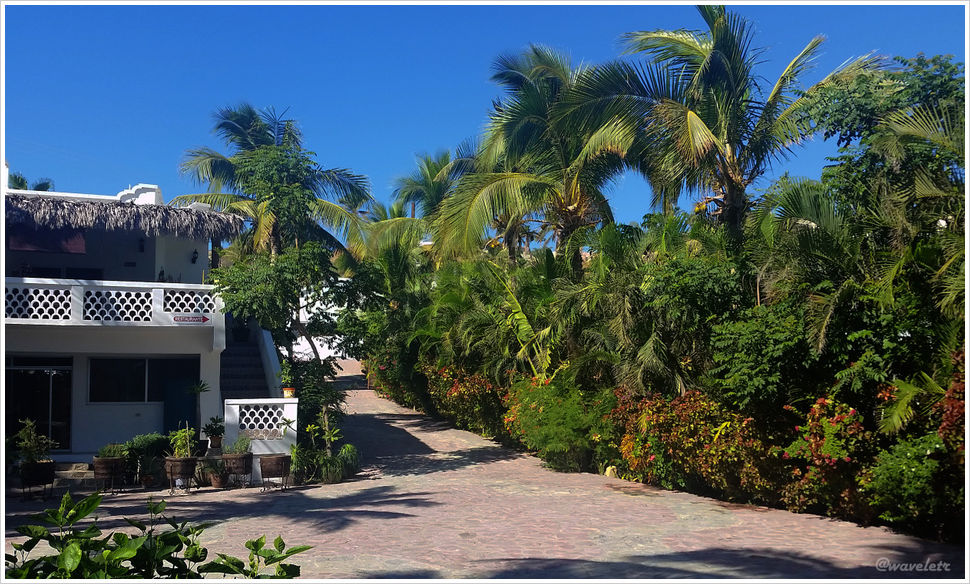
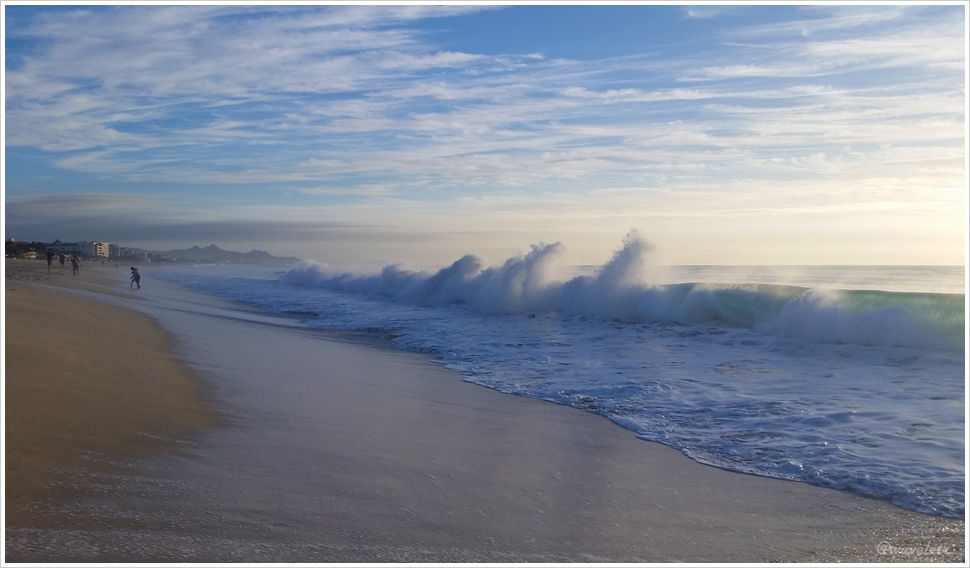
Large resorts line the Los Cabos coastline, many offering all-inclusive packages. All-inclusive hotels are convenient, but they tend to be crowded and noisy, and the on-site restaurants are mediocre at best. Having already paid, you feel reluctant to eat elsewhere. It is not a great trade-off in our view. So this time we chose a small beachside hotel, Casa Costa Azul, just outside the town of San José del Cabo. The owner lives on the premises, and the family runs the entire operation. The hotel sits right on the sand. From our room we could see the ocean and hear the waves. Step outside and the beach is there, uncrowded. We walked along the shore every morning and evening. This was a genuine vacation.

Casa Costa Azul, San José del Cabo

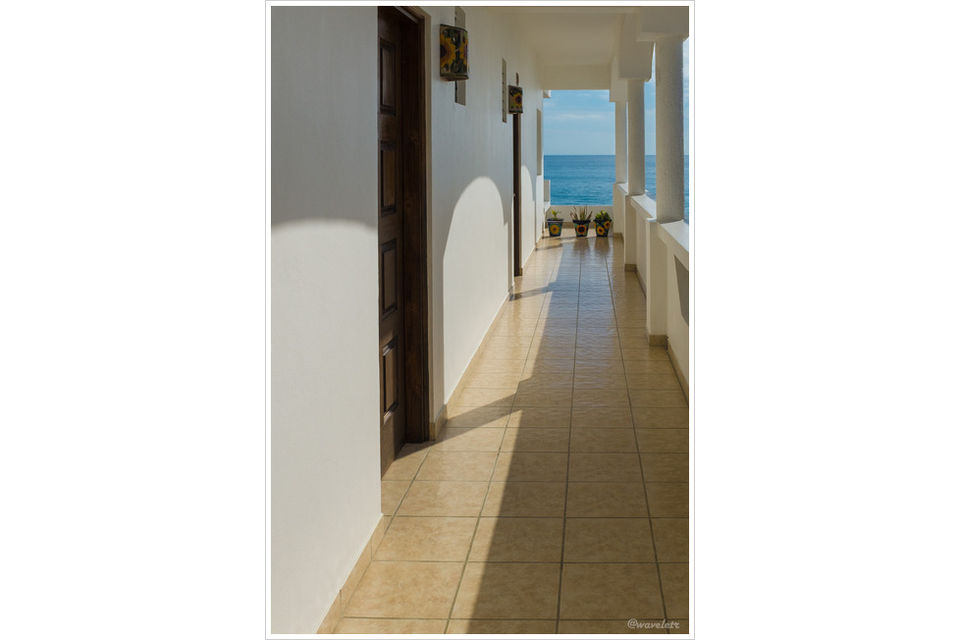
At the center of Casa Costa Azul is a small garden, tended daily by gardeners. A two-story white building houses the dining area, breakfast is included, but lunch and dinner must be arranged with the hostess each day, though the restaurants in town are a better bet. The four-story hotel building faces the beach and is attractively built, with spacious, clean rooms. The end units have balconies directly overlooking the beach, but every room offers a view of the sea.

Casa Costa Azul, San José del Cabo

Los Cabos lies within the Tropic of Cancer. Year’s end falls in the dry season, no rain at all. The locals considered the days we were there cold; sitting outside in the evening did call for a light jacket. Still, it was far warmer than Northern California. Even overcast mornings cleared by noon into brilliant sunshine. With nothing planned, lounging in a beach chair or a hammock by the sand was pleasure enough.

Casa Costa Azul, San José del Cabo

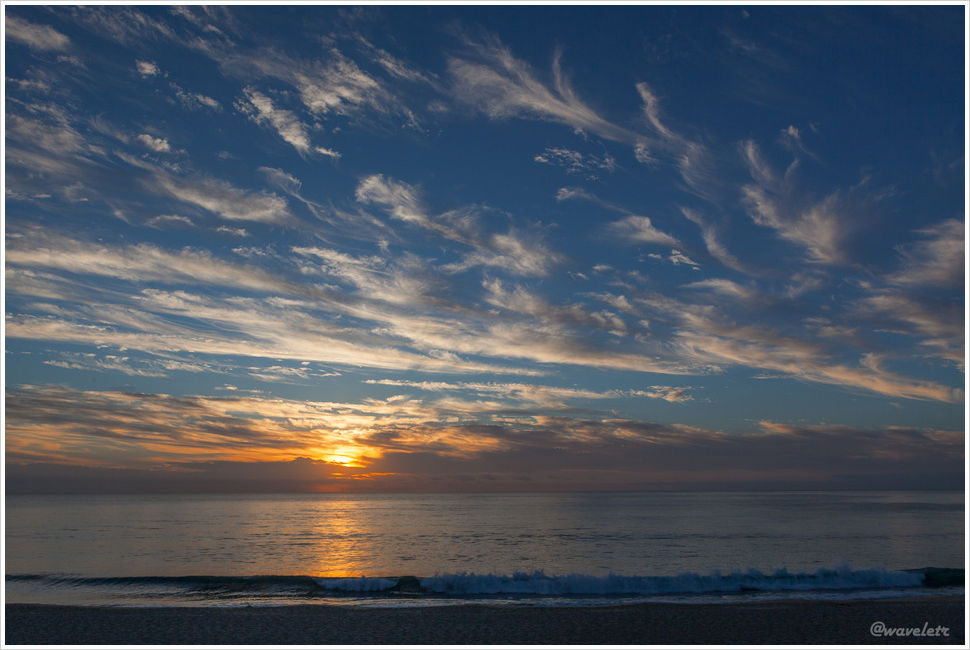
The coastline stretches a long way. Walking east, you can reach the hotel district of San José del Cabo, only three to five kilometers, not far at all. The peninsula’s eastern shore faces the Gulf of California, making this one of the few spots on North America’s west coast where you can watch the sun rise over the water.

Beach near Costa Azul, San José del Cabo

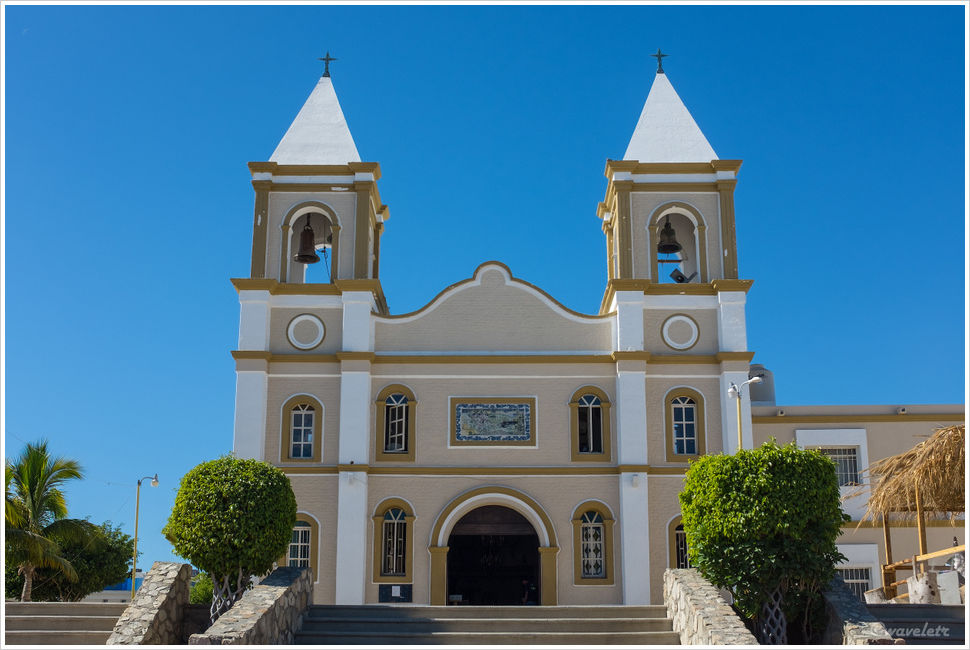
On the second day, around noon, we set out for San José del Cabo. The town center is about 10 kilometers from the hotel. A taxi should cost under 10 dollars. Perhaps because it was Christmas Day, the cab never showed, and the hotel owner drove us himself. In the early 18th century, Spanish settlers established a mission near San José del Cabo; within a few years it was burned down by the local indigenous people. The church that followed was used as a barracks during the Mexican-American War and sustained heavy damage. The current structure was rebuilt after a storm in 1918.

The main square in San José del Cabo is Plaza Mijares. On one side stands the church; on the other, a tall Mexican flag flies above a memorial plaza. During the Mexican-American War, San José del Cabo was occupied by American forces, and Mexican defenders mounted a three-month siege. The plaza is named after Lieutenant José Antonio Mijares, who was killed in the fighting. This battle played a part in keeping the Baja California peninsula under Mexican sovereignty after the war.

Church of San José del Cabo

Tourism in Cabo took off in the 1960s and 70s, yet San José del Cabo has preserved much of its Spanish colonial culture and character. Without the clamor of Cabo San Lucas, its compact downtown — five or six blocks at most — is lined with craft shops and galleries. The restaurants feel less commercialized than those in Cabo San Lucas, and several are genuinely good.

Jazmin's, San José del Cabo

That afternoon we took a taxi to browse the beachfront hotel zone and the shops in the newer part of town, then rode a city bus back to the old center in the evening. Because it was Christmas, many shops and galleries were shuttered. We had dinner at The View, a restaurant on Plaza Mijares. Its second-floor terrace overlooks the entire church square.

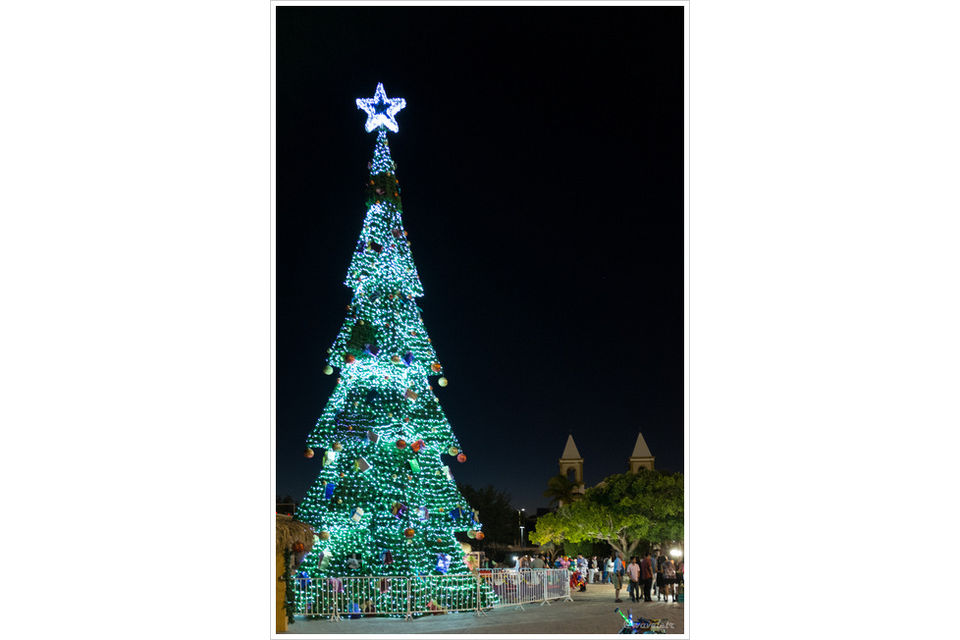
Christmas tree in Mijares Square, San José del Cabo

Cabo San Lucas is about 30 kilometers from San José del Cabo — a taxi ride of 20-odd dollars. Buses run between the two cities, but there seem to be no marked stops along the way. Locals know where to wait, but challenging for visitors. On day three we took a taxi to Cabo San Lucas at noon.

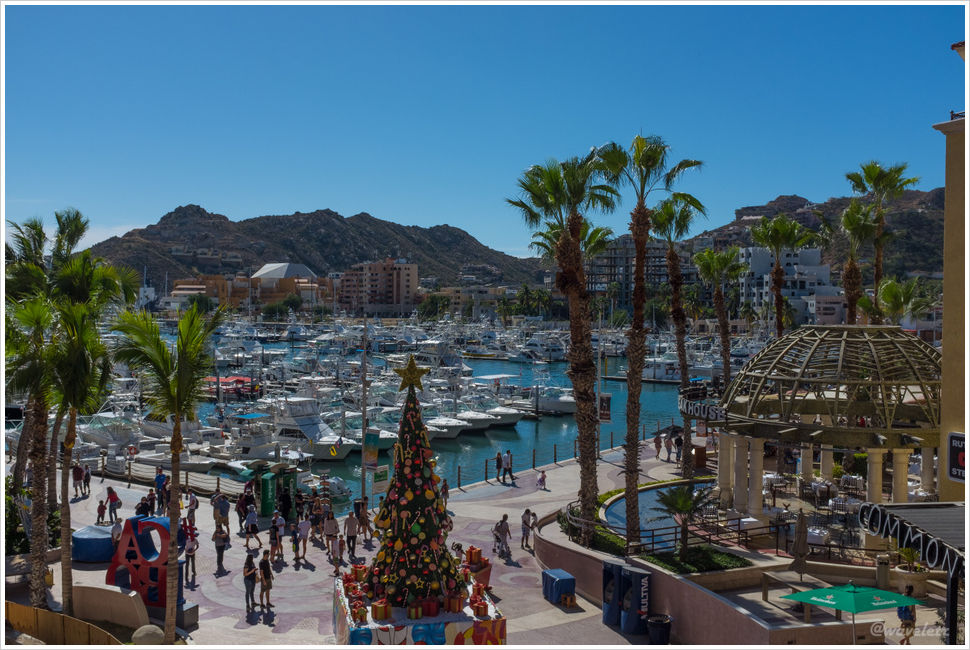
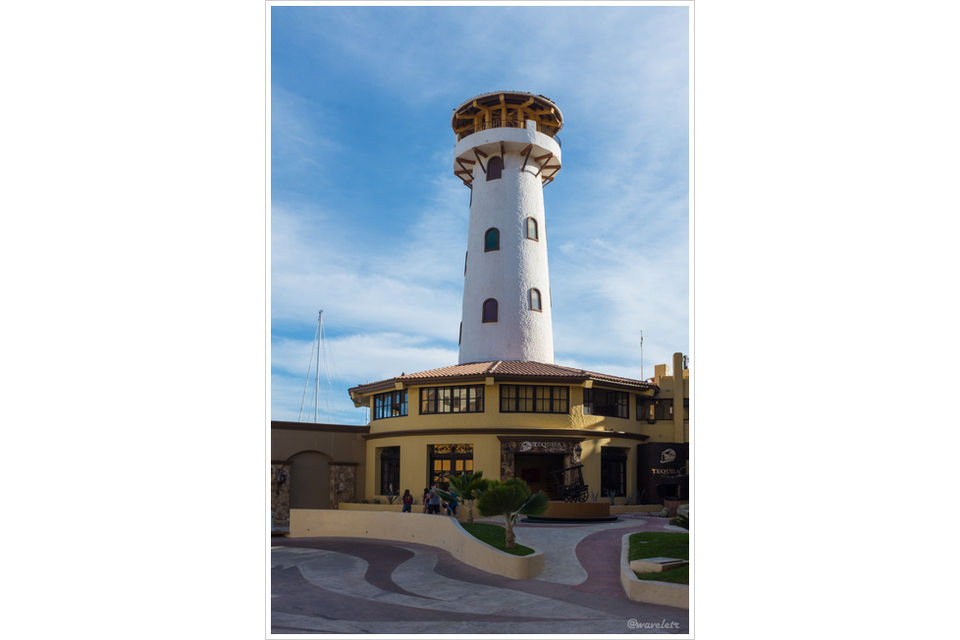
Compared to San José del Cabo, Cabo San Lucas is a full-blown party town. It’s the kind of place where spring breakers come for the beach and the nightlife. The main streets look like any other Mexican city, but plenty of shops, bars, and restaurants encircling the harbor could pass for an American waterfront mall.

Cabo San Lucas
Cabo San Lucas

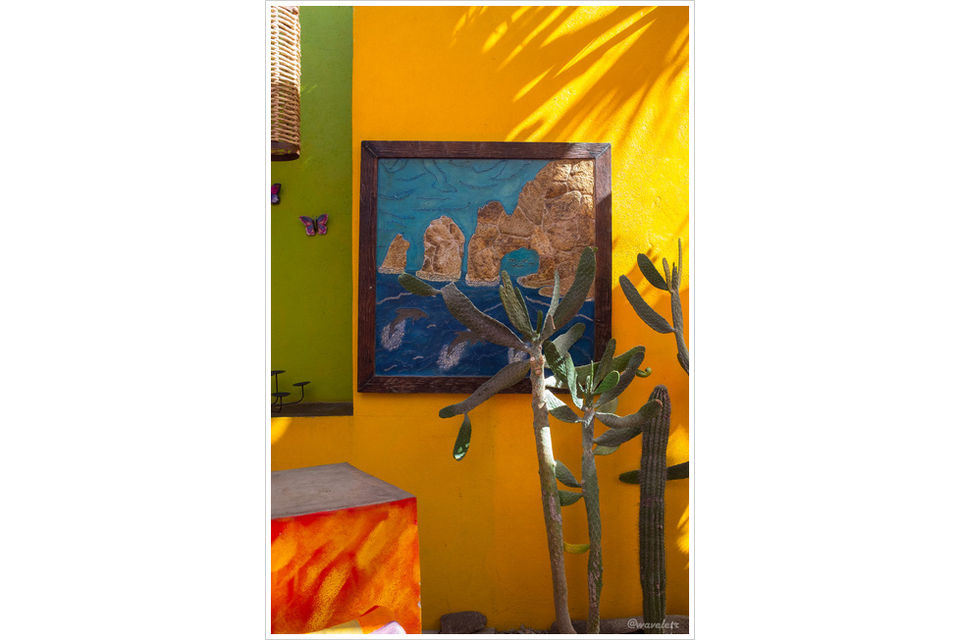
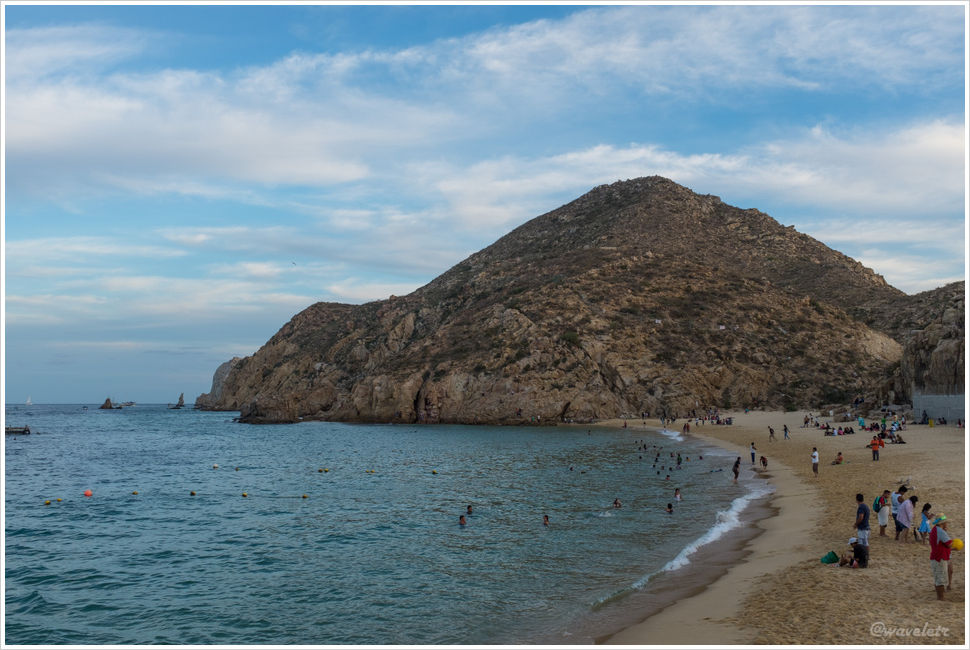
One of Cabo San Lucas’s landmarks is the rock arch at the peninsula’s tip, jutting into the sea like an elephant’s trunk. We followed the harbor around to the end of the road, only to discover that the arch can be neither reached nor seen from this direction. Beyond the harbor’s commercial fringe, the area belongs to locals at leisure.

Cannery Beach, Cabo San Lucas

On our last day we departed at noon and flew back to San Jose, California. The Los Cabos trip had no packed itinerary — relaxed, unhurried, and only a two-and-a-half-hour flight away. A solid choice for a short recharge.

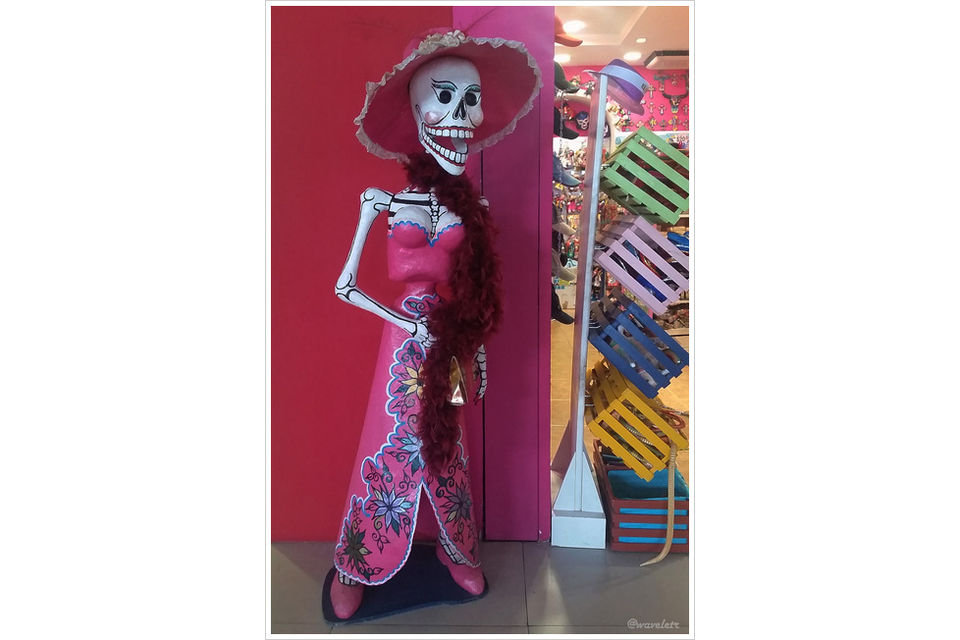
Skull in Los Cabos Airport
0 Comments

Paris – Place de la Concorde and Opéra

2014.11.3The sky was heavily overcast in the morning. A rainfall seemed inevitable. Skipping breakfast, I slipped out for a quick stroll first. The streets were still quiet. Just around the corner stood the Église Notre-Dame-de-l’Assomption. It’s a tiny church; the entrance was covered in fresh flowers and candles, the door was open, but no one was inside yet. Across the small square, the fashion stores were fully lit, though clearly not yet open; perhaps the lights stay on all night.
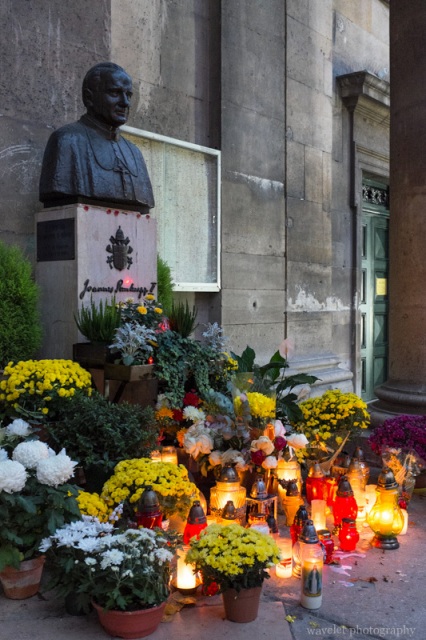
Église Notre-Dame-de-l\'Assomption, Paris
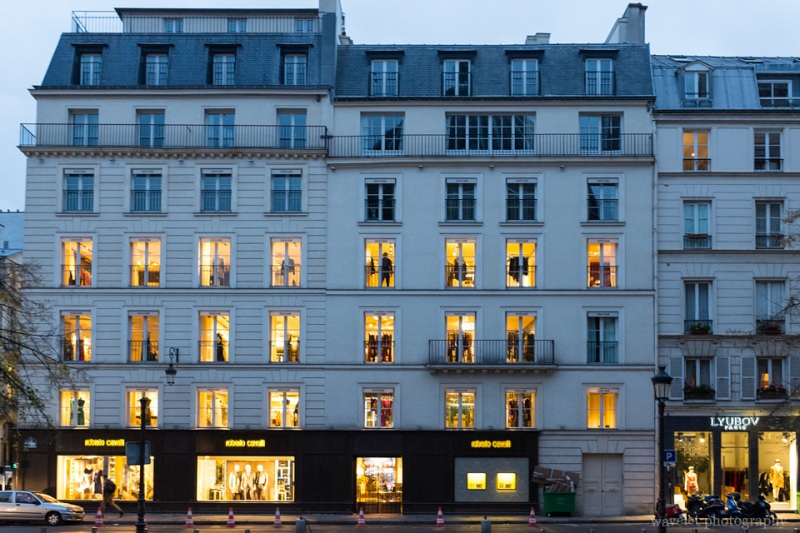

Shops near Place Maurice Barrès, Paris

Walking past Rue Cambon, I reached the Tuileries Garden and Place de la Concorde. During the French Revolution, this was known as the Place de la Révolution; Louis XVI, Lavoisier, Danton, and Robespierre were all sent to the guillotine here. After the Revolution, it was renamed Place de la Concorde, likely to draw a line under that bloody history. At the center of the square stands the Obelisk, a gift from the Viceroy of Egypt. Flanking the Obelisk to the north and south are two fountains. The outer ring of each features six statues holding goldfish, their spouting water converging on a two-tiered central platform. Below the platform sit four statues: the northern La Fontaine des Fleuves symbolizes rivers and harvest; the southern La Fontaine des Mers symbolizes the ocean and fishing. The fountains’ details are intricate, and the gloomy weather made the carved nuances stand out sharply in the lens.
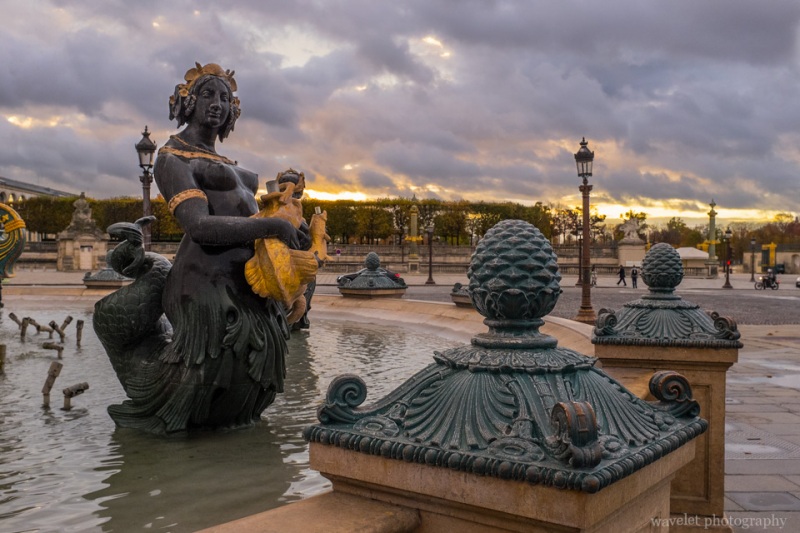
La Fontaine des Fleuves at Place de la Concorde with Jardin des Tuileries in the background, Paris
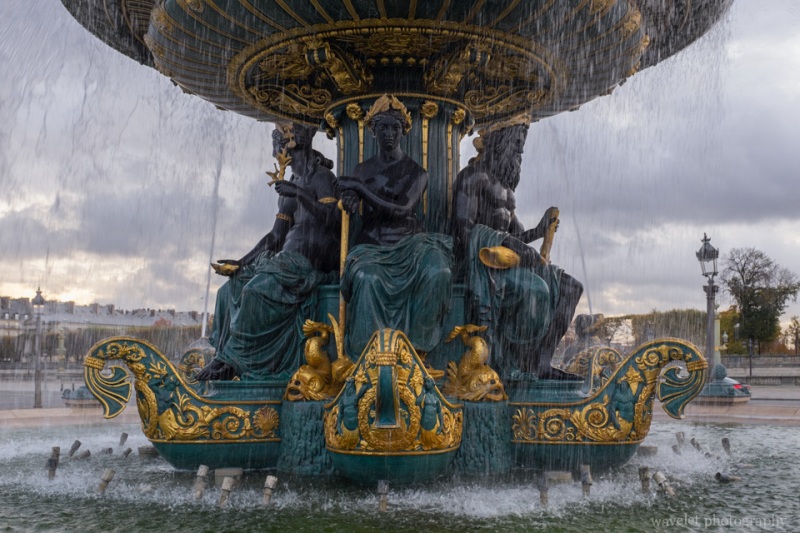

La Fontaine des Mers, Place de la Concorde, Paris

I walked back toward the hotel along one side of the Tuileries Garden. The garden displays numerous statues, mostly classical works, but there are also modern sculptures like this one.
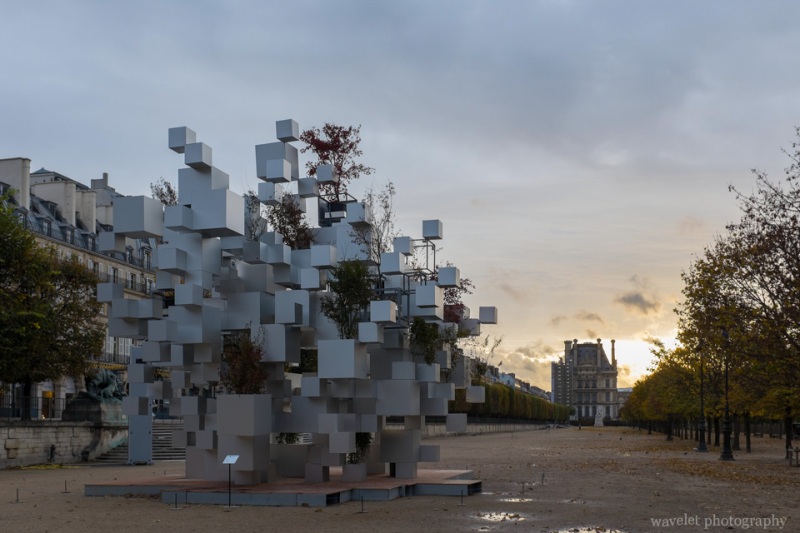
Many Small Cubes by Sou Fujimoto in the Tuileries Garden, Paris

The morning was reserved for visiting the Musée de l’Orangerie. It sits in the southwest corner of the Tuileries, close to the Seine. Perhaps because it wasn’t the weekend, the crowd was sparse, and buying tickets in advance was unnecessary.
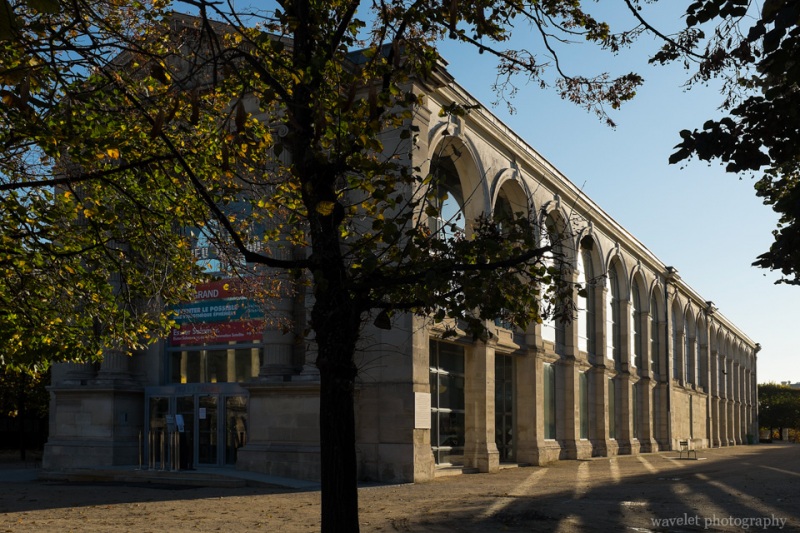
Musée de l\'Orangerie, Paris

The Musée de l’Orangerie isn’t large, nor does it share the fame of the Louvre or the Musée d’Orsay, but its collection is highly specialized. The main draw, undoubtedly, is Monet’s massive Water Lilies. There are eight of them, split across two specialized exhibition halls. This is also one of the spots in Midnight in Paris where “the pedantic one” gets to show off. Photography isn’t allowed in the Water Lilies halls; the image below is from the internet.
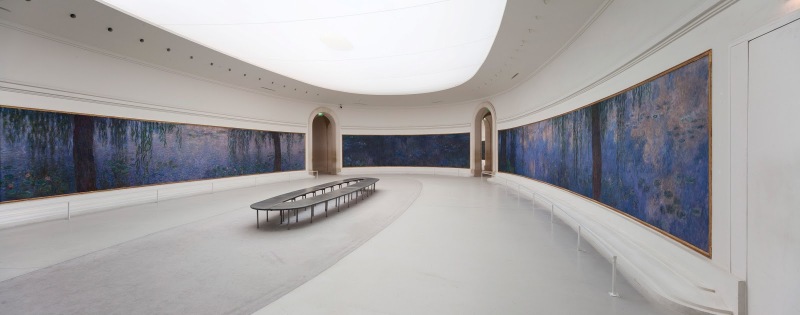
musc3a9e-de-le28099orangerie

The lower-level exhibition halls also display many masterpieces, including works by Renoir, Cézanne, Picasso, and Matisse.
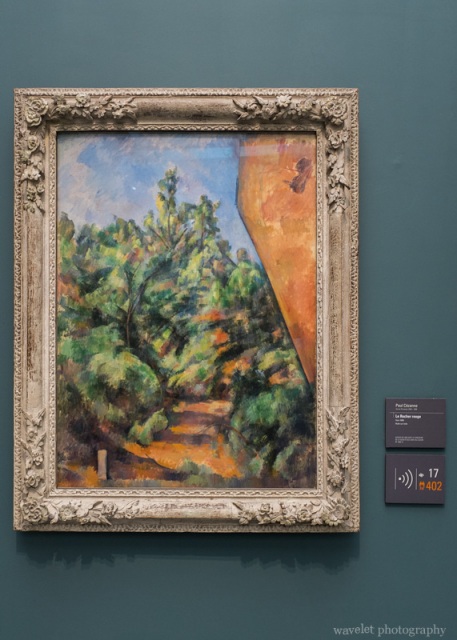
A painting by Paul Cézanne, Musée de l\'Orangerie, Paris
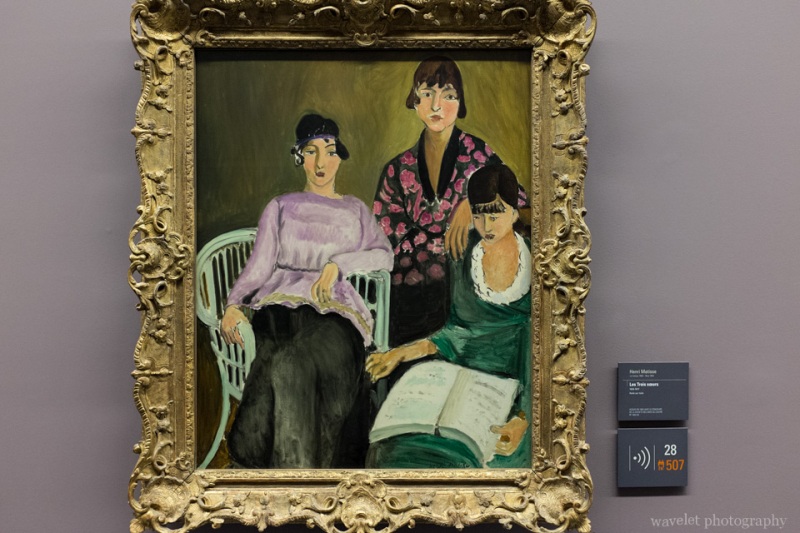

A painting by Henri Matisse, Musée de l\'Orangerie, Paris

Stepping out of the museum, the autumn wind felt even more piercing, the chill setting in. Both sides of the Tuileries Garden’s west gate are flanked by Pegasus statues, but these are mere copies; the originals are preserved in the Louvre. Directly facing the Tuileries, centered in Place de la Concorde, is the Obelisk, a gift to King Louis-Philippe in 1831 from the Viceroy of Egypt, Muhammad Ali Pasha. A truly grand gesture, the Obelisk dates back over three thousand years to the reign of Ramesses II and originally stood before the Luxor Temple. No wonder only one obelisk remained at the temple entrance when we visited Luxor.
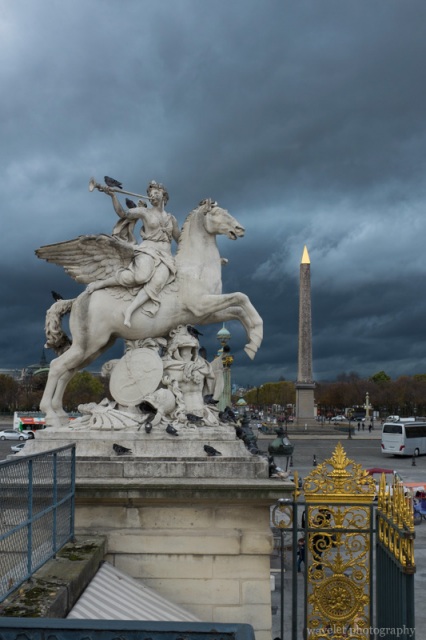
The statue of Renommée riding Pegasus at the west entrance of the Tuileries Garden and the Luxor Obelisk at the Place de la Concorde, Paris
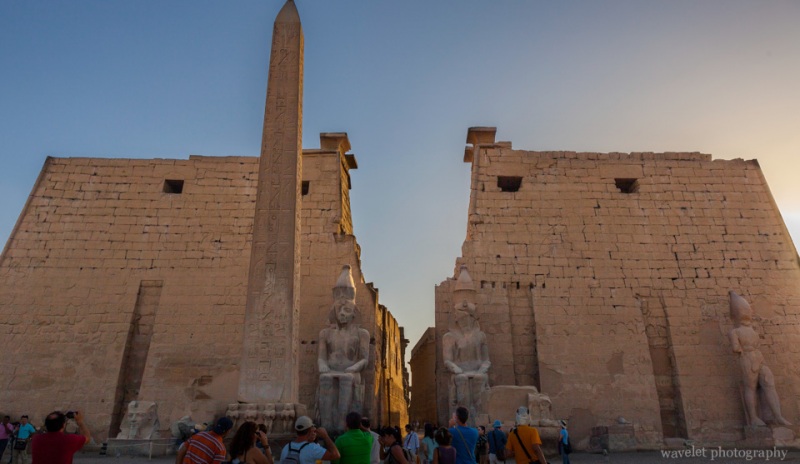

Luxor Temple
Luxor Temple

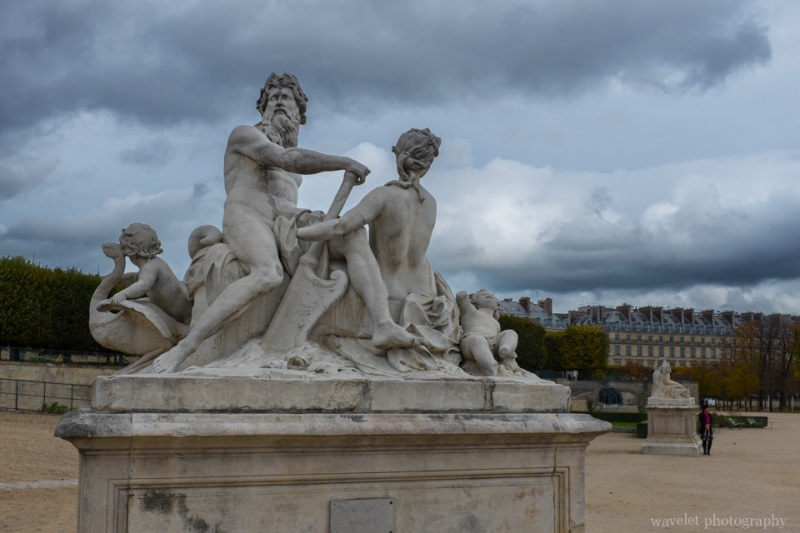
La Seine at la Marne by Nicolas Coustou at Tuileries Garden, Paris

We had lunch at Ladurée, right by our hotel. Their large macarons are excellent.
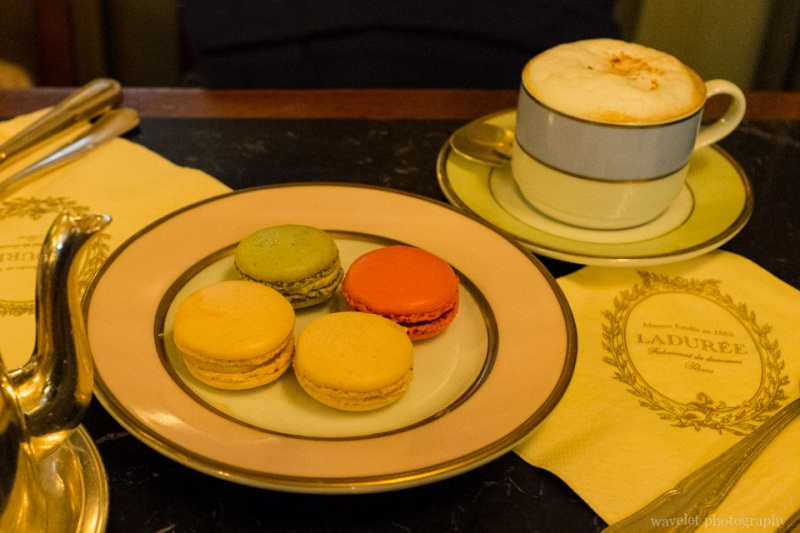
Macarons in Laduree at Rue Royale, Paris

While we rested at the hotel, a brief shower passed through. We headed out again after 3:00 PM, aiming north toward the Opera House. The small square before Église Notre-Dame-de-l’Assomption was covered by a thin layer of water, reflecting the building; in a black-and-white photo, it has a certain resonance.
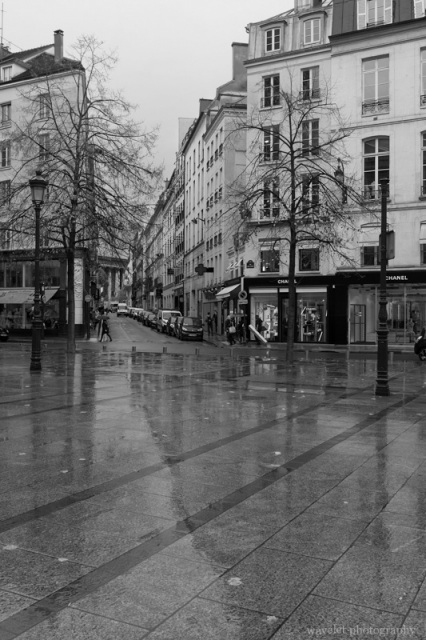
Place Maurice Barrès in the early morning rain, Paris

At the northern end of Rue Royale is the Église de la Madeleine. Its patron saint, Mary Magdalene, is a dramatic figure in both biblical stories and popular culture. The church looks like an ancient Roman temple from the outside; inside, it’s richly decorated with carved beams and plenty of gilding. It features three circular domes, each with a skylight. Unlike other churches, the Madeleine has no stained-glass mosaics; its only natural light comes from these three circular openings, leaving the interior rather dim.
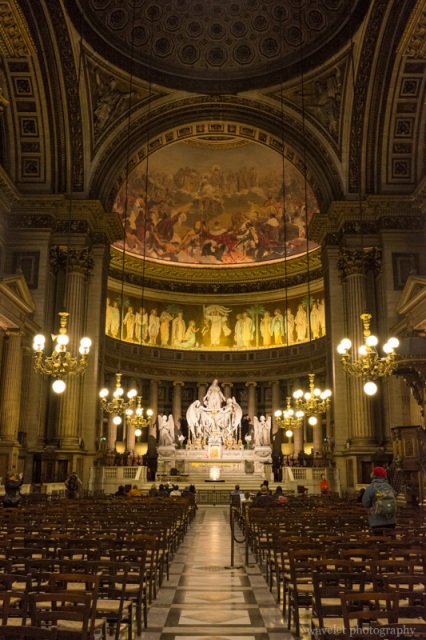
Interior of the Église de la Madeleine, Paris
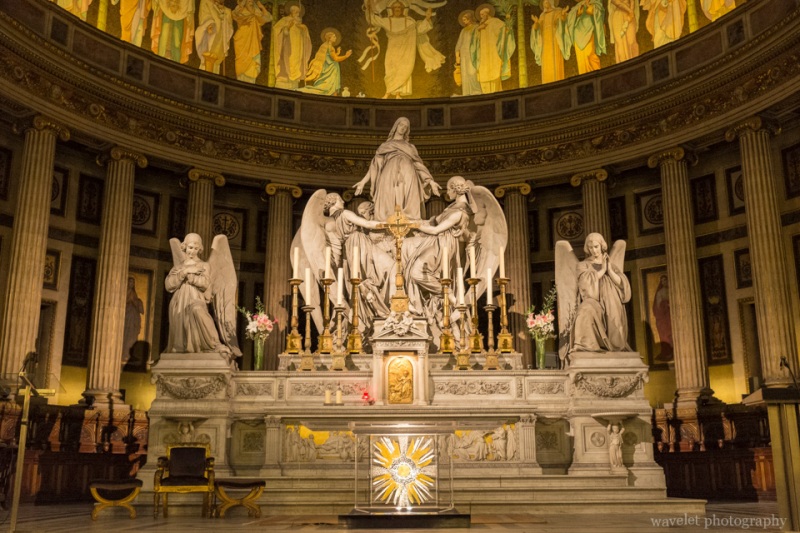

The statue by Charles Marochetti on the altar of the Église de la Madeleine, Paris
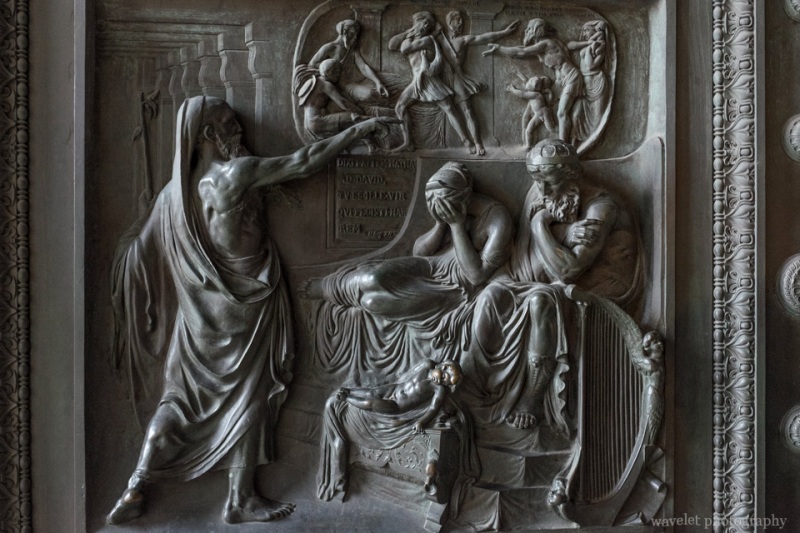

Reliefs on the bronze doors  of the Église de la Madeleine deplicting the Ten Commandments, Paris
Reliefs on the bronze doors of the Église de la Madeleine deplicting the Ten Commandments, Paris

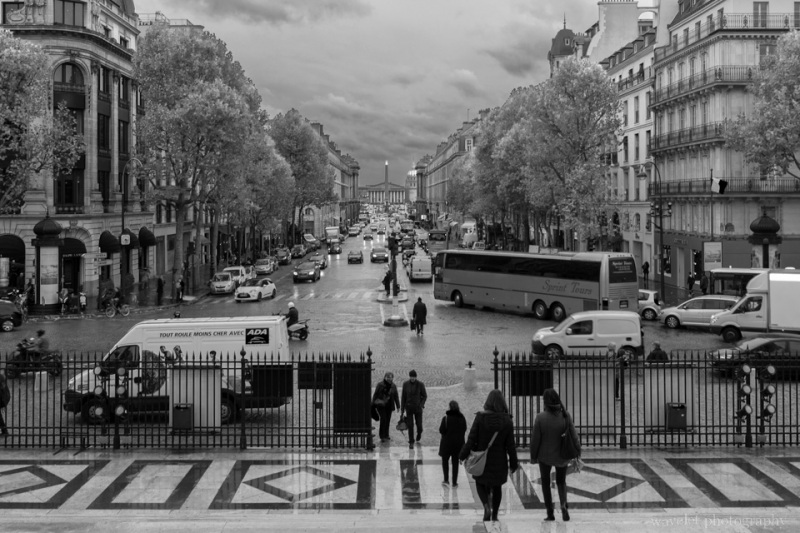
Overlook Place de la Concorde through Rue Royale from L\'église de la Madeleine, Paris

Boulevard des Capucines, Claude Monet, 1873-74

“The plane trees add to the fine drizzle, drop by drop, until dusk.(梧桐更兼细雨,到黄昏、点点滴滴。)”

The Boulevard des Capucines, connecting the Madeleine to the Opera House, divides the 2nd and 9th arrondissements. It’s not exceptionally wide, lined with sycamore trees and classical buildings housing modern businesses. This is the heart of Paris, and the Boulevard des Capucines is one of its core avenues; Monet has an Impressionist work by the same name depicting this very street.
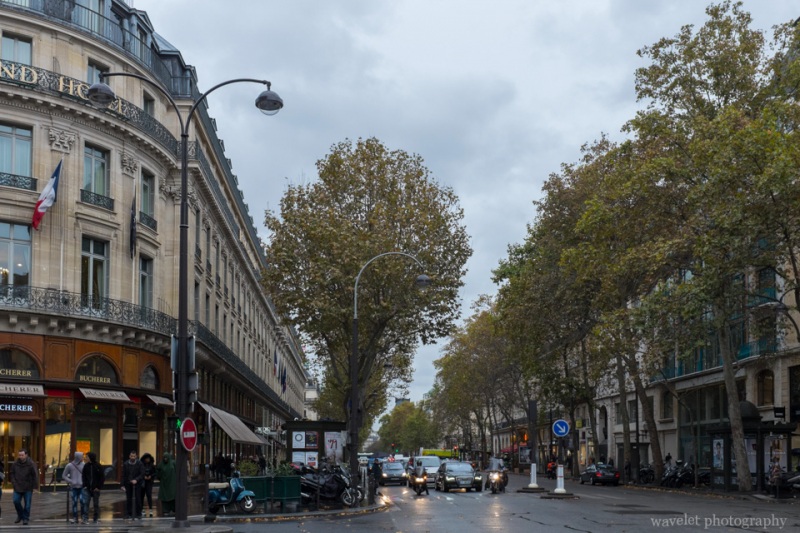
Boulevard des Capucines, Paris

A small square stands before the Palais Garnier, a hub where metro lines and surface traffic converge. Located in a commercial district, the pedestrian traffic is intense. I had only a small camera with a fixed prime lens and couldn’t manage to capture the entire facade. The Palais Garnier is a masterpiece of Baroque architecture and has been one of the world’s premier opera houses since its completion. The fact that the plot of The Phantom of the Opera unfolds here has only added to its fame. We arrived during a scheduled evening performance, so it wasn’t open for tours, but the foyer’s luxury was already apparent: vivid red curtains, gleaming gilded decorations, and massive columns and vaults covered in paintings and sculptures—a scene of pure magnificence.
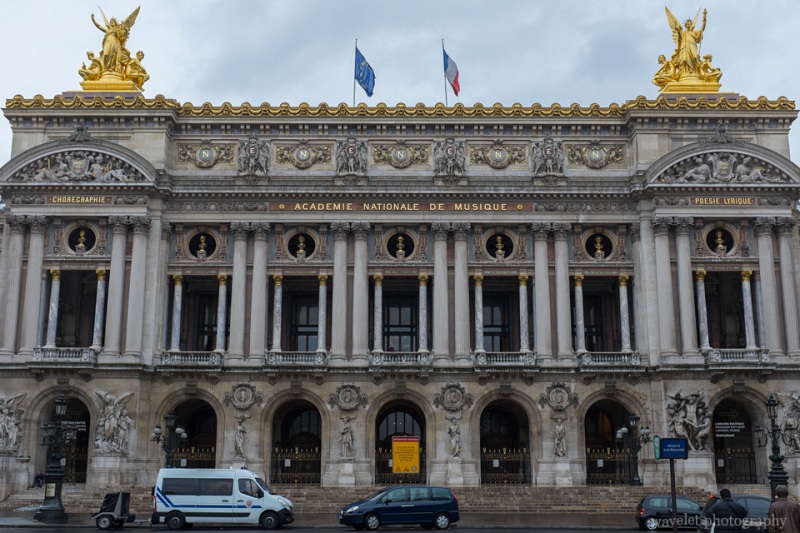
The façade of the Palais Garnier opera house, Paris
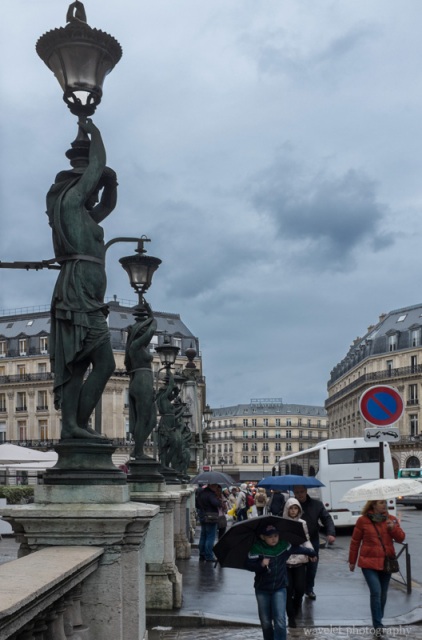

Statues at the eastern wall of the Palais Garnier opera house, Paris

Circling the Opera House, we drew closer to Galeries Lafayette. Inside a typically classical Parisian building on the roadside, we found an Apple Store. What’s more, its banner sign was a white Apple logo on a pure black background, a slightly uncanny sight.
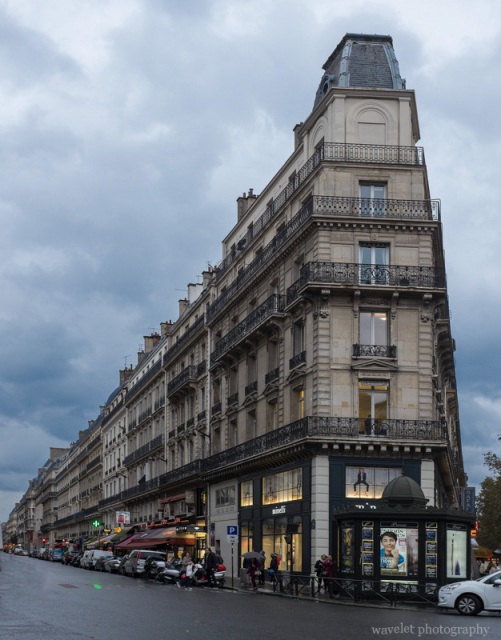
Street view near Galeries Lafayette, Paris

Despite their massive fame, Galeries Lafayette and Printemps are, in essence, not much different from typical large department stores. Yet their Byzantine-style architecture and decor are truly dazzling. The sounds of Mandarin-speaking customers and sales staff were everywhere. Stepping in from the slightly chilly exterior, the crush of people and the stuffy heat made us quite uncomfortable. We only had a passable Chinese meal at the top-floor restaurant.
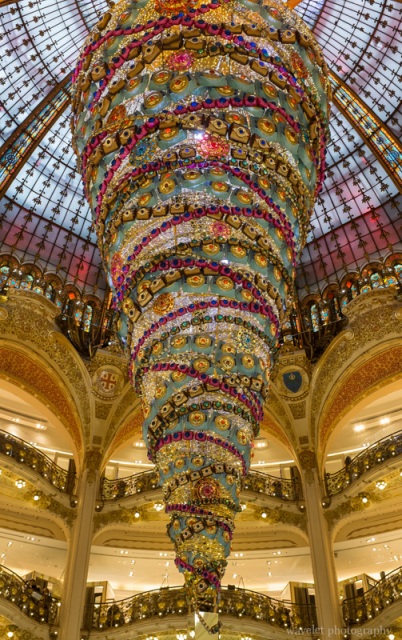
Galeries Lafayette interior, Paris

Stepping out of Lafayette, the rain finally began, and the umbrella I’d carried since leaving the hotel was finally put to use. Crossing Place Vendôme, I saw that several hotels and the central bronze column were undergoing renovation. When these classical Parisian buildings are being repaired, they are concealed behind banners matching the building’s color and pattern; the scaffolding isn’t exposed, and you might not even notice unless you look closely. The amber lights reflected in the water made the cobblestone street shimmer; a fine, misty rain fell softly, and the Parisian scene grew even more delicate and elegant in the autumn shower.
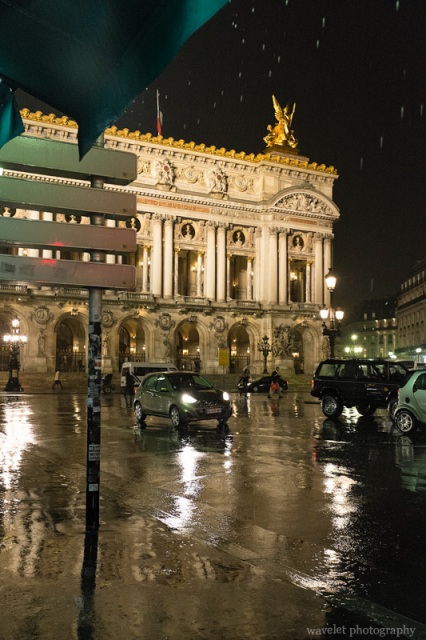
Palais Garnier (Opéra) in the rain, Paris
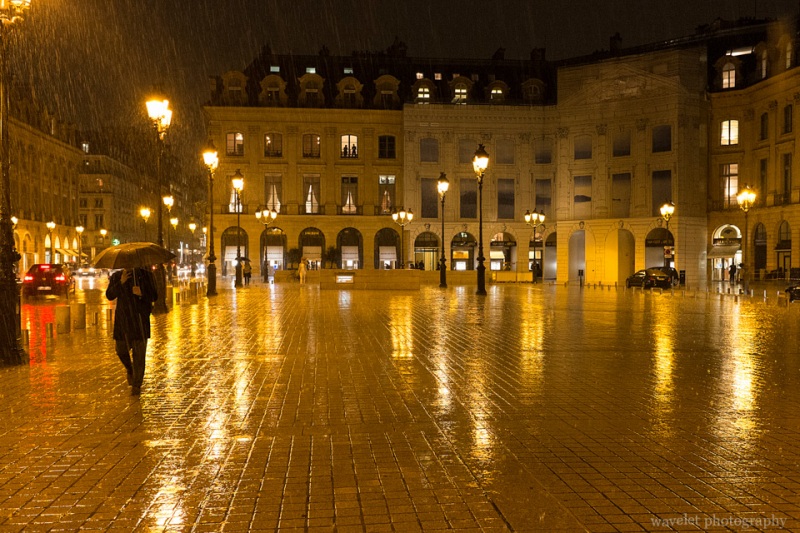

Place Vendôme in the rain, Paris

0 Comments

Seattle – Olympic National Park

2016.8.14~15We checked out from the hotel in the downtown and set off to Olympic Nation Park in the morning. We planned two full days for it, which we thought it would be enough, but as we went to the west end of the park, it’s almost 5-hour driving from the city. We actually spent a lot of time on the road.

We took I-5 south then turned to WA-16 all the way to the north through Kitsap Peninsula. Another option is to take the ferry to Bainbridge Island, the distance would be much shorter but the time required is about the same. While we were driving on the road until we got to Port Angeles, the majestic Mt. Rainier was always in our sight.

WA-16 became WA-3. At the end of WA-3, we were supposed to make a left turn to the Hood Canal Bridge, but we missed it. We then reached a hard 90-degree right turn. Through the morning fog, I noticed the tree-lined street on my left was so lovely. We stopped and found ourselves at Port Gamble. Port Gamble was found by William Talbot and his partners in 1850’s, they form the Puget Mill Company to ship the lumber from Oregon forest to California. They built the down and houses in Maine style, where their home state is.

We stopped by the little museum and walked around the streets. Sometimes, derailing from the planned route can result in a surprisingly wonderful experience. Our founding of Port Gamble is another proof.

Port Gamble, Washington

Port Gamble, Washington

It took us another 20 minutes to realize we made a wrong turn. We turned back and crossed the Hood Canal Bridge. The view over Hood Canal was nice and Mt. Rainier was at our back now. For the most part, both sides of the highway are covered by the dense jungles. As we closed to Port Angeles, we saw the Discovery Bay and Sequim Bay behind the woods. We arrived at Port Angeles at 1pm and we had the lunch at McDonald’s.

Last time we came to Olympic Nation Park, it’s 10 years ago in April. We tried to get to Hurricane Ridge but were stopped by snow. This time we were here at the height of summer in the early afternoon, even at 1-mile above the sea level, it’s very warm and the sun was harsh. The air was clear, we could see Victoria Island about 30 miles away. We had a hike along the Cirque Rim Trail and eventually got as far as to the Sunrise Point.

Hurricane Ridge, Olympic National Park, Washington

Hurricane Ridge, Olympic National Park, Washington

Hurricane Ridge, Olympic National Park, Washington

Returned to Port Angeles, we kept on driving to the west, the Pacifica Coast side of the park. Although the map might tell you that it only takes one and half hours, you should plan for longer time. The road, for the most part, running on the north of the park. There are several small branches that allow visitors to explore the valleys. We planned to do that on our way back, so we only made a brief stop at Lake Crescent.

Lake Crescent, Washington

We arrived in Forks at 5:30pm. We checked into Miller Tree Inn B&B. We are not Twilight movie fans, so before coming here, we had no idea that Forks is actually where the story took place in the novels. Since the novels became the best sellers and movies were release later, tourist traffic to this small town has been greatly multiplied, although the movies were mostly filmed in Oregon. Because the house of Miller Tree Inn bears some similarities to the house described in the novels, it’s also called “Cullen House”.

Forks, Washington
Forks, Washington

My plan for the rest of the day was to photograph Rialto Beach‘s famous sea stacks at sunset. The sky looked very promising at Forks, but Forks is 15-mile away from the coast. As we got closer and closer to the beach, the fog got thicker. When we were actually on the spot, the beach was entirely shrouded in the gray and ominous fog. Sea stacks were bare to be seen. It’s no way I could get those picture with sea stacks immersed in the golden color, but the bad weather offered me another opportunity: How to capture the gloomy feeling? The stark difference in color between the white waves of the angry sea and dark cobbles on the beach was also inspiring. I ended up having some very interesting shots but very different from what I had expected.

Rialto Beach, Washington

Rialto Beach, Washington

Rialto Beach, Washington

As we were on our way back to the town after 7pm, the sky got clear again. Weather by the sea is totally unpredictable, especially in the summer. Maybe because Twilight fever has somewhat retreated now, Forks is a quiet town at night, almost no people on the street. We had the dinner at Blakeslees Bar and Grille.

We stayed in Ella’s Suite of Miller Tree Inn. Before the sunrise, we heard some strange noises coming from the surrounding ranch. The next day morning, as we were having breakfast at Miller Tree Inn, (the host cooks breakfast for all guests), the owner said some Elks coming down from the hill and one youth got stuck by the fence. What other creatures could come out from the forest and hills? It’s the Twilight Zone after all.

Forks, Washington
Forks, Washington

Forks, Washington
Forks, Washington

After playing the seek-and-hide game with the owner’s tabby cat for a bit, we checked out the B&B at 9am. The distance between Forks to Hoh Rain Forest Visitor Center is 30 miles. It will take about an hour to get there because of the winding road, once you leave highway 101 in the park. Hoh Rain Forest is one of the largest temperate rainforests in America. Two short trails loop through the forest near the visitor center. The view of the rain forest was fascinating. I wish we could spend more time there.

Hoh Rain Forest, Olympic National Park, Washington

Hoh Rain Forest, Olympic National Park, Washington

Hoh Rain Forest, Olympic National Park, Washington

It took us more than 5 hours to drive all the way back to the airport. We skipped all the interesting spots by the road and only made a brief stop at Port Angeles for lunch. Given the distance from the city, you should plan to stay two nights in order to explore the Pacific side of the Olympic National Park.

Hoh River, Olympic National Park, Washington

0 Comments

Seattle – City

2016.8.13We have been to Seattle several times. This time, we just wanted to take one-day off and have an easy trip, spending one day at the city and the rest days at Olympic National Park. We arrived on Friday night and checked into Sheraton in the downtown. Many people walking on the downtown street at almost midnight. It’s pretty safe around here.

I had a morning walk to the Public Market. There were less tourists before 8am. Locals come to shop as well. After I came back with my wife at 10am, it’s so crowded in the public market, we could barely move.

Flowers in the Public Market, Seattle

Public Market, Seattle

First Starbucks, Seattle

All restaurants around Public Market were crowded. Anyone with some specialty had a long waiting line. We finally found a restaurant with open seats in a small alley, named Emmett Watson’s Oyster Bar. They intentionally made the restaurant a down-to-earth style. Their food was just OK.

Pike Place Chowder was the restaurant we planned to dine in, but the waiting line was still quite long even after we finish our lunch. We walked back to our hotel and felt having the appetite again. Pike Place Chowder has another site on the top floor of the shopping center just around the corner. We ordered their sampler with 4 different chowders. Probably because we were not hungry, we were not super impressed.

Pike Place Chowder, Seattle

After having a short break at the hotel, we set off to explore the opposite side of the downtown. We walked along Pike St. over highway I-5 overpass. There are some trendy stores and apartment buildings in this area, and much less crowded.

We first stopped at Starbucks Reserve Roastery & Tasting Room around the corner between Pike St. and Melrose Ave. If you are a coffee lover, you got to be here. Space is huge, with cool decor and awesome atmosphere. The coffee and drink options are plenty and unique, which cannot be found in any other Starbucks stores. I had our best one and half hours in the city.

Starbucks Reserve Roastery & Tasting Room, Seattle

We had some walk around and had dinner at Terra Plata. I like their contemporary arrangement. Food is nice and looks good too. A little pricey though.

Terra Plata, Seattle

We walked back to the downtown center and spent some time in Barnes & Noble, then we continued walking down to the Public Market. Most stores are closed there. There are homeless people hanging around.

Public Market, Seattle

0 Comments