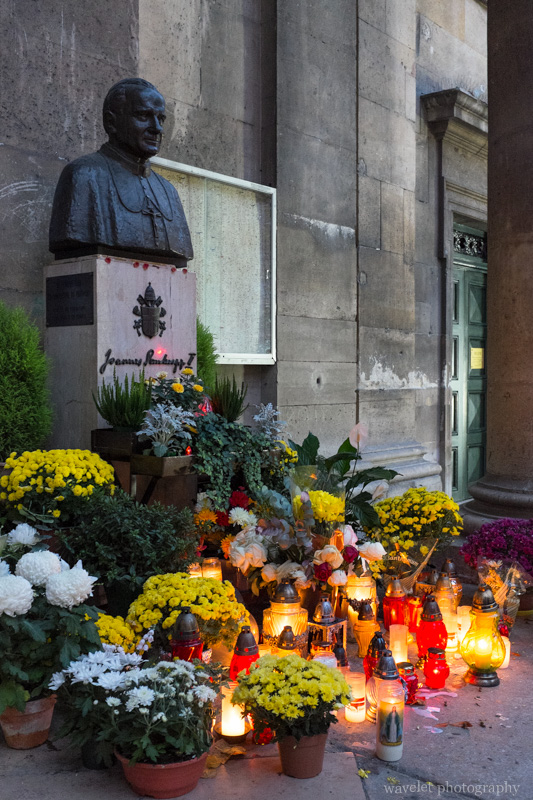
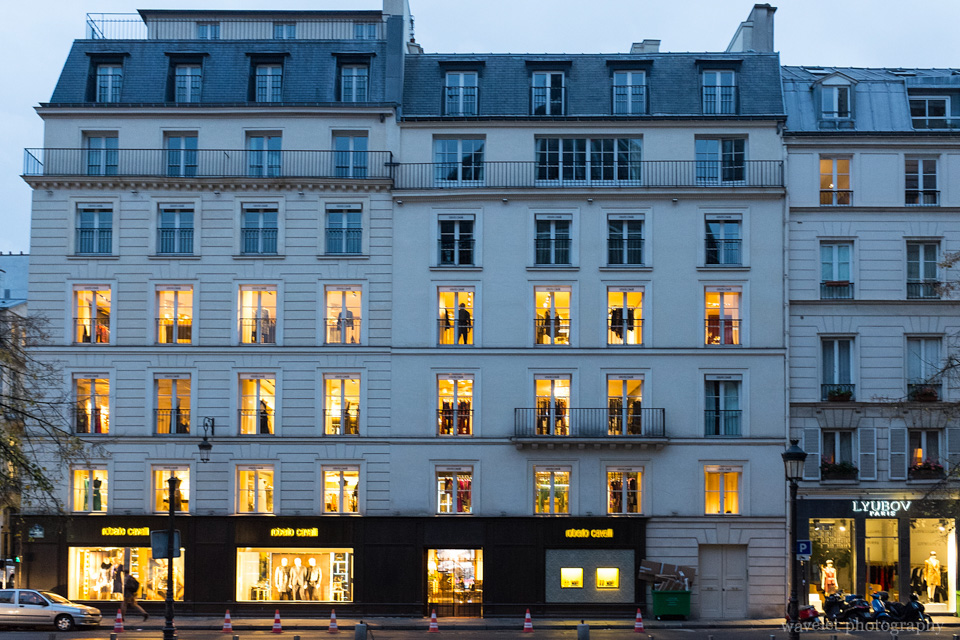
2014.11.3The sky was heavily overcast in the morning. A rainfall seemed inevitable. Skipping breakfast, I slipped out for a quick stroll first. The streets were still quiet. Just around the corner stood the Église Notre-Dame-de-l’Assomption. It’s a tiny church; the entrance was covered in fresh flowers and candles, the door was open, but no one was inside yet. Across the small square, the fashion stores were fully lit, though clearly not yet open; perhaps the lights stay on all night.
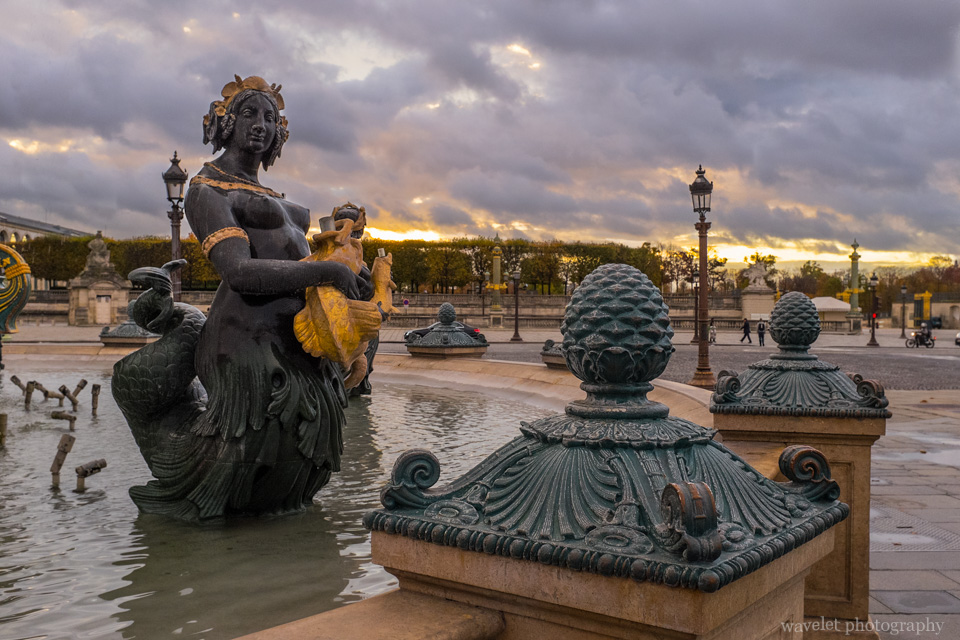
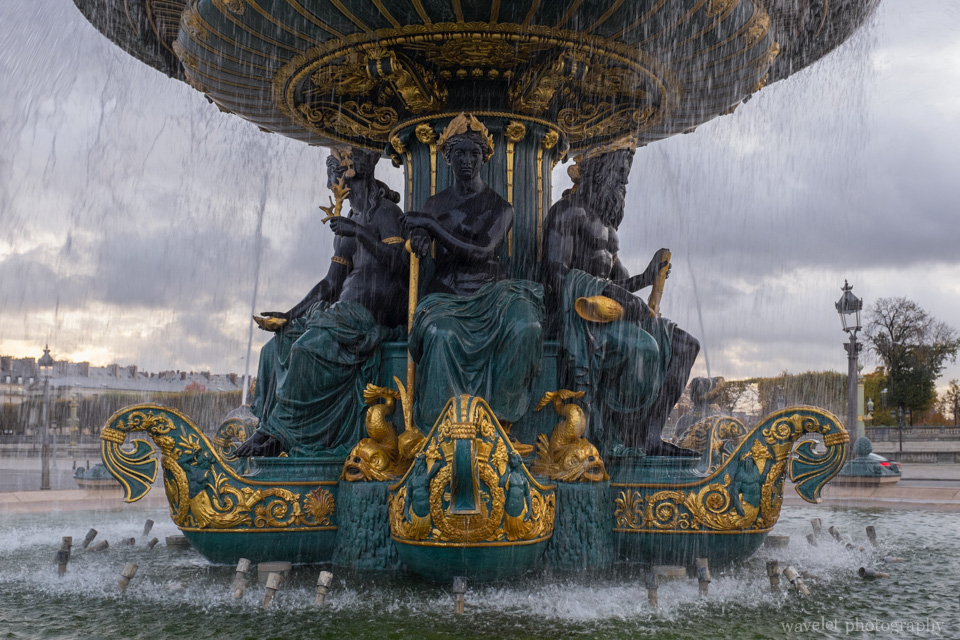
Walking past Rue Cambon, I reached the Tuileries Garden and Place de la Concorde. During the French Revolution, this was known as the Place de la Révolution; Louis XVI, Lavoisier, Danton, and Robespierre were all sent to the guillotine here. After the Revolution, it was renamed Place de la Concorde, likely to draw a line under that bloody history. At the center of the square stands the Obelisk, a gift from the Viceroy of Egypt. Flanking the Obelisk to the north and south are two fountains. The outer ring of each features six statues holding goldfish, their spouting water converging on a two-tiered central platform. Below the platform sit four statues: the northern La Fontaine des Fleuves symbolizes rivers and harvest; the southern La Fontaine des Mers symbolizes the ocean and fishing. The fountains’ details are intricate, and the gloomy weather made the carved nuances stand out sharply in the lens.
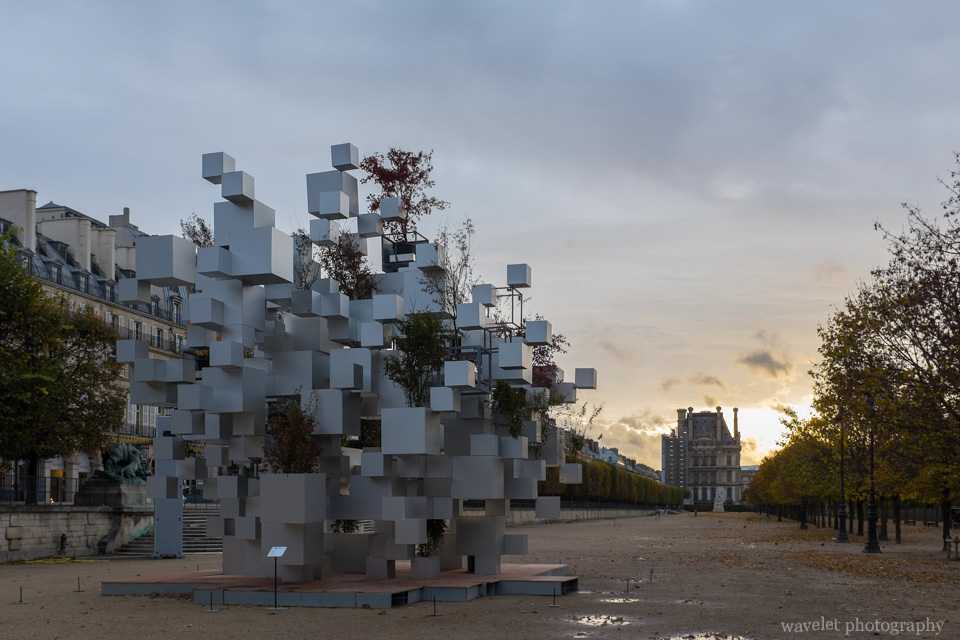
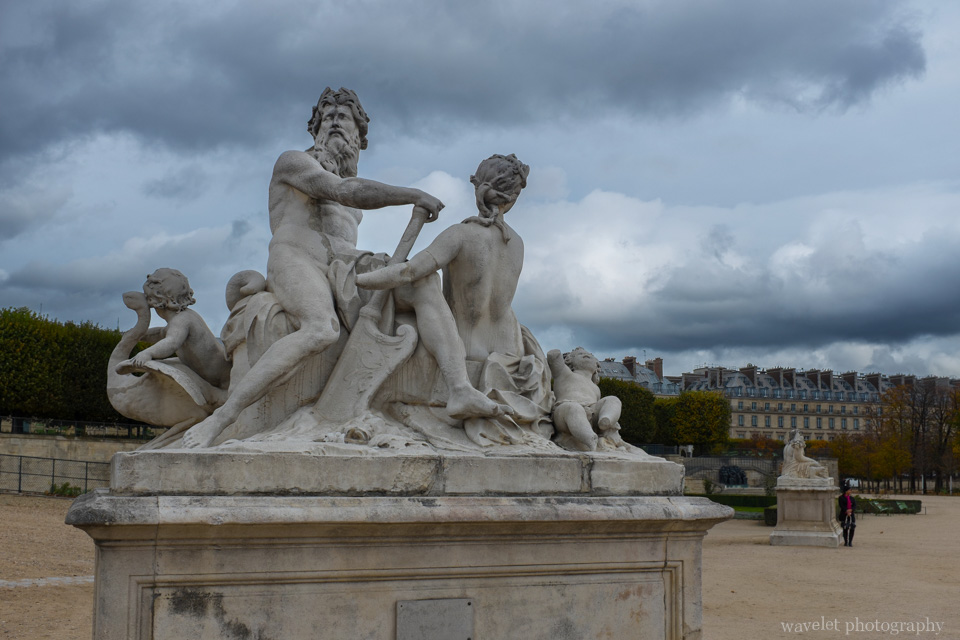
I walked back toward the hotel along one side of the Tuileries Garden. The garden displays numerous statues, mostly classical works, but there are also modern sculptures like this one.
The morning was reserved for visiting the Musée de l’Orangerie. It sits in the southwest corner of the Tuileries, close to the Seine. Perhaps because it wasn’t the weekend, the crowd was sparse, and buying tickets in advance was unnecessary.
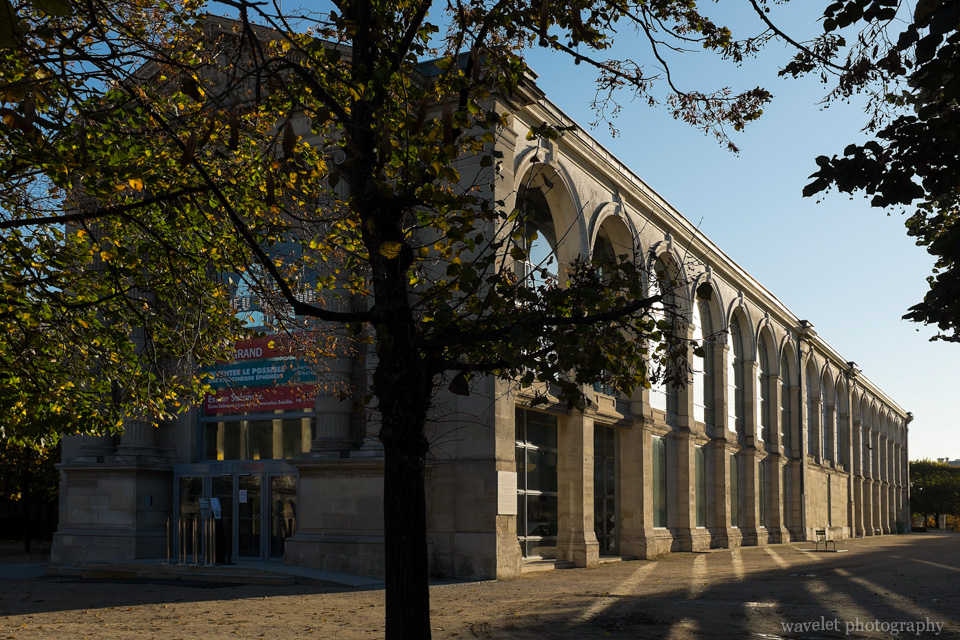
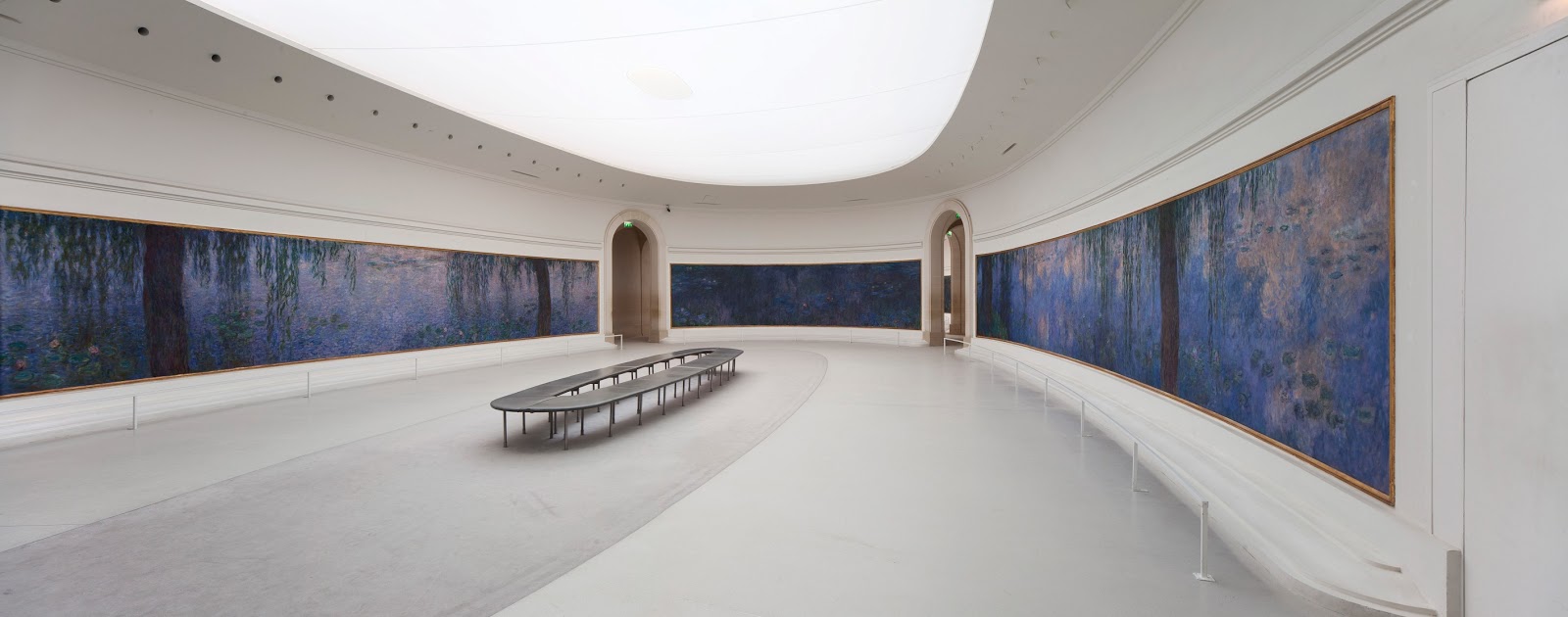
The Musée de l’Orangerie isn’t large, nor does it share the fame of the Louvre or the Musée d’Orsay, but its collection is highly specialized. The main draw, undoubtedly, is Monet’s massive Water Lilies. There are eight of them, split across two specialized exhibition halls. This is also one of the spots in Midnight in Paris where “the pedantic one” gets to show off. Photography isn’t allowed in the Water Lilies halls; the image below is from the internet.
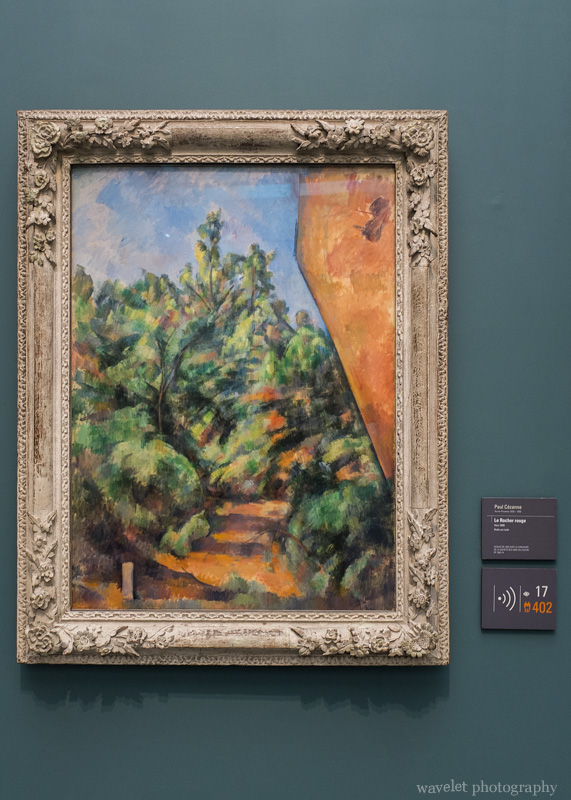
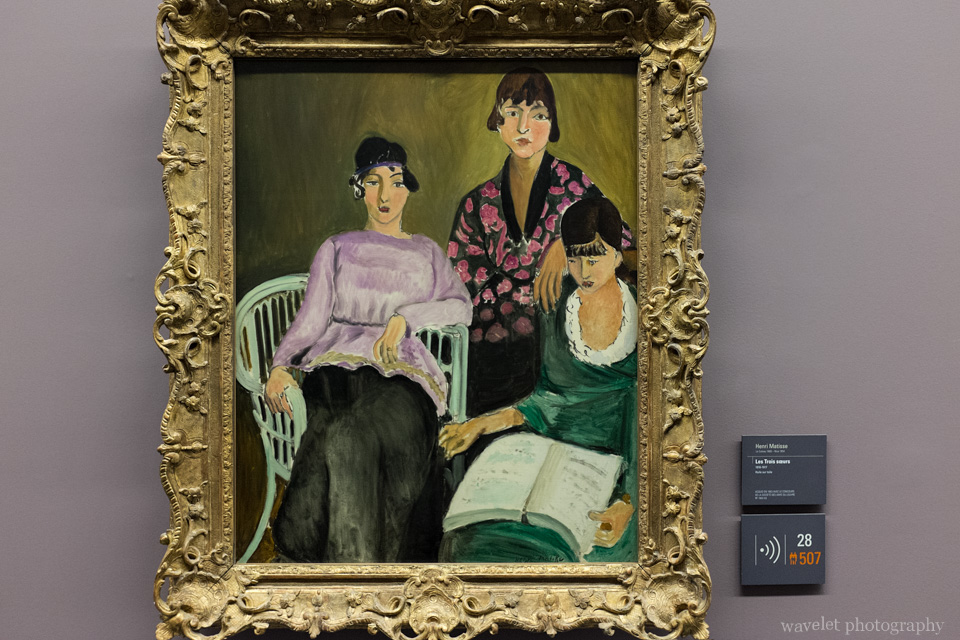
The lower-level exhibition halls also display many masterpieces, including works by Renoir, Cézanne, Picasso, and Matisse.
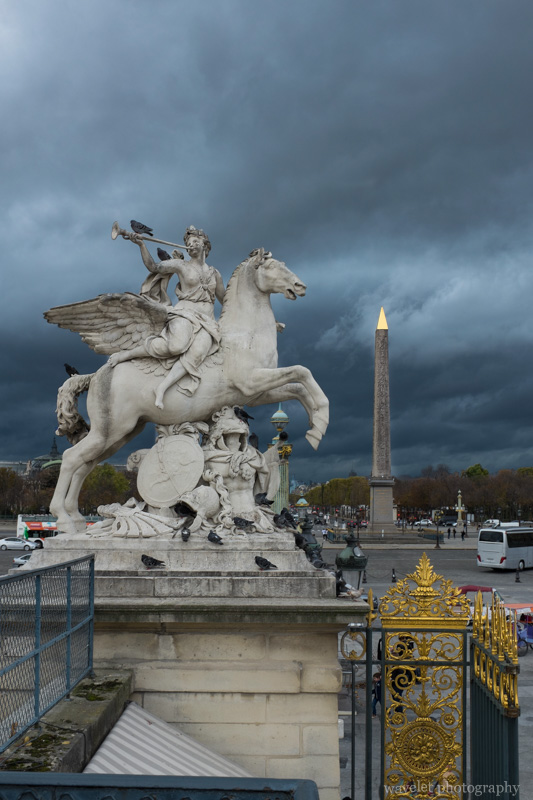
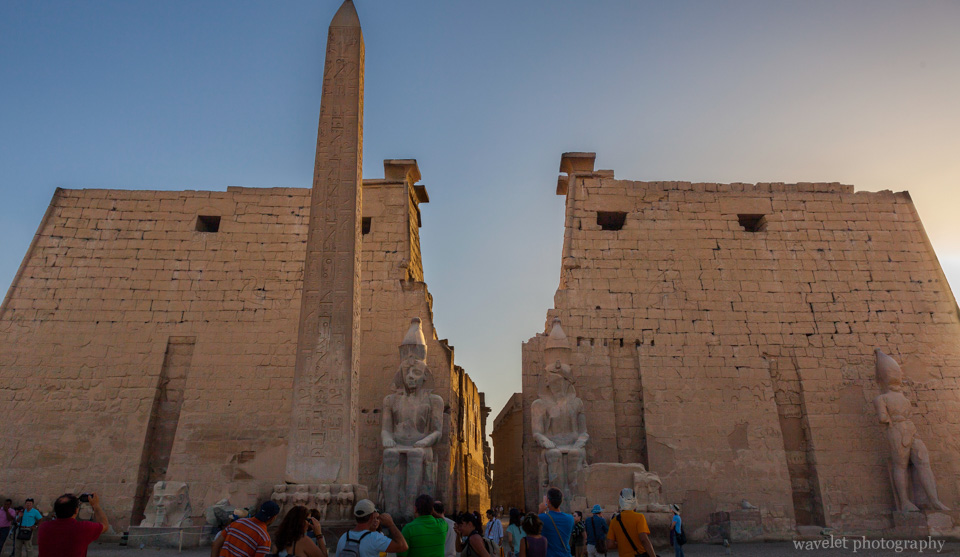
Stepping out of the museum, the autumn wind felt even more piercing, the chill setting in. Both sides of the Tuileries Garden’s west gate are flanked by Pegasus statues, but these are mere copies; the originals are preserved in the Louvre. Directly facing the Tuileries, centered in Place de la Concorde, is the Obelisk, a gift to King Louis-Philippe in 1831 from the Viceroy of Egypt, Muhammad Ali Pasha. A truly grand gesture, the Obelisk dates back over three thousand years to the reign of Ramesses II and originally stood before the Luxor Temple. No wonder only one obelisk remained at the temple entrance when we visited Luxor.
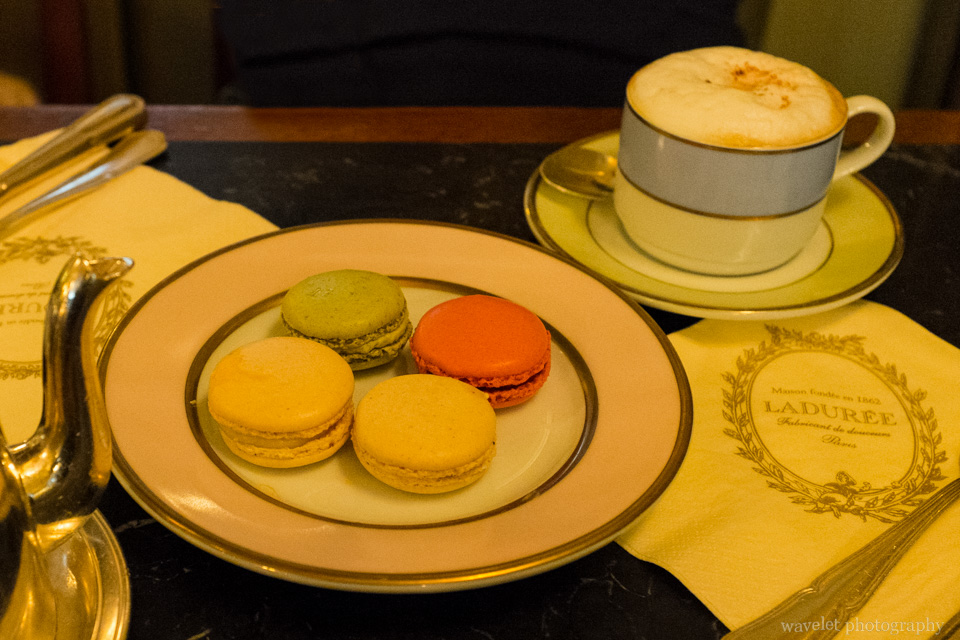
We had lunch at Ladurée, right by our hotel. Their large macarons are excellent.
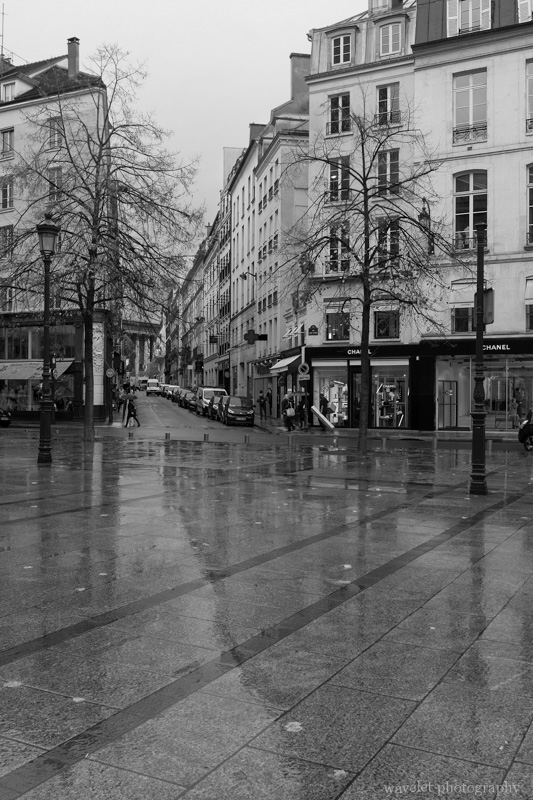
While we rested at the hotel, a brief shower passed through. We headed out again after 3:00 PM, aiming north toward the Opera House. The small square before Église Notre-Dame-de-l’Assomption was covered by a thin layer of water, reflecting the building; in a black-and-white photo, it has a certain resonance.
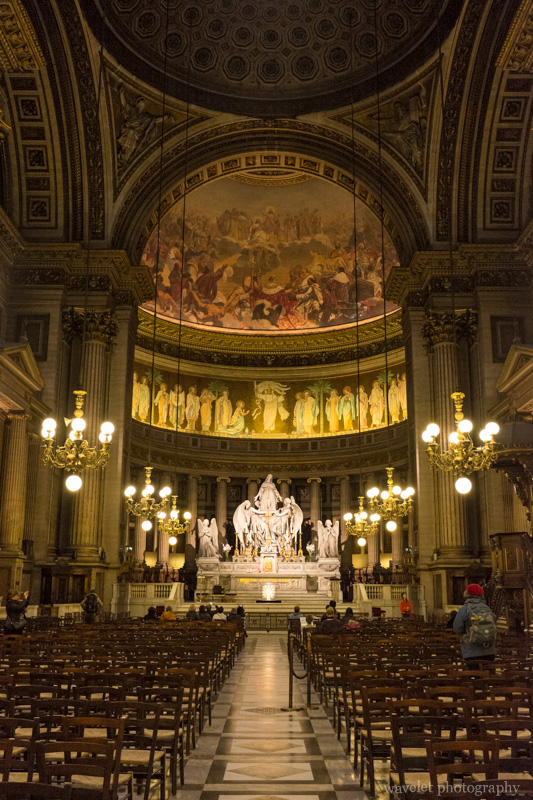
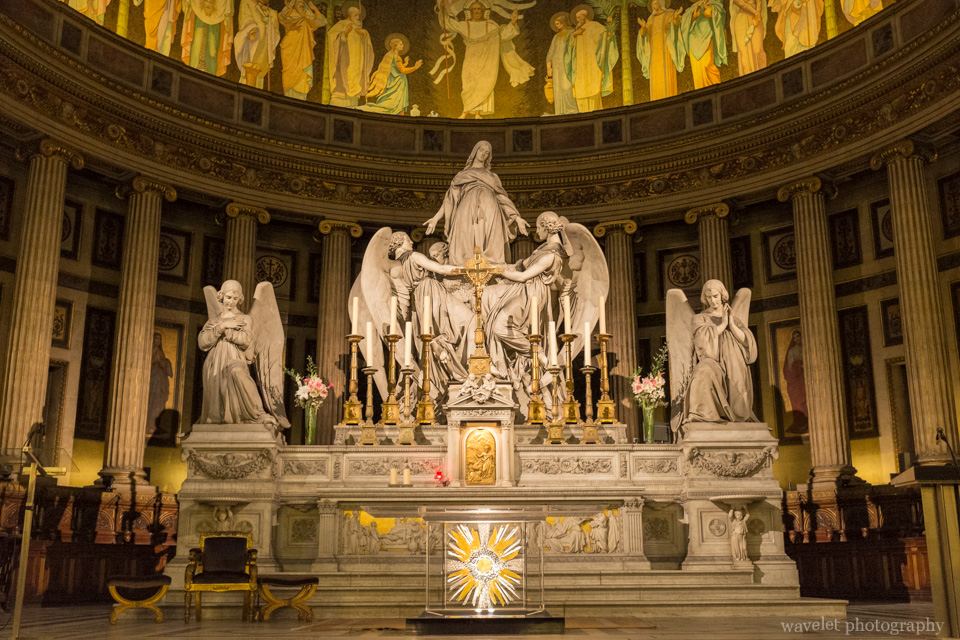
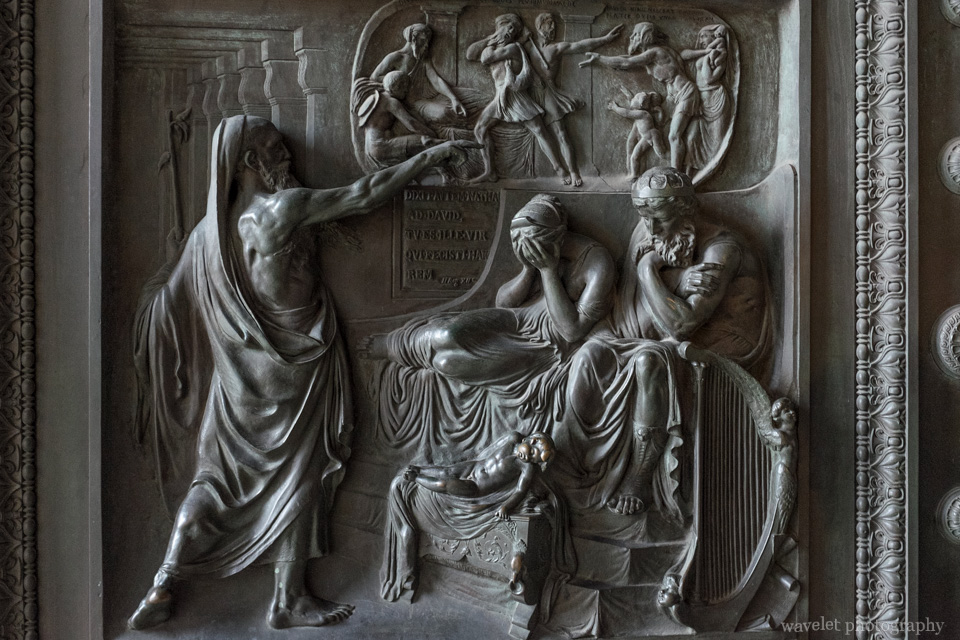
At the northern end of Rue Royale is the Église de la Madeleine. Its patron saint, Mary Magdalene, is a dramatic figure in both biblical stories and popular culture. The church looks like an ancient Roman temple from the outside; inside, it’s richly decorated with carved beams and plenty of gilding. It features three circular domes, each with a skylight. Unlike other churches, the Madeleine has no stained-glass mosaics; its only natural light comes from these three circular openings, leaving the interior rather dim.
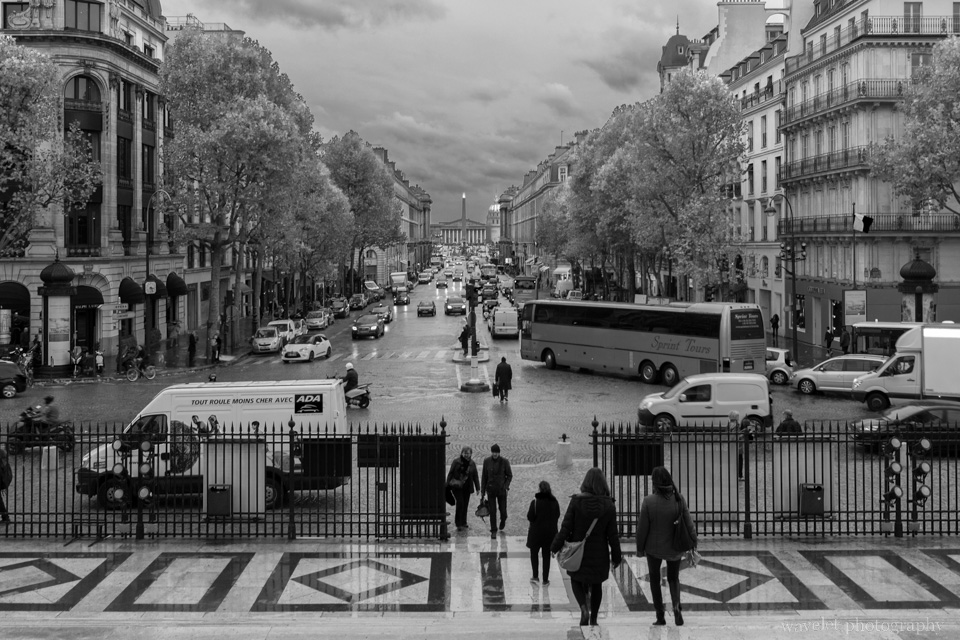
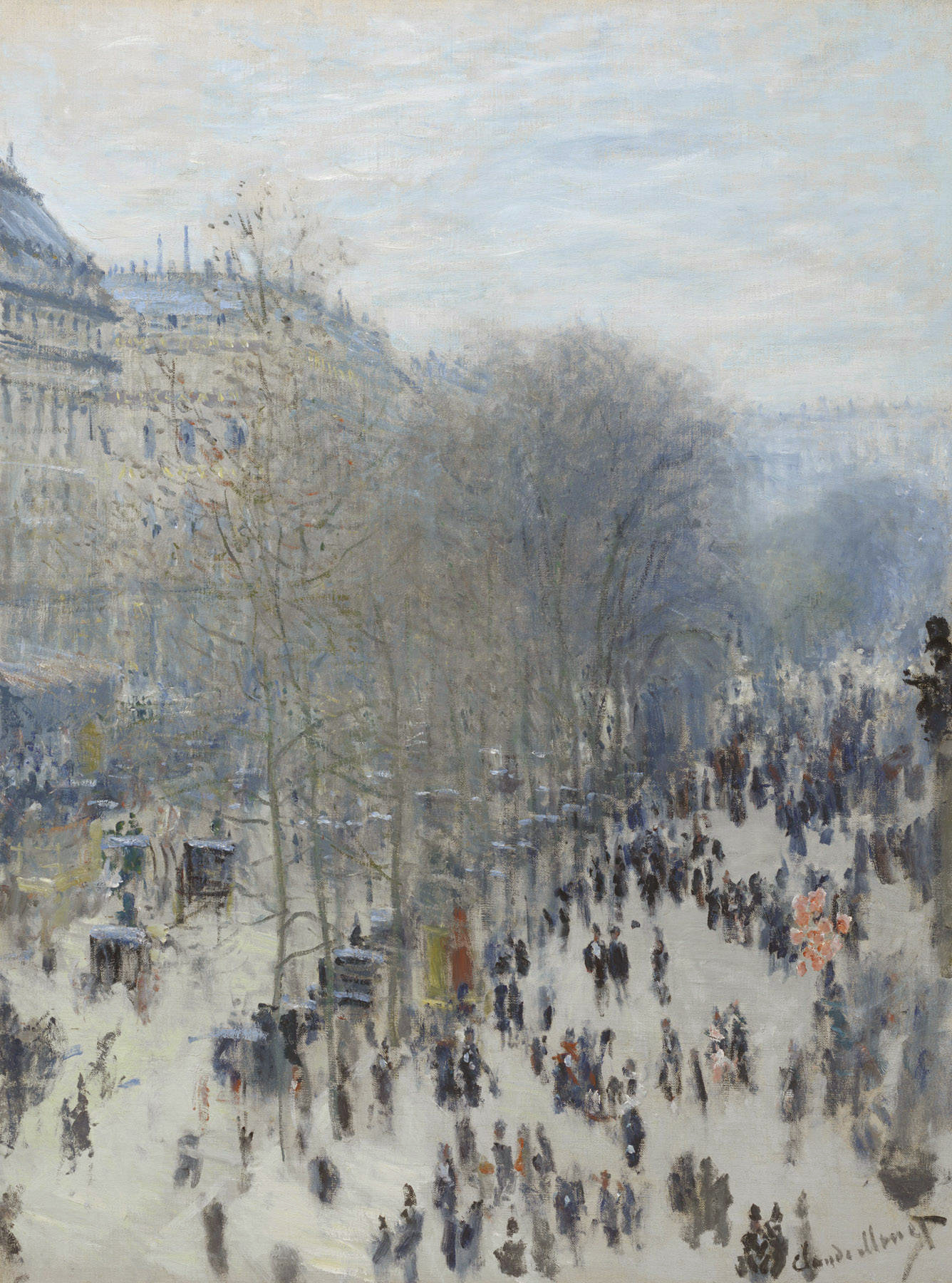
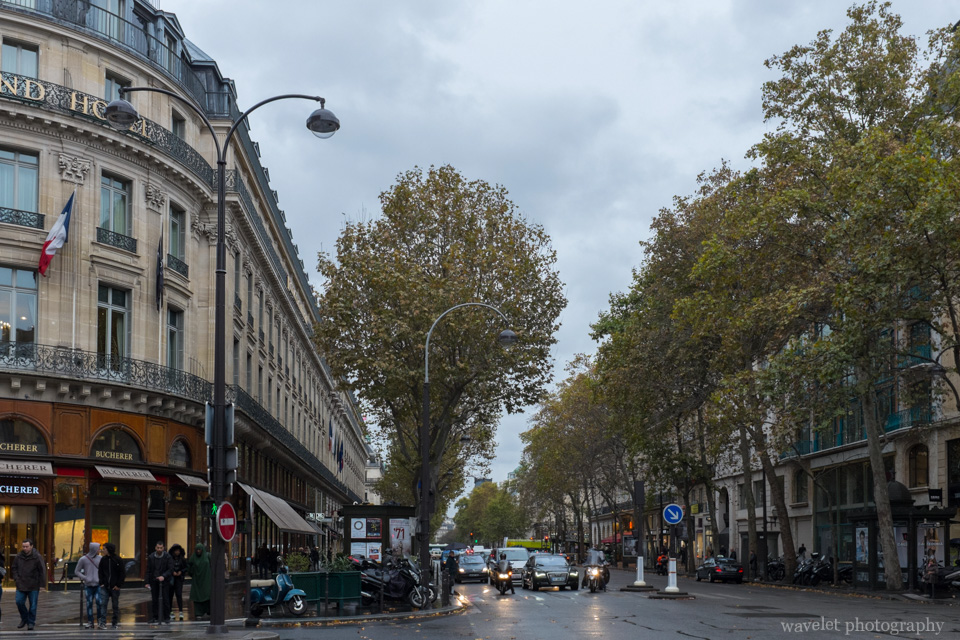
“The plane trees add to the fine drizzle, drop by drop, until dusk.(梧桐更兼细雨,到黄昏、点点滴滴。)”
The Boulevard des Capucines, connecting the Madeleine to the Opera House, divides the 2nd and 9th arrondissements. It’s not exceptionally wide, lined with sycamore trees and classical buildings housing modern businesses. This is the heart of Paris, and the Boulevard des Capucines is one of its core avenues; Monet has an Impressionist work by the same name depicting this very street.
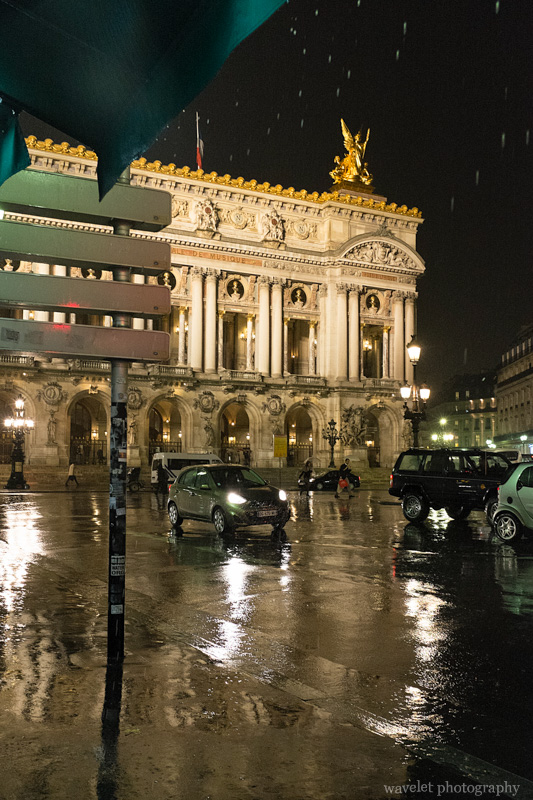
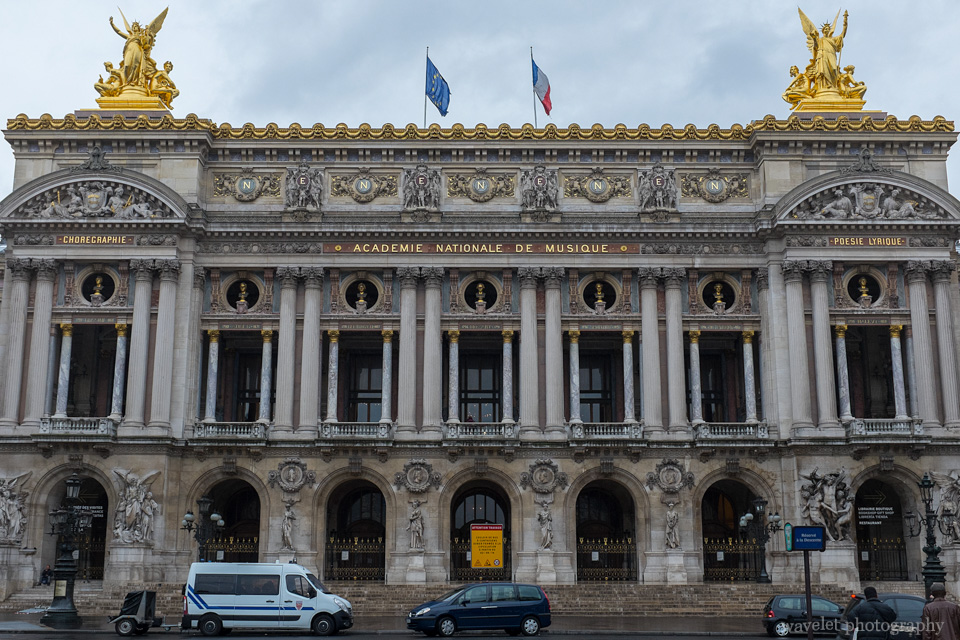
A small square stands before the Palais Garnier, a hub where metro lines and surface traffic converge. Located in a commercial district, the pedestrian traffic is intense. I had only a small camera with a fixed prime lens and couldn’t manage to capture the entire facade. The Palais Garnier is a masterpiece of Baroque architecture and has been one of the world’s premier opera houses since its completion. The fact that the plot of The Phantom of the Opera unfolds here has only added to its fame. We arrived during a scheduled evening performance, so it wasn’t open for tours, but the foyer’s luxury was already apparent: vivid red curtains, gleaming gilded decorations, and massive columns and vaults covered in paintings and sculptures—a scene of pure magnificence.
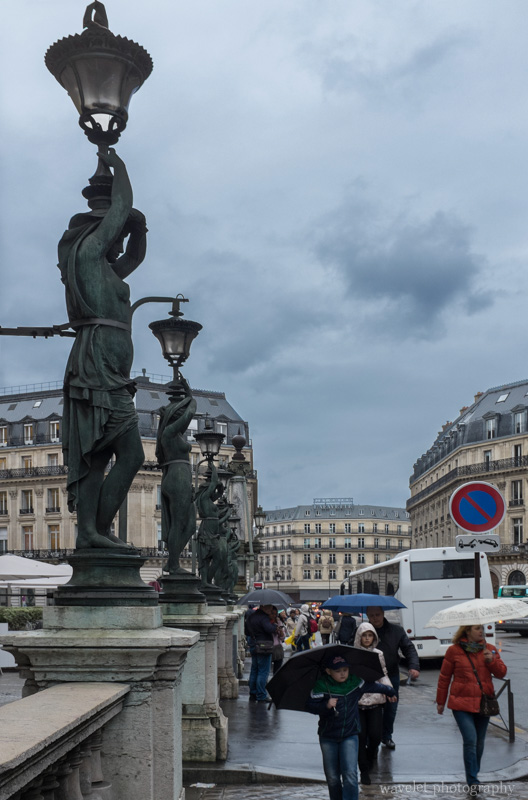
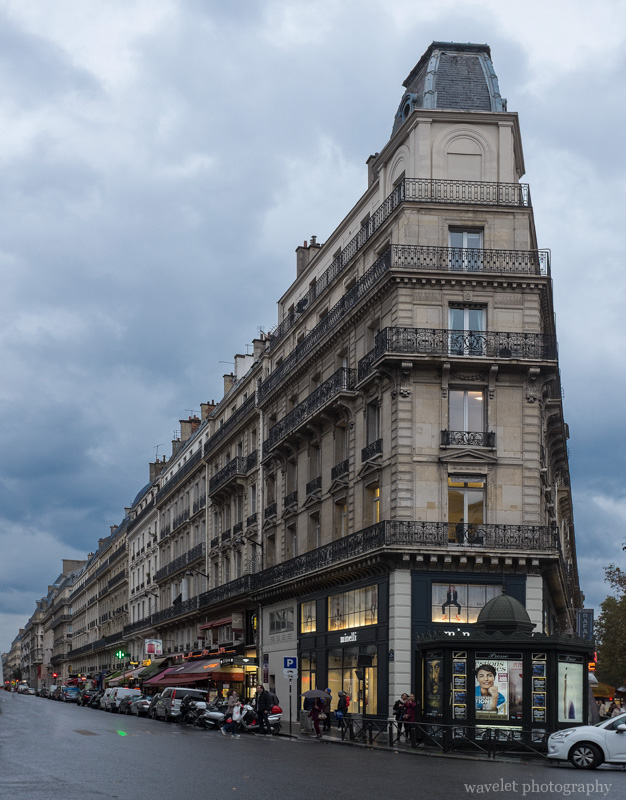
Circling the Opera House, we drew closer to Galeries Lafayette. Inside a typically classical Parisian building on the roadside, we found an Apple Store. What’s more, its banner sign was a white Apple logo on a pure black background, a slightly uncanny sight.
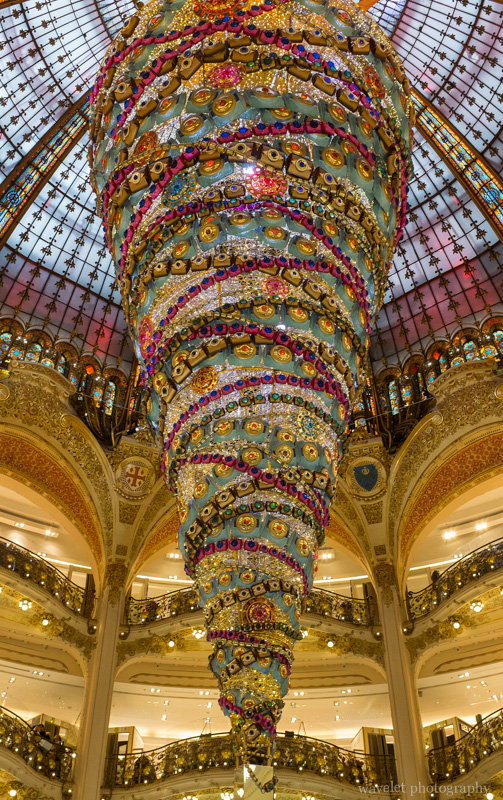
Despite their massive fame, Galeries Lafayette and Printemps are, in essence, not much different from typical large department stores. Yet their Byzantine-style architecture and decor are truly dazzling. The sounds of Mandarin-speaking customers and sales staff were everywhere. Stepping in from the slightly chilly exterior, the crush of people and the stuffy heat made us quite uncomfortable. We only had a passable Chinese meal at the top-floor restaurant.
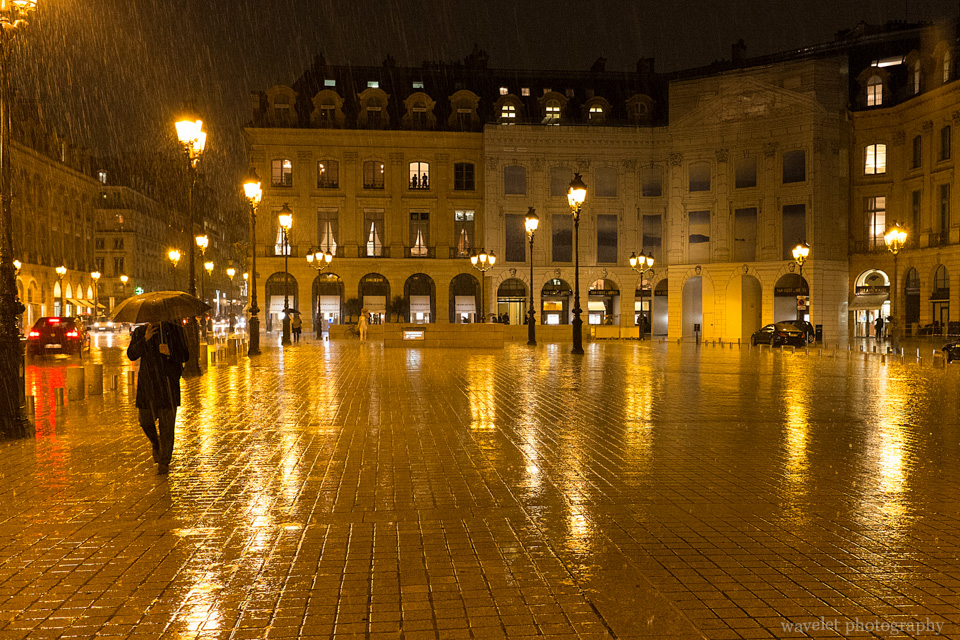
Stepping out of Lafayette, the rain finally began, and the umbrella I’d carried since leaving the hotel was finally put to use. Crossing Place Vendôme, I saw that several hotels and the central bronze column were undergoing renovation. When these classical Parisian buildings are being repaired, they are concealed behind banners matching the building’s color and pattern; the scaffolding isn’t exposed, and you might not even notice unless you look closely. The amber lights reflected in the water made the cobblestone street shimmer; a fine, misty rain fell softly, and the Parisian scene grew even more delicate and elegant in the autumn shower.