2024.8.10
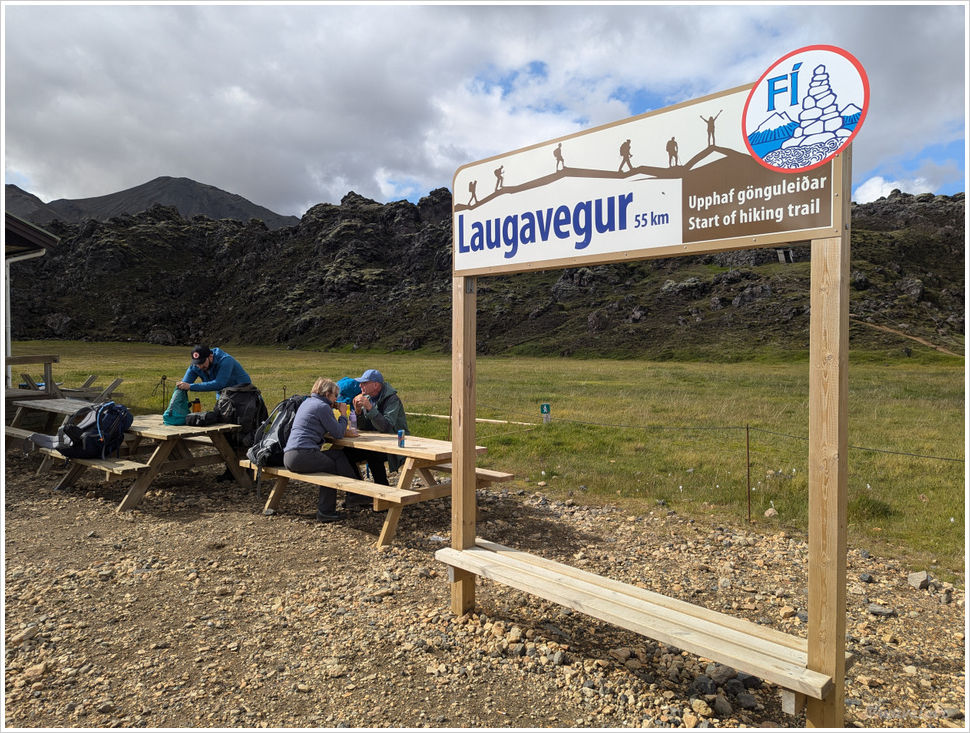
Around 11am, we took a group photo at the Landmannalaugar trailhead, marking the start of our 4-day, 55-kilometer trek.
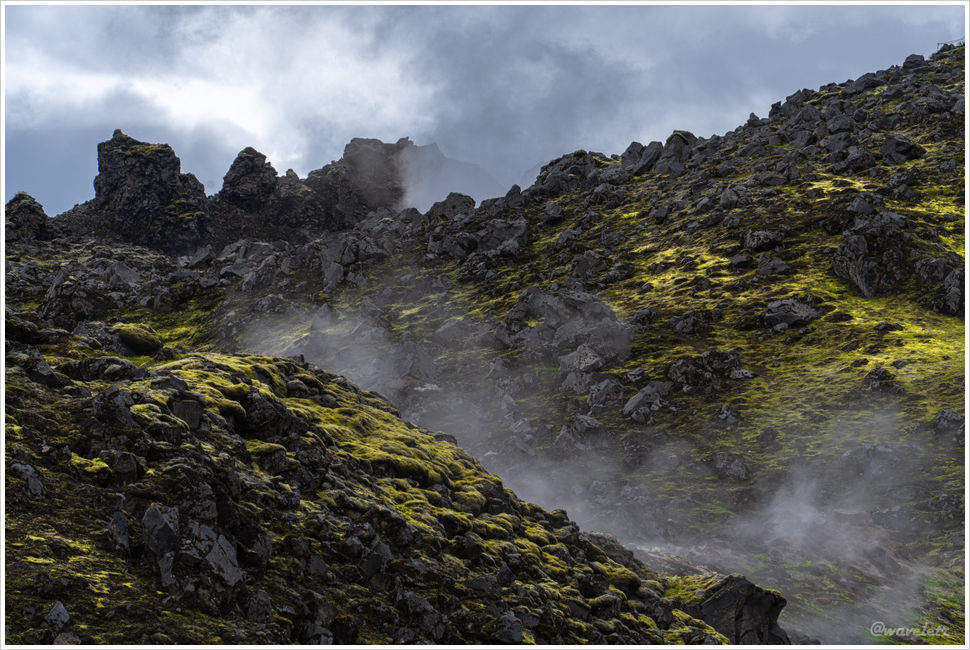
After crossing a small stream, we quickly entered a volcanic lava field. As far as the eye could see, the flats and hills were covered in jagged black rocks. Lichen and moss clung to the lower rocks, their vibrant yellow-green hues contrasting sharply against the dark volcanic rock, while geothermal steam rose from the crevices.
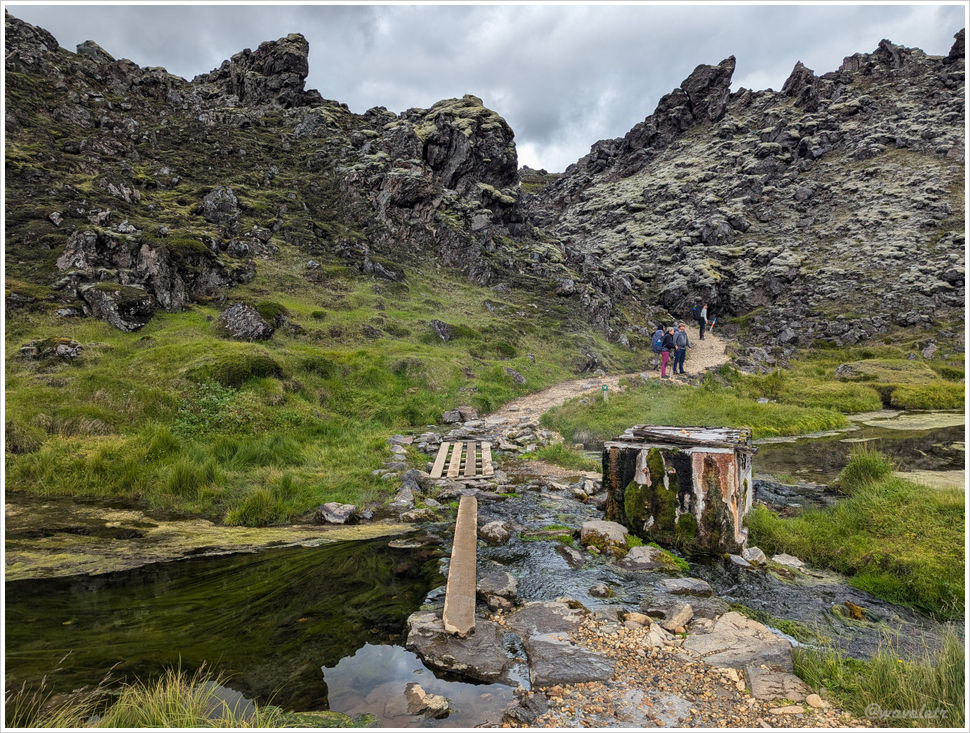
This section of the route is gentle, with the path winding through rolling hills. Signs are posted among the rocks prohibiting drone flight. Once past the lava field, the trail begins a gradual ascent. Due to frequent stops for photography, it took me nearly two hours to cover the first 2.5 kilometers.
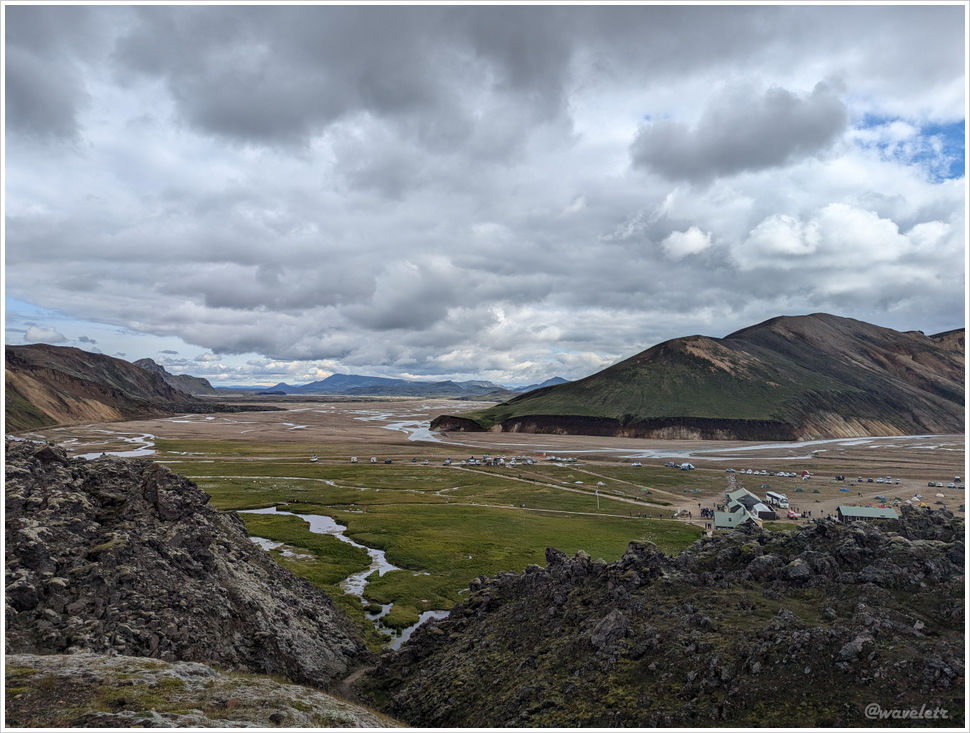
Looking back from the mountain ridge, Landmannalaugar remains visible. The area surrounding Landmannalaugar offers numerous trails ranging from hour-long walks to full-day hikes. To the north lie even more highland attractions, certainly worth a return visit.
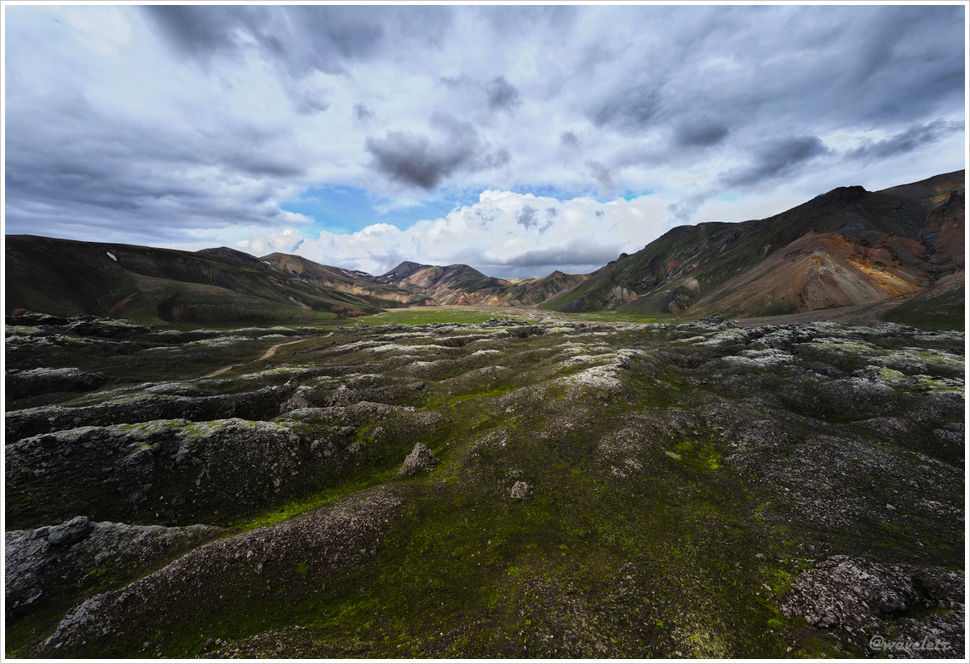
Continuing forward, the trail enters a steeper climbing section. The slopes here lack lava coverage, exposing the striped formations of the mountains. The rocks near Landmannalaugar are rhyolite. It is a volcanic rock whose name reflects its curved and banded appearance.
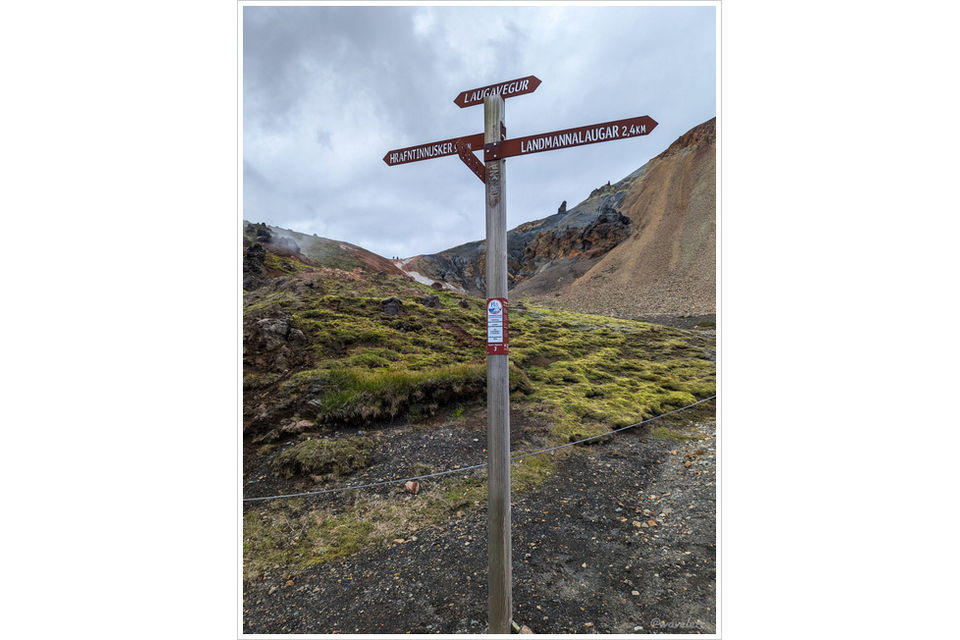
Halfway up the climb, my friends catching up asked if I had taken a detour. I recalled seeing a sign earlier but had bypassed it. Hesitating for a moment, I decided I didn’t want to miss out and turned back down the hill.
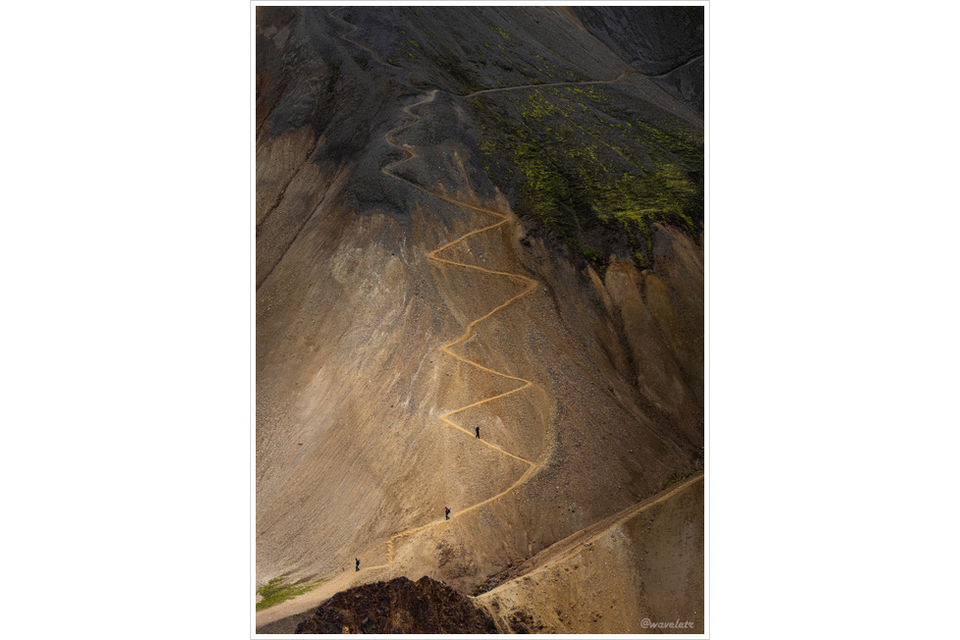
Standing on the detrou sign, you can see the switchbacks on the opposite mountain, though I didn’t want to go there but walked toward the right. Following the ridge to its end reveals a valley of striking colors. It is a place you shouldn’t miss for anyone on this trail.
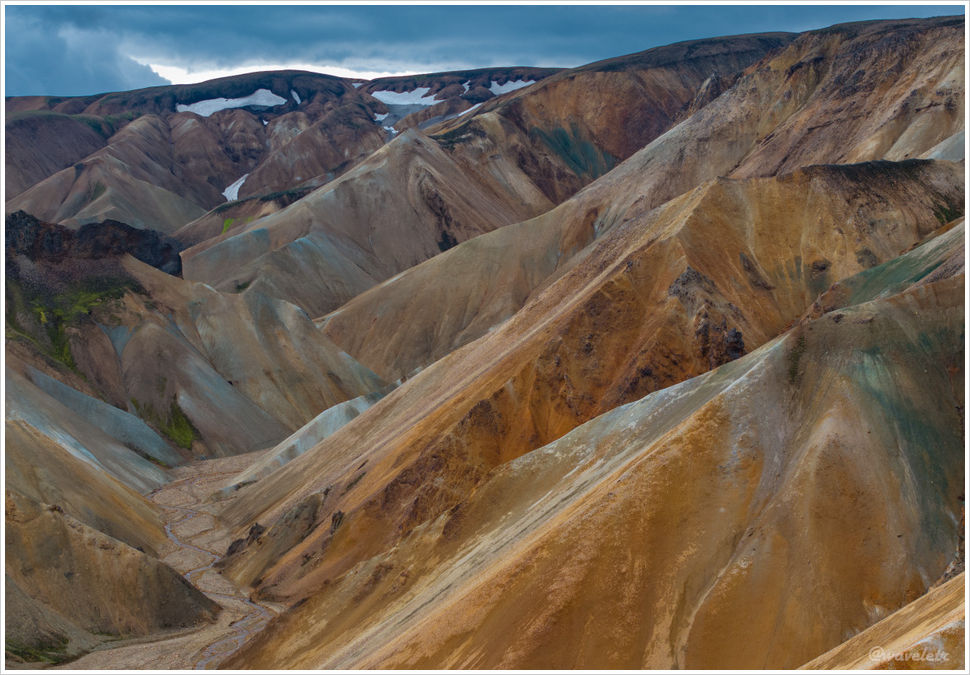
I launched my drone; under the wide-angle distortion, the valley below resembled a mask, with two lakes serving as eyes. We had traversed the lava field on the right and now had to climb toward the summit.
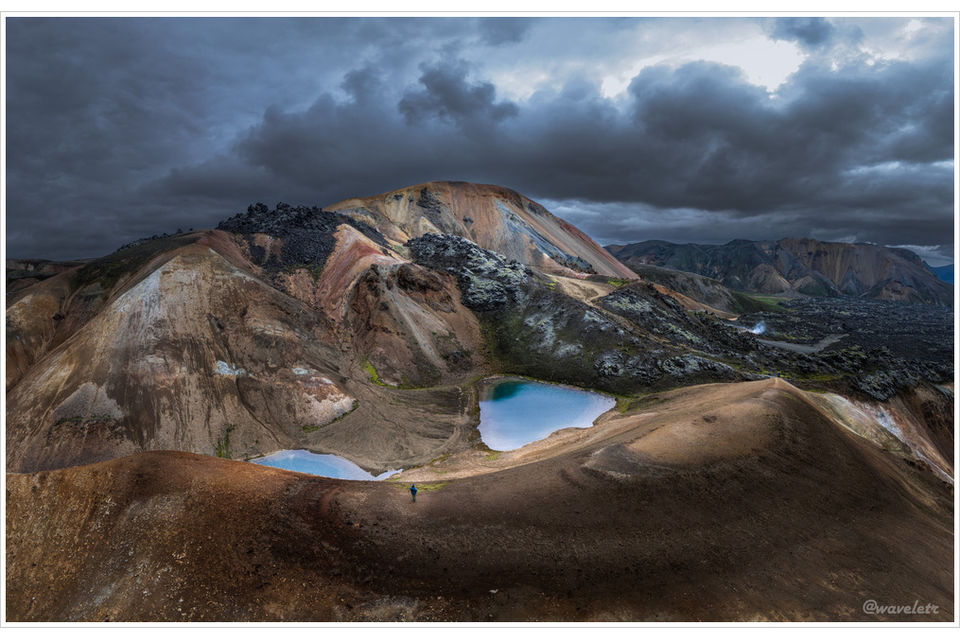
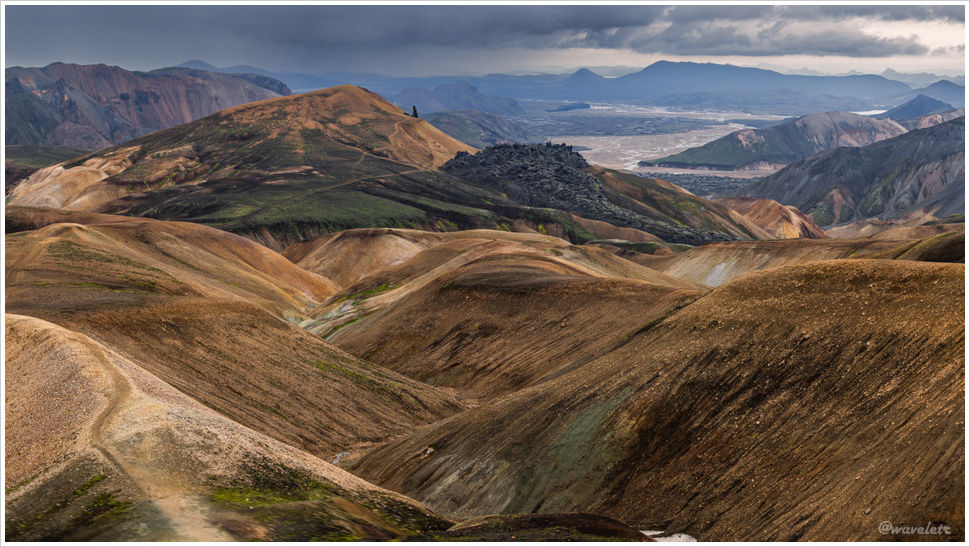
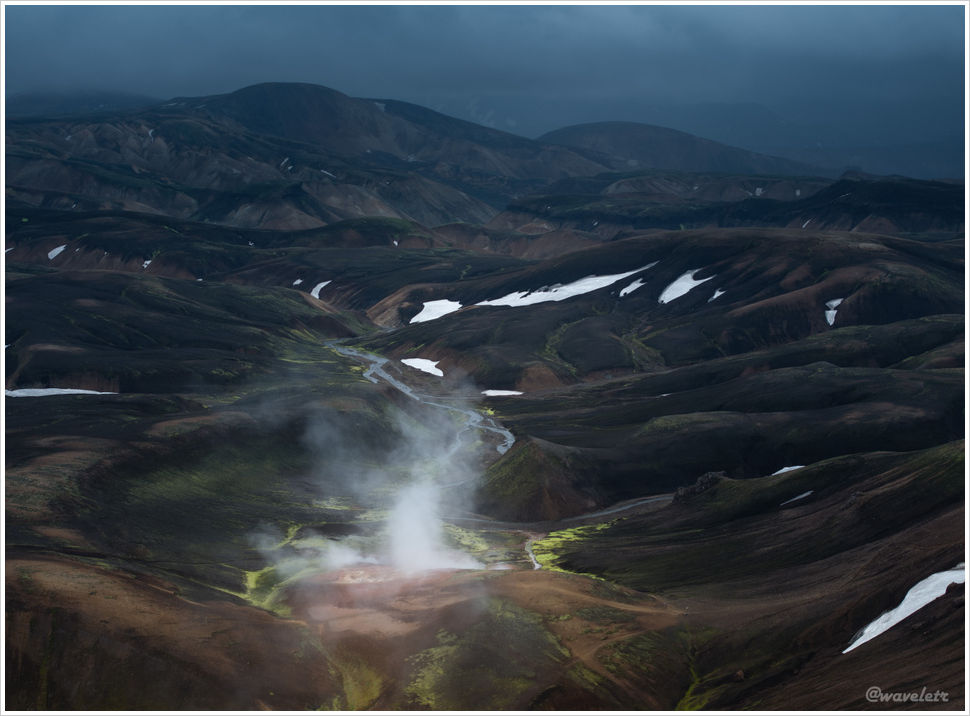
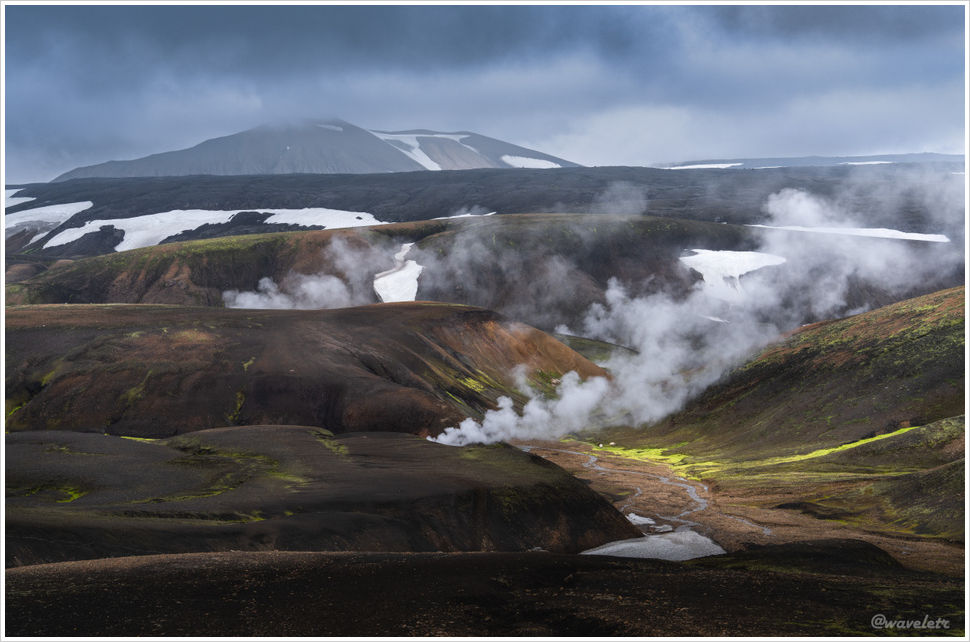
Crossing this mountain leads to a landscape of deeply eroded hills. The trail becomes a series of constant ascents and descents, making for a physically demanding stretch. Under an overcast sky with clouds nearly touching our heads, steam rose from streams in the valley, filling the ravines with mist. Gloomy and ethereal, this was the defining impression of the first day in the Icelandic Highlands.
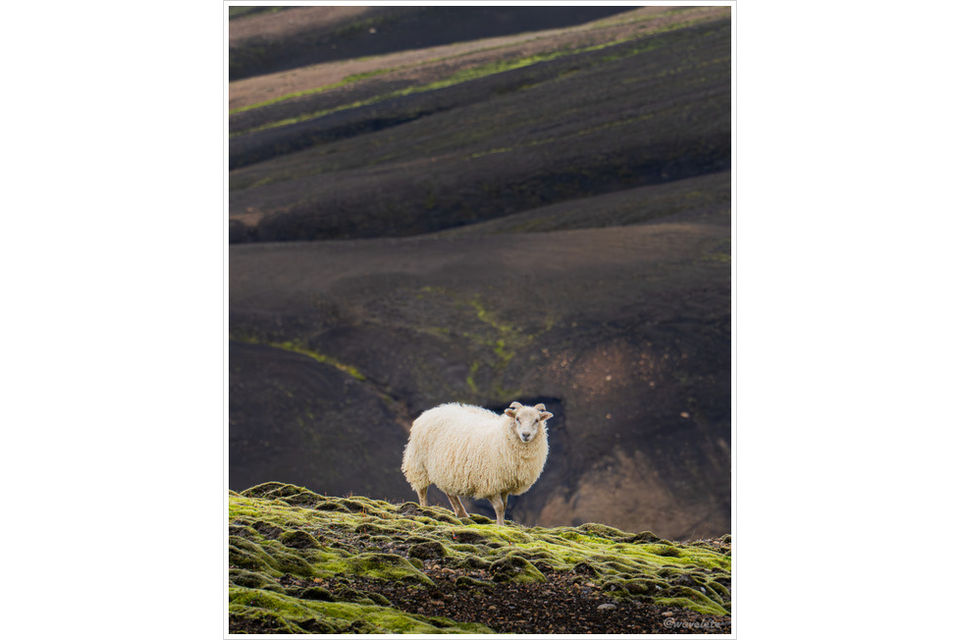
Occasionally, we spotted scattered mountain goats. They are skittish creatures, turning and fleeing the moment they sense humans; capturing a clear forward-facing photo was difficult.
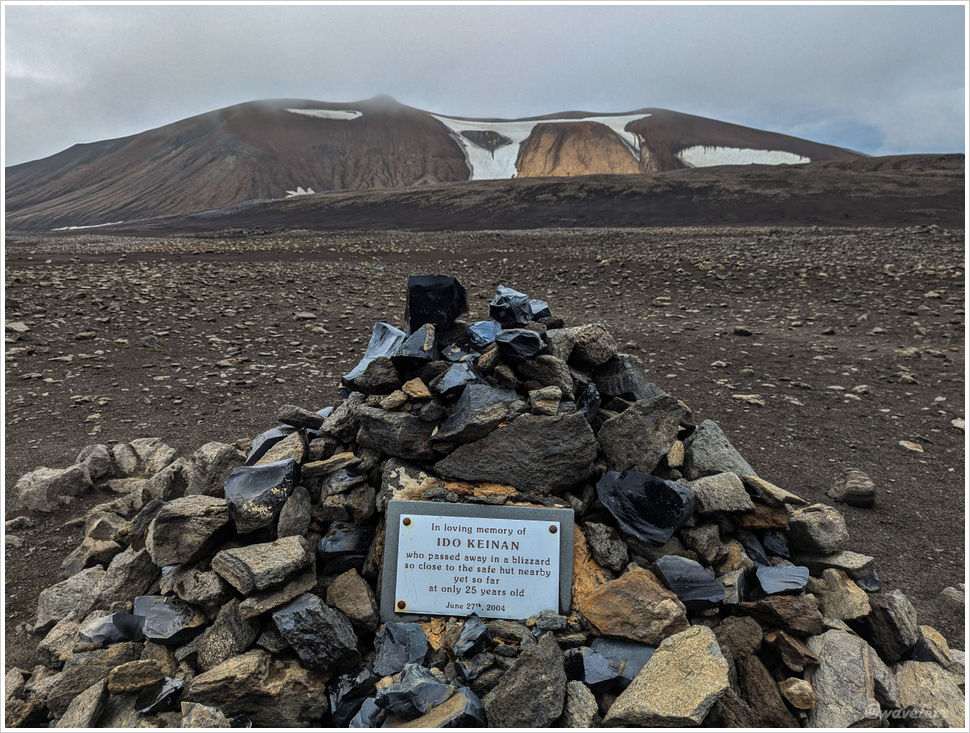
On a flat stretch of the trail stands a small memorial made of volcanic stones. On June 25, 2004, 25-year-old Ido Keinan set out alone into the highlands. Caught in a multi-day storm with poor visibility and insufficient gear, he lost his way just a short distance from the next hut and ultimately died of hypothermia. This stackof stones serves as a somber reminder to all who explore the Highlands: the greatest risks often hide within the most beautiful landscapes. Nature demands constant respect.
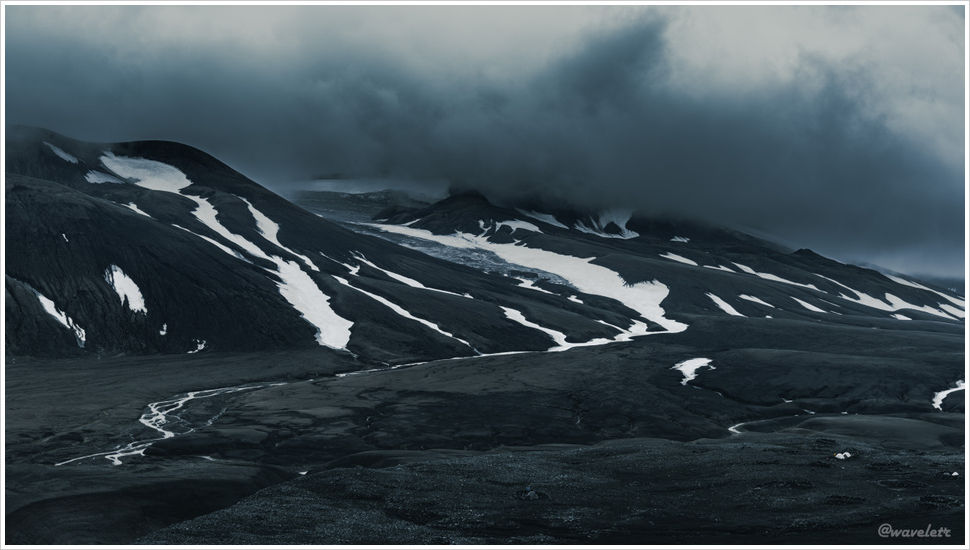
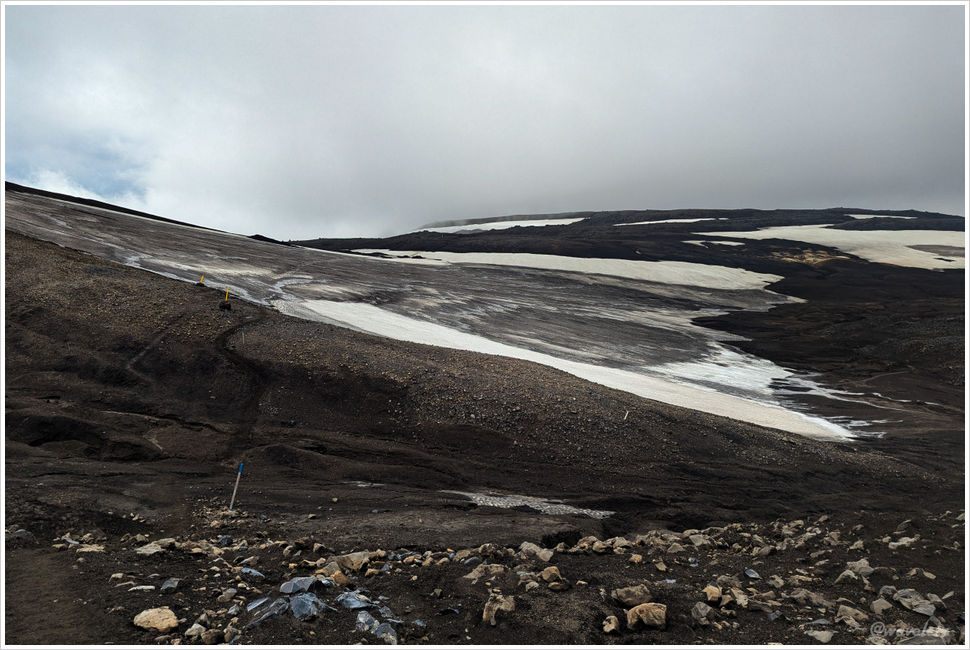
This is the highest section of the trek. A barren landscape defined only by shades of grey, black, and the stark white of lingering snow.
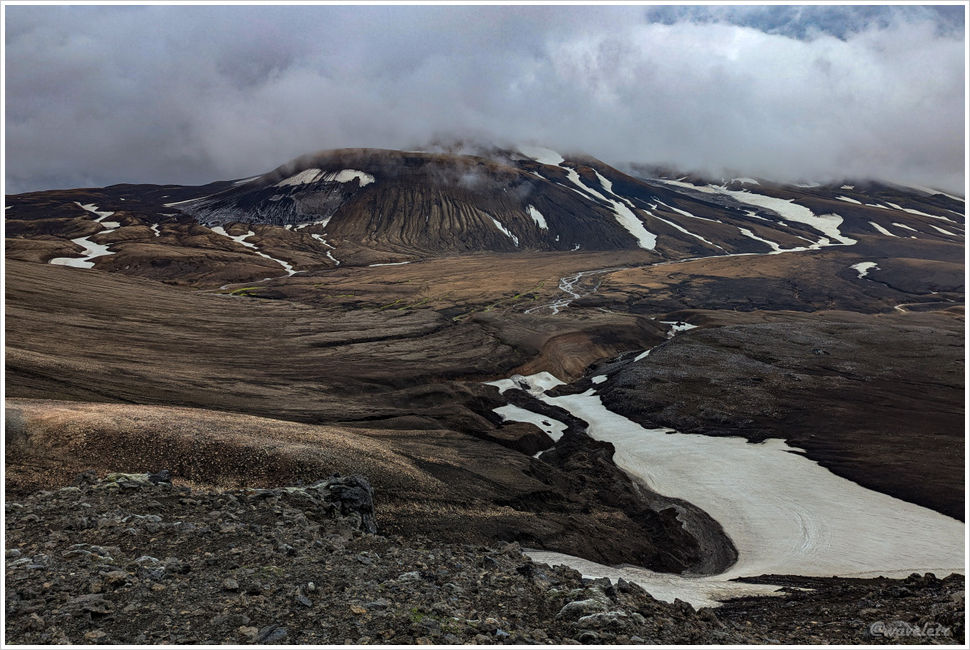
The site of Ido Keinan’s passing is less than a kilometer from Hrafntinnusker. After another half hour of hiking, a few small huts appeared behind a mountain notch.
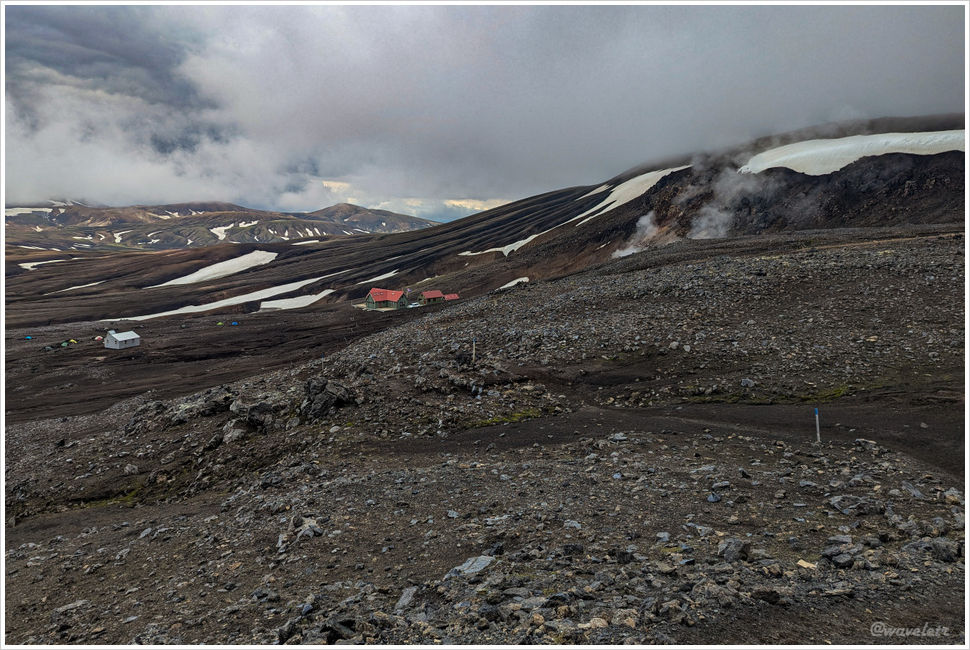
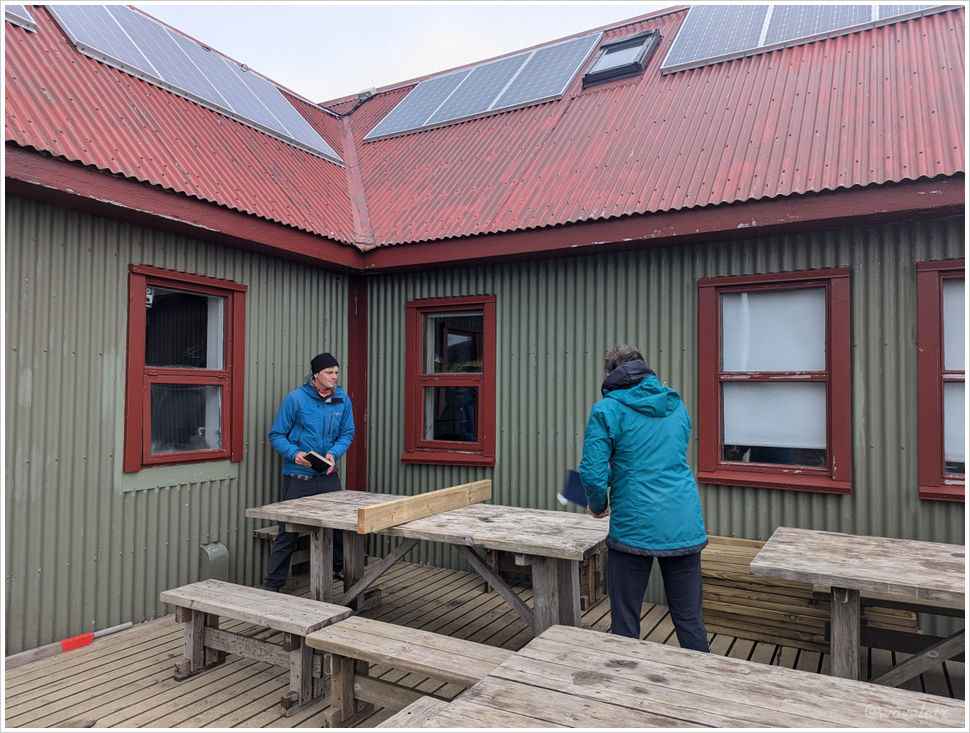
We arrived at the hut at 5:30pm. While it was freezing outside, the interior was warm. The hut has two levels, housing roughly 30 to 40 people. Our group of eight took up most of the floor space on one side of the second level, which felt relatively spacious.
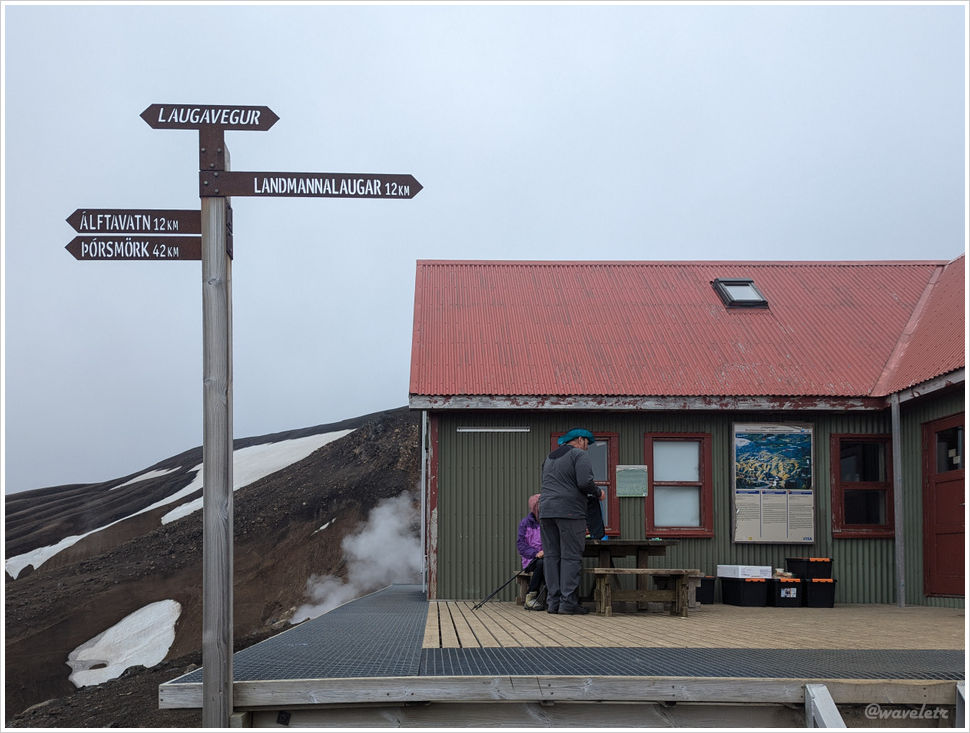
The Laugavegur trail spans 55 kilometers. If completed in four days, the daily distances are roughly 12, 12, 16, and 15 kilometers. Many choose to finish in three days by skipping the overnight stay at Hrafntinnusker and pushing through to Álftavatn. However, I believe these two 12-kilometer stretches contain the most stunning scenery in the highlands and deserve the extra time.
The sky remained overcast, making it impossible to tell if the sun had set. Judging only by the dropping temperature and the fading light, it was time to head inside and sleep.