Games Without Rules

Author: Tamim Ansary
Rating: ★★★★☆

Over the past two hundred years, multiple global powers have attempted—and failed—to invade and occupy Afghanistan. As an intellectual with a family history of serving in various Afghan governments, the author provides an insider’s perspective. Tracing Afghanistan’s recent history, the author explores the recurring patterns that have kept the country oscillating between local and foreign control, as well as between war and peace.

0评论

The New Map

Author: Daniel Yergin
Rating: ★★★★☆

Throughout human history, energy discovery and access have been major drivers of both progress and conflict. Due to its high energy density and relatively low extraction cost, oil has been a focal point of competition among nations. Its extremely uneven global distribution has also made it a critical factor in geopolitics.

Daniel Yergin, a global energy expert, won a Pulitzer Prize for his book The Prize, which is widely regarded as “the best history of oil ever written.” In his 2020 book The New Map, Yergin examines the shifting global energy landscape and its impact on geopolitics.

The book begins with the “shale revolution” that took place in the United States about a decade ago. The discovery of new oil fields in North America, along with technological breakthroughs that significantly lowered the cost of shale extraction, enabled the U.S. to surpass Russia and Saudi Arabia as the world’s leading oil producer. This reduced dependence on foreign oil has, in turn, expanded U.S. influence and strategic options on global issues.

Yergin also examines the histories and strategic choices of other key oil-producing regions, including Russia, the Middle East, and China. Readers gain insight into various geopolitical dynamics, such as environmental groups’ opposition to the Keystone oil pipeline, Russia’s territorial disputes with Ukraine and their connection to energy supply, Europe’s tensions with the U.S. over Russian pipelines, and the interplay between OPEC and non-OPEC nations during energy crises. The book also explores the roles of smaller nations like Kuwait and Bahrain in Middle Eastern geopolitics, as well as the deep connection between China’s Belt and Road Initiative and national economic security.

For readers well-versed in international politics, the book may not introduce groundbreaking ideas. However, it effectively connects various historical events through the lens of oil, helping readers understand the technological and economic developments that have shaped global energy policies and national security strategies over the decades.

The book also touches on the evolving role of renewable energy. While wind and solar power have become integral to the energy mix, their low energy density and high storage and transportation costs make them less viable without government subsidies. As a result, renewable energy remains expensive and not yet widely adopted. Toward the end, the author shifts focus to electric vehicles and artificial intelligence—topics that feel somewhat disconnected and, in my view, unnecessary.

0评论

Genius Makers

Author: Cade Metz
Rating: ★★★★☆

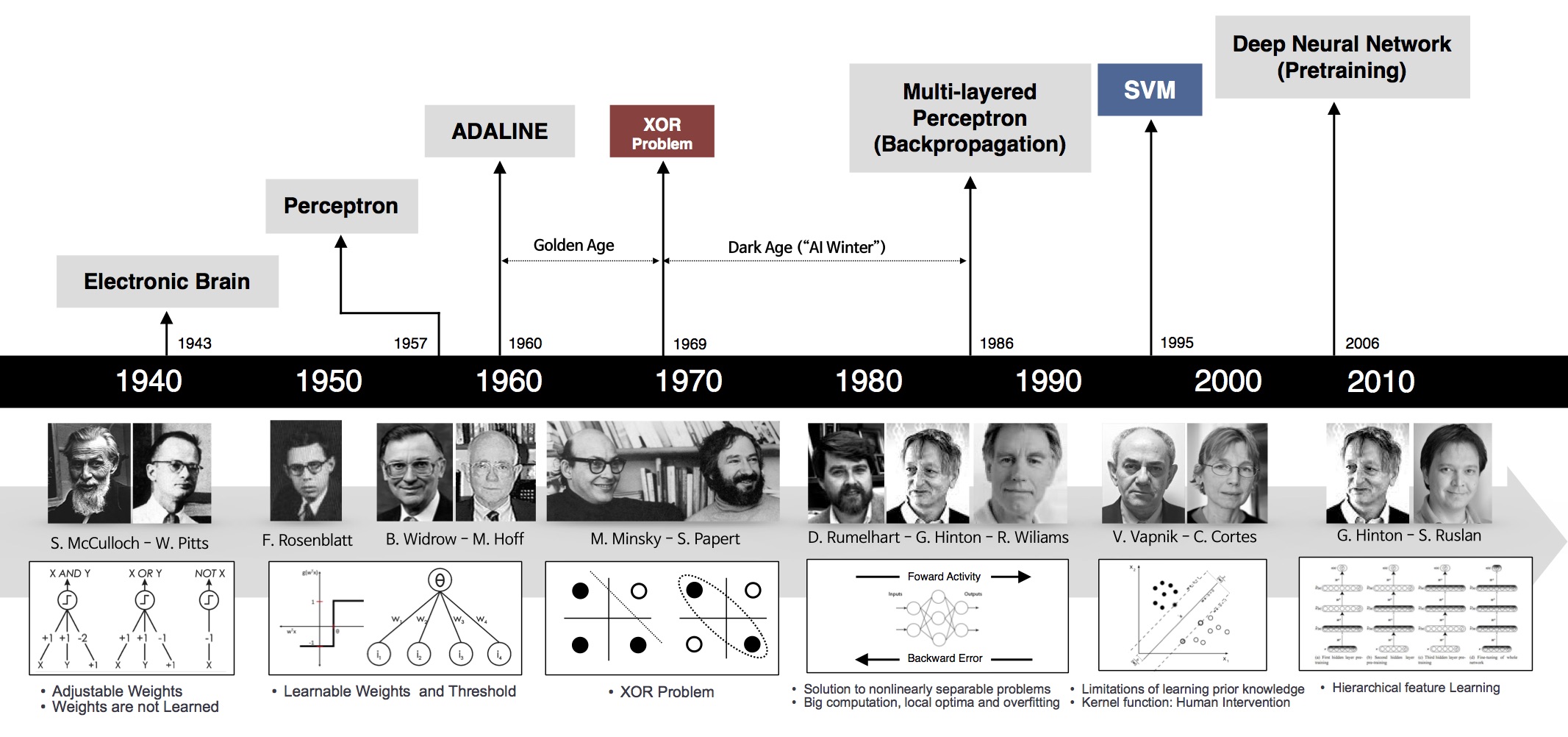
A good introduction of the history of Artificial Intelligence, through the stories of the major players.

0评论

Superbugs

Author: Matt McCarthy
Rating: ★★★½☆

The main storyline of the book centers around the author’s experience conducting a clinical trial for a new antibiotic. A significant portion of the book is devoted to the stories of several patients whom he tried to qualify for the trial. These sections explore their backgrounds, how they contracted the disease, and how they coped with their situations. Interwoven with introductions to basic immunology and the growing dilemma of antibiotic shortages in modern medicine, this aspect of the book is its most fascinating.

0评论

Guns, Germs and Steel

Author: Jared Diamond
Rating: ★★★★½

The author sets off to answer one of the most challenging questions about human history, why did human civilizations become so diversified in their forms, and especially why did they develop in such different pace? Why is it countries in the Eurasian continent that dominated civilizations in other region? Dr. Diamond presents a lot of researches, data and diagrams to support his conclusion, however, this is more of a logic book than a historical book to me. I have never read a book with such a rigorous reasoning that demands a vast amount of critical thinking, at the same time keep me intrigued and reading more.

The conclusions should only be applied to the large scale, the entire history of human development in the past tens of thousands of years. It is certainly tempting to derive certain explanation based on the recent history of the last several hundred years, but the results will be far less convincing.

0评论

Stuff Matters

Author: Mark Miodownik
Rating: ★★★☆☆

A fun reading about the modern materials around us.

0评论

The Last Empire: The Final Days of the Soviet Union

Author: Serhii Plokhy
Rating: ★★★★☆

The author uses the first-hand materials and previous classified documents to outline a series of events between the failed coup in August 1991 and the collapse of the Soviet Union by the end of the year. He reveals that financial difficulties and independent movements were the major drivers that crumbled the empire in a unthinkable pace, and Bush’s administration was actually trying to keep the Soviet Union alive longer. Sometimes, the history just cannot be designed.

0评论

Silk Road

Author: Peter Frankopan
Rating: ★★★★☆

An epic view of the place between the east and the west, the place that has been the center of the world for thousands of years, connected by the trade and fought by the powers, where the civilizations met and collided. I wish the author had more materials to cover the further east where the Silk Road starts, China.

0评论